Hurricane Trudy Impacts Southwestern Mexico with Heavy Rain and Winds
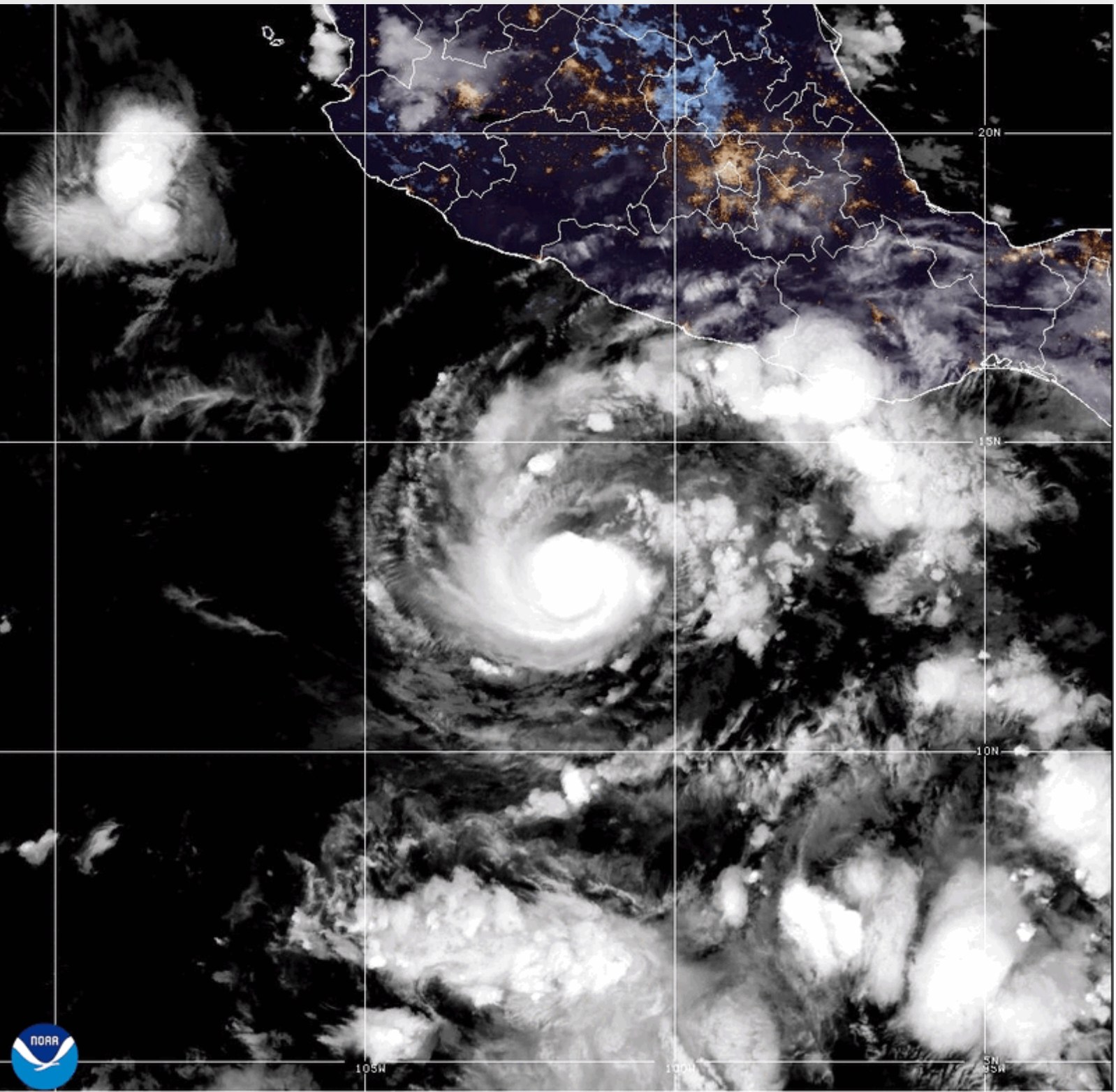
Hurricane Trudy continued to bring intense rainfall and gusty winds to southwestern and west-central Mexico on Sunday. Forecasters warned of potential life-threatening flooding and mudslides in areas with steep terrain.
At 8 a.m. MST Sunday, Trudy was reported to have maximum sustained winds of 105 miles per hour. It was centered approximately 115 miles southwest of Cabo Corrientes and 165 miles west of Manzanillo, as per the National Hurricane Center (NHC). The storm was moving northwest at 8 mph.
“Trudy is expected to produce an additional 2 to 6 inches of rain with isolated storm totals around 12 inches along and near the southwest Mexican coast in Jalisco,” stated the NHC in a Sunday advisory. “This rainfall may lead to life-threatening flooding and mudslides, especially in areas along steep terrain.”
Although Trudy’s center was predicted to begin moving away from mainland Mexico on Sunday afternoon, its rain, winds, and coastal hazards were still expected to affect parts of the country.
The NHC warned of a “dangerous storm surge accompanied by damaging waves” where winds were blowing onshore within the warning areas. Swells generated by the hurricane were anticipated to create “life-threatening surf and rip current conditions” along portions of southwestern and west-central Mexico.
Hurricane-force winds extended up to 30 miles from the center, while tropical-storm-force winds reached up to 105 miles. In response, Mexico’s Navy announced the closure of ports in Puerto Vallarta, Manzanillo, Lázaro Cárdenas, and Puerto Escondido to all navigation due to Trudy. Several other ports were closed to small vessels.
Officials advised the maritime community and coastal residents to exercise “extreme precautions” due to high surf, intense rain, and the risk of swollen rivers, flooding, and landslides in vulnerable areas.
Threats to Mexico
A tropical storm warning was in effect from Playa Perula to San Blas and for Las Islas Marías. The Mexican government downgraded the hurricane warning between Playa Perula and Cabo Corrientes and discontinued all warnings south of Playa Perula, noted the NHC.
The warning indicated that tropical-storm conditions were expected within the affected area within 12 hours. The NHC anticipated these conditions along the warned portion of mainland Mexico Sunday morning and in Las Islas Marías during the afternoon.
In addition to the heaviest rainfall forecasted for Jalisco, Trudy’s outer bands were expected to bring another 1 to 2 inches of rain, with isolated totals near 4 inches, along the coast in northern Colima and southern Nayarit. This rainfall “may result in localized flash flooding, especially in areas along steep terrain,” the agency stated.
Trudy was projected to turn west-northwest Sunday night and pass south of Baja California Sur on Monday and Tuesday. “Rapid weakening is expected to begin tonight, and Trudy could degenerate to a post-tropical low by Tuesday night,” mentioned the NHC.
Active Pacific Season While Atlantic Remains Quiet
Trudy was the only active tropical cyclone listed by the NHC across the Atlantic, eastern Pacific, and central Pacific basins on Sunday morning. There were no tropical cyclones in the Atlantic at this time, while advisories remained active for Trudy in the eastern Pacific.
Further Pacific developments were possible, with an area of low pressure forecasted to develop well offshore of southern Mexico in a few days. A tropical depression was likely to form around midweek as the system moved west to west-northwest, well south of the country. The agency estimated a 7-day development probability of 80 percent.
While Trudy poses a threat in the eastern Pacific, the Atlantic has seen an unusually quiet hurricane season, even post its climatological peak. By October 18, only one of the Atlantic basin’s nine named storms in 2026, Isaias, had intensified into a hurricane, according to the NHC. Data showed the season running five hurricanes below the 1991-2020 average and its accumulated cyclone energy, or ACE, was 83 percent below normal, highlighting the limited activity in the Atlantic this year.