Warm Weather’s Impact on Trees and Agriculture
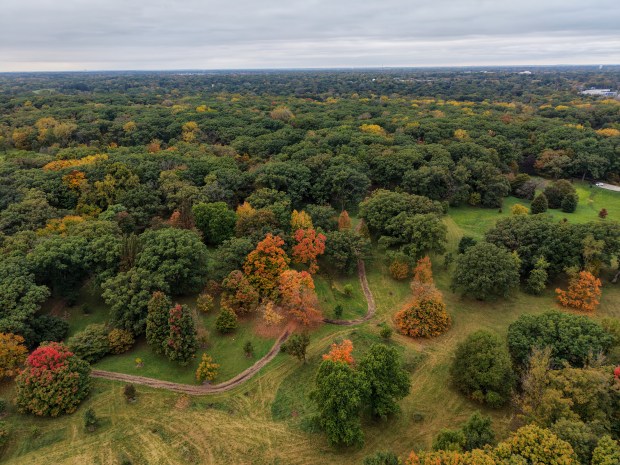
Janet Cole believed she had enough photos of trees at The Morton Arboretum. Yet, the vibrant colors of a solitary amur corktree drew her in once more. Despite being 75, Cole captured its beauty, captivated by its yellow leaves. A resident of Downers Grove, she has volunteered at the arboretum for six years after retiring as a librarian. Her duties vary from removing weeds to helping at events like wine tastings. Cole often cycles around to assist visitors, although colder winters usually halt this.
This year might allow more cycling if the warmth persists. Such abnormal warmth delays leaf color changes and impacts plant and aquatic life in the Midwest. Predictions from NOAA indicate above-average temperatures due to El Niño, a natural weather cycle. Trent Ford, Illinois state climatologist, stated El Niño predicts temperature shifts better than precipitation. For the coming winter, a 70% chance exists for higher temperatures in the Great Lakes region. Ford considers this forecast nearly certain for winter temperatures.
Temperature influences leaf color changes, according to Michael Jesiolowski, The Morton Arboretum’s plant clinic manager. Leaves often change when temperatures fall below freezing. As of mid-October, temperatures stayed above 45 degrees. However, they are starting to drop into the 30s and 40s. On October 12, Chicago suburbs reached a record high of 88 degrees. Typically, maples peak in color mid-October and oaks in late October. On October 14, 2026, tree colors at The Morton Arboretum were just beginning to change.
Although foliage may appear later, the colors could last longer, says Jesiolowski. Factors like precipitation and sunlight affect this. Cool mornings and evenings are crucial, but they have been absent, delaying the color change.
El Niño-Southern Oscillation significantly influences global climate, with El Niño currently affecting global weather patterns. NOAA predicts the strongest El Niño on record, impacting various regions differently. While the global effects can be severe, NOAA forecasts normal to above-average U.S. temperatures. Illinois should expect warmer temperatures, with varied precipitation prospects.
For agriculture, El Niño presents mixed outcomes. It might relieve droughts but worsen issues like pests and weeds. David Zaya from the Illinois Natural History Survey notes that El Niño years often yield better corn and soybean crops due to longer growing seasons. Colder springs, however, can impede early planting. This year’s weather might benefit farmers, according to University of Missouri’s Zack Leasor. In the U.S., El Niño likely means more rain in parts of the Midwest. Missouri, experiencing severe drought, might benefit from a wetter winter.
Illinois faces specific challenges. Southern Illinois’s elevated temperatures could harm perennial crops like cherries and apples, which might wake early from dormancy. Kelly Estes, entomologist at the University of Illinois, warns of increased pest survival into spring, threatening crops. Weeds like horseweed also thrive in milder winters, complicating corn and soybean cultivation. More herbicide use could affect nearby natural areas, a pressing issue in Illinois. A study by Zaya shows herbicide damage in 99% of natural areas he visited.
Warmer winters also enable faster spread of invasive plants like the Japanese chaff flower in Southern Illinois. Water organisms face challenges as well. Warm water accelerates harmful algae growth in the Great Lakes, which consume oxygen or obstruct fish gills. Algal blooms in 2021 revealed toxin levels far exceeding safe limits. Warm conditions also threaten lake whitefish as they rely on ice for egg protection.
While severe impacts will affect other global regions, Chicago’s effects will likely be mild, according to Ford. However, homeowners should monitor gardens and trees as warmer conditions could lead to moisture retention issues. Jesiolowski advises deep watering weekly instead of daily light watering, promoting deeper root growth. Applying mulch or leaves can help retain moisture. Following the ‘Leave the Leaves’ practice enhances conservation by forming a protective layer over soil.
As temperatures begin to drop, colors at The Morton Arboretum slowly intensify. For Cole, the delay is worthwhile. “It’s inspiring,” Cole said. “It’s a distraction from events in the world.”