Filmmaker Challenges Smithsonian on Documentary Screening
A Black conservative filmmaker, Eli Steele, has called on the Smithsonian Institution to clarify why his documentary, “White Guilt,” hasn’t been publicly screened at the African American history museum. This museum has previously featured films about systemic racism.
The documentary, co-produced by Steele, draws from a book by his father, Shelby Steele, a Black conservative academic. Eli Steele, who is Black, Jewish, and deaf, uses his experiences to question current views on race and identity. The film asserts that White guilt regarding America’s racial past, along with the fear of being labeled racist, has pushed many to prioritize racial identity above individual merit.
The controversy arises as the Smithsonian encounters pressure from President Donald Trump and his administration, accusing the institution of ideological bias in American history portrayal. The White House has threatened to limit federal support, claiming the museum promotes progressive narratives.
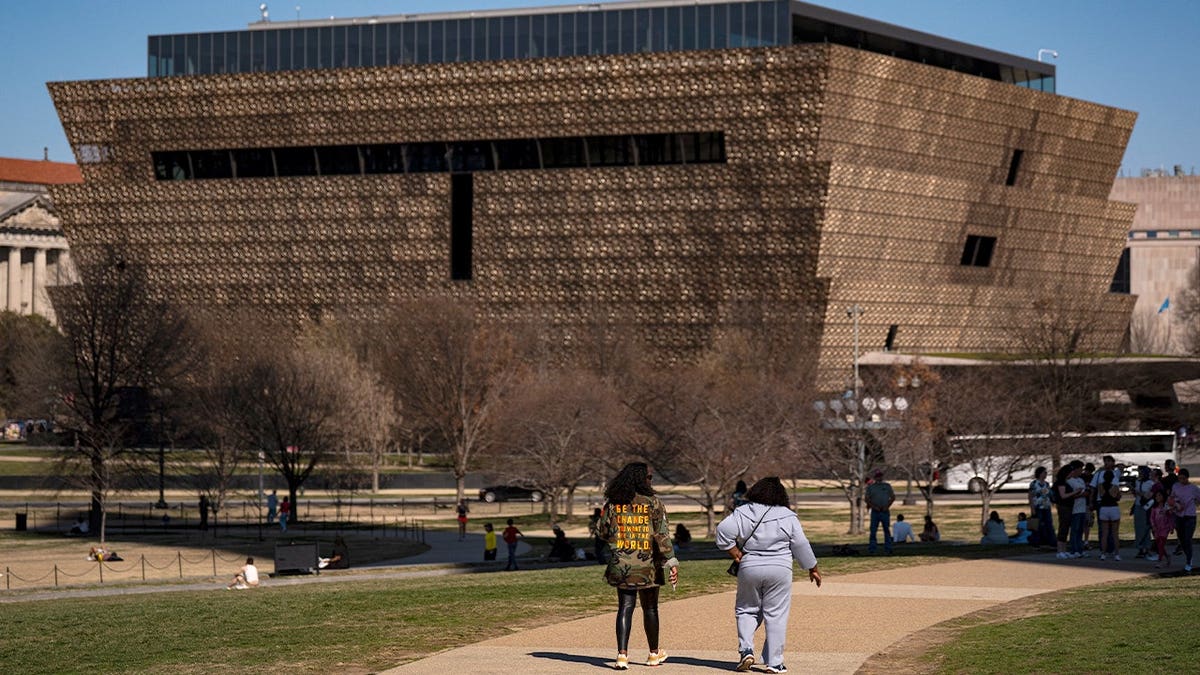
The Smithsonian’s National Museum of African American History and Culture in Washington, D.C., has hosted films exploring race and American history. Steele showed messages to Fox News Digital indicating the museum rejected proposed screening dates. Instead, they offered a private rental option, to which the filmmaker requested alternative dates for a public screening.
“The film is professionally shot, the quality is there. A comparable film that they’ve shown is ’13th,’ which itself is a very controversial film,” Steele told Fox News Digital.
Steele questioned the decision not to screen his film, noting the museum’s history of showcasing works with progressive themes, although he refrained from charging the museum with ideological bias. The museum has screened films like “13th,” “Hidden Figures,” and “I Am Not Your Negro,” among others.
Black conservatives view the museum’s decision as part of a pattern. Carol Swain, a retired professor, told Fox News Digital, “There would always be a token conservative included. And I have found over the years that conservatives were tolerated less and less. And if they were black, at some point they were not tolerated at all.”
Similarly, Jason Riley, Wall Street Journal columnist, shared his view that Smithsonian officials align with liberal narratives opposed to conservative perspectives.
The NMAAHC informed Steele that the proposed screening dates were unavailable. The museum suggested a private screening at a cost of $35,000, an option Steele’s team didn’t prefer. Glenn Loury, a professor at Brown University, described the film as provocative and insightful, deserving a platform at the museum to incite critical engagement.
In recent months, Republican officials have criticized the Smithsonian for letting political bias overtake neutral history presentation. The Smithsonian has responded that it shows both positive and negative aspects of American history.
Steele’s father, Shelby Steele, who grew up under segregation, has explored America’s racial transformation for decades. Eli Steele remarked, “Sharing his life’s work in a museum dedicated to the history he lived would mean a great deal to both of us.”