Rising Ebola Concerns in Africa and Global Response Efforts
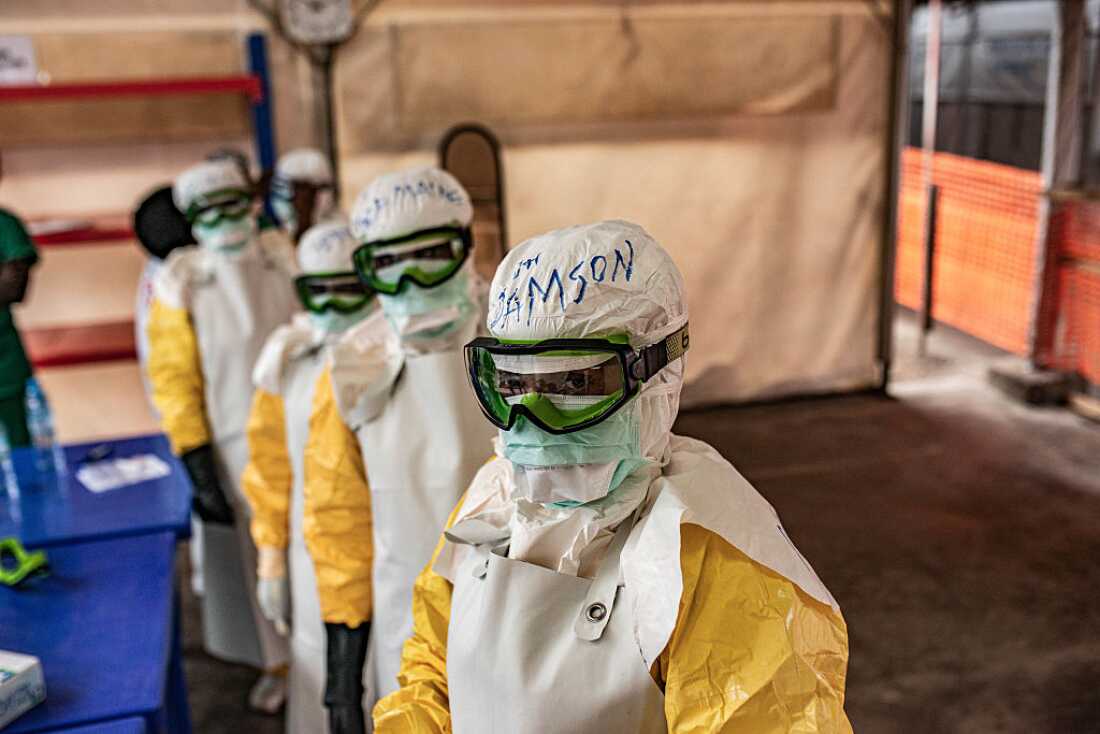
Health workers donned protective gear at an Ebola treatment center on June 2, 2026, in Monigi, Democratic Republic of Congo. The ongoing outbreak in Africa could potentially match the devastating outbreak in West Africa a decade ago, where 20,000 cases and over 4,000 deaths were recorded in just three months. Recent analyses by the U.S. Centers for Disease Control and Prevention (CDC) highlight how severe the current outbreak might become.
The Democratic Republic of Congo, along with Uganda, are frantically working to contain this major Ebola outbreak, prompting the World Health Organization to announce an international health emergency. Three new papers from the CDC emphasize the urgent need for extensive and sustained public health interventions to curtail the spread of the disease and prevent a worst-case scenario.
“If only 20% of cases enter isolation within two days of symptom onset, more than 20,000 cases are projected in two out of three of our scenarios,”
explained Jason Asher from the CDC’s Center for Forecasting and Outbreak Analytics at a press briefing. These cases are expected within the next three months. Without intervention, this could become the most severe Ebola outbreak on record, surpassing the 28,000 cases from the 2014-2016 West Africa outbreak.
Challenges on the ground, such as ongoing conflict and limited access to healthcare, contribute to the dire situation. Immediate isolation of exposed individuals is crucial to controlling the spread. International efforts to increase isolation compliance could significantly reduce the outbreak’s scale.
“If 70% of cases started isolating within that two-day period, there’s a 94% probability of limiting the outbreak to fewer than 10,000 cases in the next three months,”
Asher highlighted. Jennifer Nuzzo from Brown University echoed these concerns, saying the outbreak’s path is alarming and requires intensified action at its source to prevent further escalation.
One CDC paper assessed the risk to the U.S., finding it remains low. While Ebola is severe, its transmission is not as easy as COVID-19 or the flu, and the U.S. is equipped to rapidly identify and isolate cases. Satish Pillai, the CDC’s Ebola response manager, noted that domestic risk is minimal, and there is no need for behavioral changes or travel precautions outside the Democratic Republic of Congo and Uganda.
Despite the warnings, Pillai stressed that action can still be taken. Previous successful responses to Ebola outbreaks provide a framework for current efforts. The goal remains to control, contain, and end outbreaks in the affected regions.
In an opinion piece in The Washington Post, Anthony Banbury, a former U.N. official, stated that the crisis requires a coordinated international response to manage the rising case numbers effectively. Banbury emphasized the need for a strategic shift in the international community’s approach to combat the Ebola crisis in Africa.