Alabama Challenges Supreme Court on Redistricting Ruling
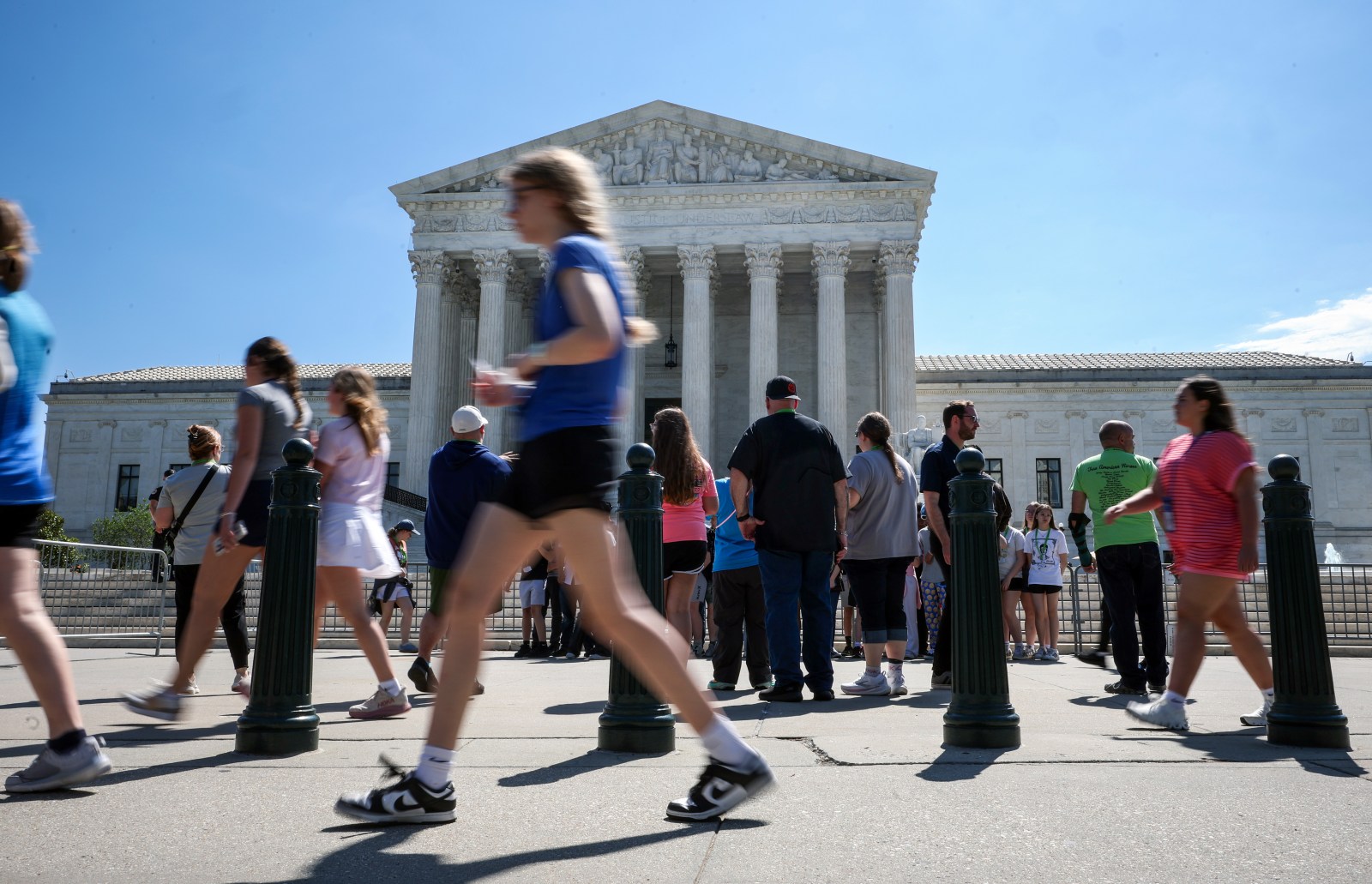
Alabama’s attempt to bring its redistricting case before the U.S. Supreme Court faced a setback. Justice Clarence Thomas declined to immediately issue a stay on the lower court’s prevention of the redrawing of Alabama’s congressional map. Thomas, who has expressed doubts about the provisions of the Voting Rights Act used in cases like Alabama’s, denied the request from Republican officials for immediate action. He asked the opponents of the map change to justify why the new map should not be used.
Details on the Alabama Redistricting Case
This decision comes amid a broader push by the GOP to introduce new maps nationwide, with an eye on the 2026 midterms. These elections are crucial for maintaining Republican control in the House of Representatives. A federal three-judge panel recently blocked the use of Alabama’s map created in 2023. Alabama quickly challenged this at the U.S. Supreme Court, which has addressed similar cases including one in Texas.
“The extent to which there is confusion about the maps which Alabama uses for congressional districts seems to be with the three-judge panel, not the voters. The fact that our State’s conservative electorate has conservative representation is democracy, not an attack on it.” – Steve Marshall, Alabama State Attorney General
The District Court ruled in favor of using court-ordered districts from 2024 after Black voters argued the state’s plan was discriminatory. The judges emphasized that votes should not be cast under a plan tainted by racial discrimination.
Supreme Court’s Previous Involvement
This case has gone back and forth from the legislature to the courts since 2021. The Supreme Court made a notable ruling in 2023 affirming the ban on the new Alabama map, based on the Voting Rights Act. Justice Thomas opposed this decision.
A ruling in Louisiana v. Callais reexamined the application of Section 2 of the Voting Rights Act, prompting a return to the District Court. Solicitor General D. John Sauer criticized the district court’s injunction as election preparations were underway.
“Federal district courts do not have the same license to interfere with election rules at the last minute, especially on dubious theories,” Sauer argued.
Justice Thomas’s Perspective on Redistricting
Justice Thomas has maintained a stance that federal law should minimally interfere with state-drawn congressional maps. He argues for a constitutional interpretation that mandates a colorblind approach to the Equal Protection Clause, opposing race-based districting.
Thomas has consistently questioned the legal framework under Section 2 of the Voting Rights Act. He asserts that it has been wrongly used to address vote dilution claims related to district lines, a view he outlined in a 1994 concurrence in Holder v. Hall. His position is that Section 2 pertains only to voting procedures, not district designs.
Criticism from Thomas includes claims that modern uses of Section 2 encourage racial sorting, which the Constitution prohibits. He refutes the idea of proportional representation based on racial demographics as legally and constitutionally dubious.
Upcoming Decisions
The attorneys challenging Alabama’s map have a deadline to present their arguments to the Supreme Court by June 1. The court will then decide whether to proceed with the state’s appeal.