Artist Lex Marie Examines Discipline in Black Households Through Art
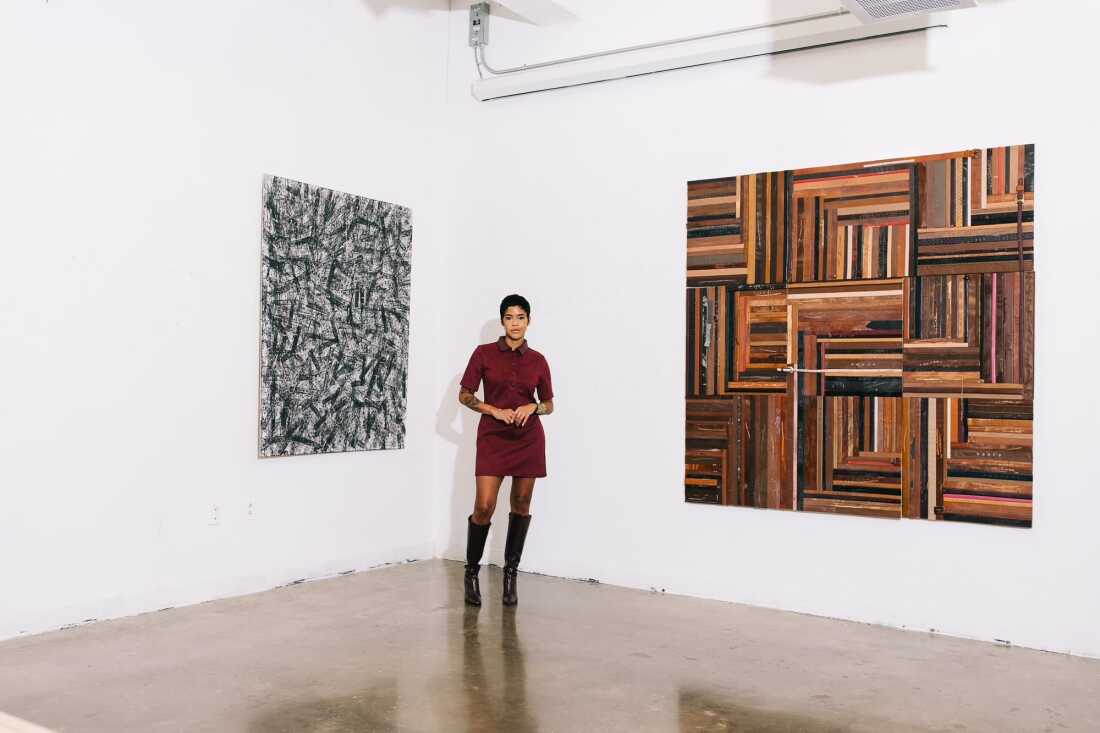
Lex Marie, a multidisciplinary artist, gained viral attention on TikTok and Instagram for her artwork that delves into discipline within Black households. When visiting Marie’s art studio, a seemingly ordinary object, like a belt, takes on profound meaning.
In Washington, D.C., at the American University’s Katzen Arts Center, belts are transformed into tools and canvases. Marie arrays belts in ordered rows and columns on a canvas. She also uses belts dipped in paint to create violent strokes on a white canvas, each stroke telling a story of childhood, discipline, and complex expressions of love.
Marie aims to address a sensitive topic often undiscussed: corporal punishment in Black households. “I’m critiquing discipline in Black households specifically,” she says. Her focus is on the historical context of discipline techniques like spankings and whippings, while comparing it to modern parenting.
The subject is deeply personal for Marie, who is 33 and has an eight-year-old son. As she raises her child, she reflects on her childhood experiences to inform her art. Her works often explore the emotions stemming from spankings and her own perceptions.
One notable artwork, “Watch Your Tone,” spans six-by-six feet and is crafted entirely of belts. Various shades of brown, black, and pink reflect the color of flesh. The name resonates with a common phrase heard in childhood, “Watch your tone when talking to me.” Marie explains the belts symbolize a deeper message linked to American history.
For many historians, corporal punishment in Black families is intertwined with slavery’s legacy. Enslaved individuals faced physical violence, like whipping, for control, which evolved into contemporary parenting practices. Yohuru Williams, director of the Racial Justice Initiative at the University of St. Thomas, reinforces the connection between corporal punishment and African Americans originating from slavery.
The belief that Black bodies require excessive discipline has roots beyond slavery, yet was reinforced during enslavement.
Another piece, “Because I Love You,” highlights the physical act of punishment. Marie strikes a white-painted wooden panel with a paint-covered belt, leaving marks resembling scars and welts. “I spent hours beating the same thing repeatedly,” she recalls. The process left her sore, echoing the sentiment behind phrases like “This hurts me more than it hurts you.”
The unveiling of her art online sparked widespread reactions. Thousands shared childhood stories, some defensive, others thankful for the dialogue. Marie’s objective is facilitating conversations about buried topics, not condemnation or shame.
Williams advocates for reimagining discipline discussions in the Black community. He calls for reviewing the historical legacy of corporal punishment, recognizing its impact on communal and human dignity.
Marie views her art as a conduit for difficult conversations about childhood trauma. Her ongoing project will feature nearly 20 pieces, with plans for an exhibition this fall. Some artworks have been acquired by filmmaker Spike Lee. For Marie, recognition—rather than agreement—holds the greatest significance in her artistic journey.