Asian American and Pacific Islander Adults’ Perspectives on Immigration and Identity
The Trump administration’s immigration policies have brought significant disruption to the lives of Asian American and Pacific Islander (AAPI) adults. A recent poll from AAPI Data and The Associated Press-NORC Center for Public Affairs Research reveals that nearly half of AAPI adults have experienced, or know someone who has faced, detainment or deportation in the past year. Many report changes to travel plans or daily routines due to concerns about immigration status.
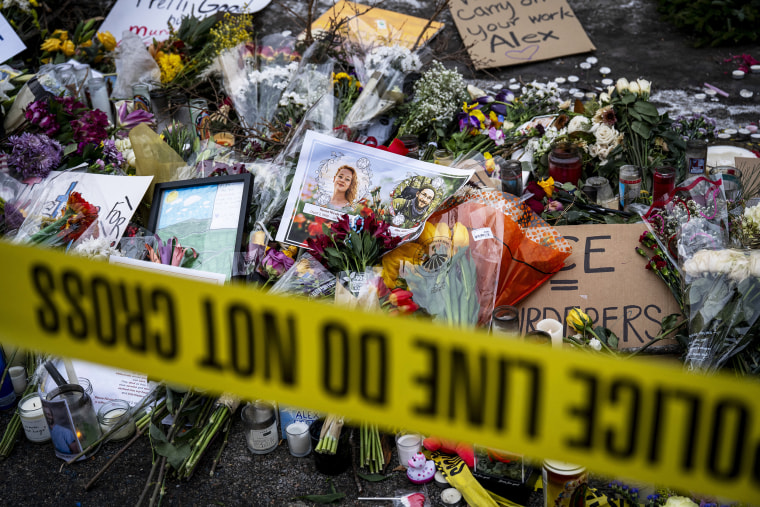
These findings come amidst ongoing immigration crackdowns, marked by clashes between protesters and enforcement officers. Such incidents include the shooting deaths of Nicole Good and Alex Pretti by federal immigration agents in Minneapolis earlier this year. The aggressive approach appears to be altering perceptions of the U.S. among immigrant communities.
AAPI adults represent one of the fastest-growing demographics in the U.S., with the majority born outside the country. The poll shows that 60% of AAPI adults believe the U.S. was once a great place for immigrants but no longer holds that promise. Only 30% think America remains a good place for immigrants, while a small fraction, about 5%, feel the U.S. never was.
Karthick Ramakrishnan, founder and executive director of AAPI Data, emphasized the role of immigrants in America’s success story. Yet the poll indicates a shift in sentiment among long-standing residents, casting doubt on the country’s current standing.
“When you have people who are already in this country, have been here for decades saying, ‘I’m not really sure that this is the best country anymore,’ that’s a warning sign,” Ramakrishnan stated.
The Trump administration’s policies have impacted even immigrants with legal status. Recent legal actions have halted changes in visa fees and blocked a ban that affected immigrants from 39 countries in receiving asylum, work permits, and citizenship decisions.
An example includes Khoa Tran from San Antonio, Texas, who gained U.S. citizenship after emigrating from Vietnam. Tran expressed concerns after seeing recommendations for immigrants, including legal ones, to carry documentation at all times. This has caused anxiety among international students and others about visiting family abroad.
“They’re just scared. They don’t know the law around that,” Tran said. “Better safe than sorry.”
The survey highlights differences among AAPI subgroups regarding their experiences and concerns. South Asian adults are particularly likely to know someone who has begun carrying proof of legal status, emphasizing fears about their presence in the country.
Cultural Identity Versus American Identity
AAPI adults tend to prioritize their family’s ancestry or country of origin over their American identity. Over half of respondents consider their heritage vital to personal identity, while fewer emphasize being American.
Even among U.S.-born AAPI adults, 59% see their heritage as crucial, compared to 47% identifying with their American identity. In contrast, a separate poll shows a majority of U.S. adults connect strongly to being American rather than their family’s origins.
Abigail Jeyaraj, born in Texas to Indian parents, noted the importance of acknowledging cultural roots alongside American nationality. Her experiences with diversity contribute to her understanding and empathy.
“Especially as a South Asian woman, I’m very sensitive to the fact that I have opportunities that my mother and my grandmother, all the women before that didn’t,” Jeyaraj shared.
Ambivalence Around America’s 250th Anniversary
While the mixing of global cultures is deemed vital by 73% of AAPI adults for defining U.S. identity, this view contrasts with only 55% from the general American public. Jeyaraj and others express ambivalence about celebrating the nation’s milestone anniversary amidst ongoing challenges.
“I’m proud we made it this far as a country,” Jeyaraj stated. “You have recent actors who are trying to undo that progress.”
Math teacher Tran expresses his skepticism toward the concept of the country’s founding, viewing the U.S. as a continuously evolving entity rather than a static formation.
The survey, conducted with more than 1,000 AAPI adults, aims to amplify voices often less highlighted in previous research due to sample sizes and representation challenges. The margin of sampling error is plus or minus 4.4 percentage points.