Books That Made History: The Armed Services Editions
During my childhood, many fathers in my neighborhood were World War II veterans. As expected, they rarely spoke about their experiences. Our knowledge was piecemeal. My best friend’s father, a former Air Force member in China, casually taught us the Mandarin phrase for ‘hot water.’ Another neighbor admitted to burning his Army uniform upon his return, leaving us puzzled. My own father vaguely referred to ‘funny paperbacks’ from the war era.
While researching my book on The Great Gatsby, I uncovered how my father was among millions of servicemen who received books, tagged the ‘biggest book giveaway in history.’ As the U.S. entered World War II, efforts emerged to supply servicemen with books to alleviate boredom. However, these books had to be compact enough to fit into pockets. This was one of many challenges faced by the Council on Books in Wartime, a group of publishers, librarians, and booksellers. Their program contrasted sharply with the Nazi-led book burnings of 1933. The Council’s motto stated: ‘Books Are Weapons in the War of Ideas.’ This initiative affirmed America’s commitment to wide reading.
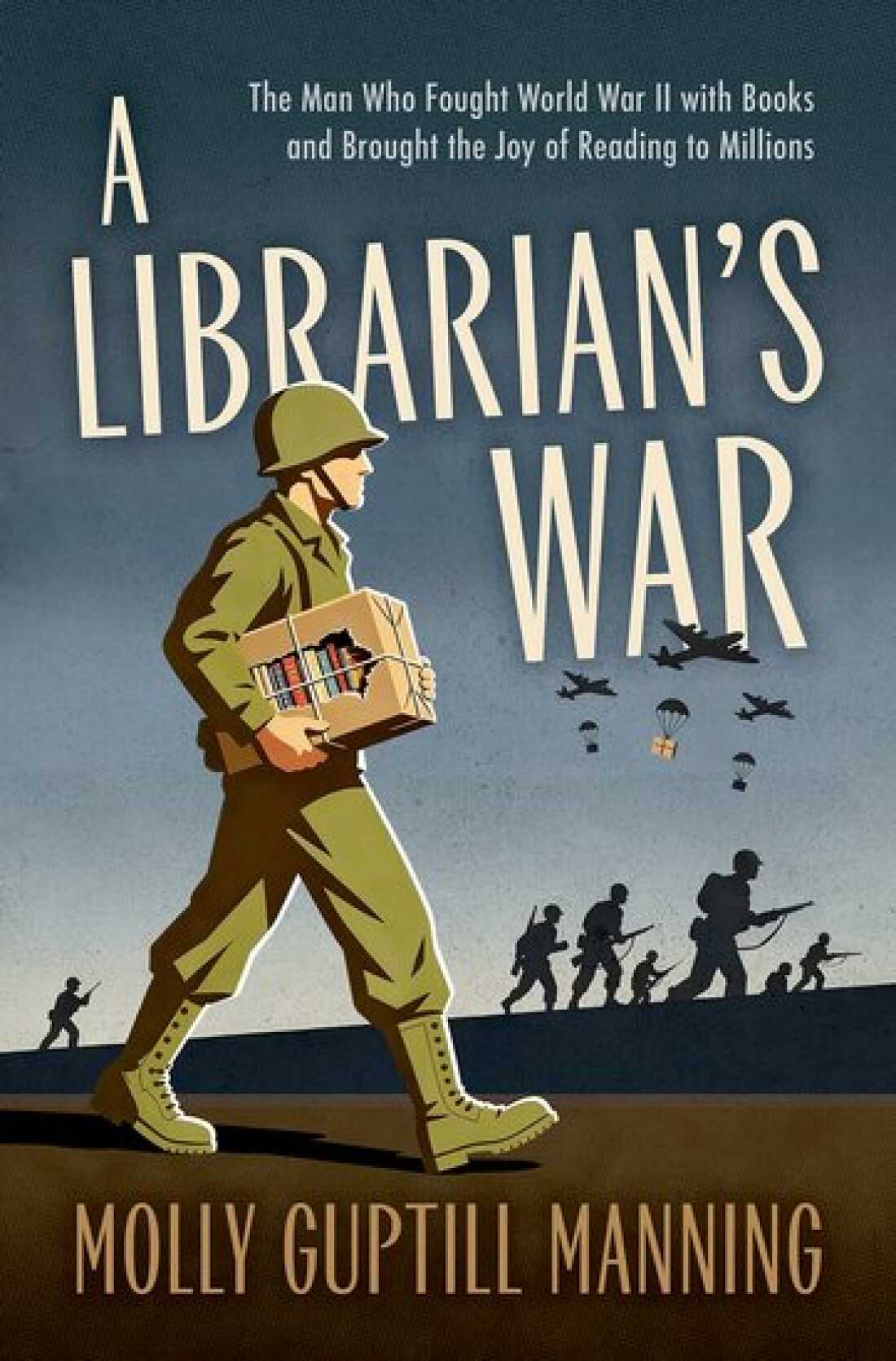
The story’s hero is Colonel Ray Trautman. In her upcoming book, A Librarian’s War, Molly Guptill Manning explains Trautman’s idea to not only distribute books but to produce them, known as Armed Services Editions (ASEs). These were the ‘funny paperbacks’ my father mentioned. Starting in 1943, these pulp-printed ASEs reached U.S. troops, totaling nearly 123 million by 1947’s end. Their largest distribution occurred before D-Day, with soldiers carrying ASEs in landing craft pockets. Betty Smith’s A Tree Grows in Brooklyn became a favorite.
The selection of ASEs wasn’t limited to assumed soldier preferences. While cowboy stories and suspense fiction were prevalent, classics like Moby Dick, Frederick Douglass biographies, and poetry collections also featured. Though predominately authored by white writers, the ASEs sparked controversy. Manning’s book describes attempts to ban books perceived as favorable to President Roosevelt during the 1944 election. Editorials and reader letters condemned these attempts. Even troops protested. Manning cites one soldier’s letter warning, ‘Hitler began by burning books he disagreed with.’ In the end, freedom to read prevailed.
For those eager to learn more, other resources include Manning’s earlier book, When Books Went to War, and the Library of Congress publication, Books in Action. In 2012, I visited the Library of Congress exploring how The Great Gatsby, released in 1925, rose from obscurity to popularity after F. Scott Fitzgerald’s 1940 death. A key factor was its ASE release in 1945, with 155,000 copies distributed. The Library of Congress preserves the only complete ASE collection. Access is available to anyone. Holding one of these books is a poignant reminder of their historical significance.