Border Wall Plans Threaten Big Bend’s Heritage and Economy
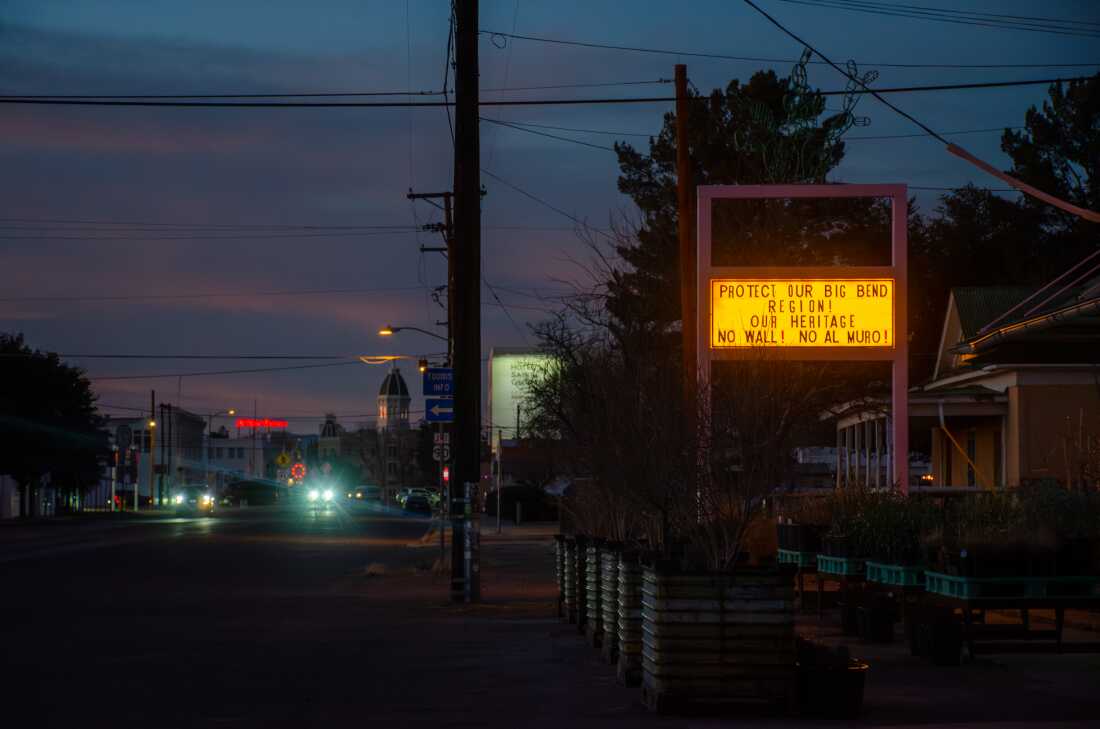
Across the Big Bend, anti-wall signs and messages are emerging in homes and businesses, reflecting widespread opposition. In Marfa, Texas, a liquor store displays some of these messages. In Redford, Texas, Joe Pineda contemplates the future of his land near the Rio Grande. As he drives across the family property, he points to areas where he runs cattle, grows alfalfa, and mentions the family cemetery dating back to the 1800s.
Pineda pauses by the river and reflects on the moments shared with his children and the heritage of the land. He expresses apprehension about the potential loss of these experiences. The government has sent his family a letter warning of eminent domain proceedings if they refuse to sell the land or provide access for border wall construction.
Pineda notes, “It’s the time that you can enjoy with your kids, and enjoy the heritage of your land… and it’s going to be taken.”
The government looks to construct approximately 175 miles of border barrier in the Big Bend area. This untouched region faces the prospect of 30-foot-tall steel fences, patrol roads, flood lighting, and surveillance systems. Pineda’s concerns echo through the community, affecting his decision to avoid running cattle this year due to wall-related worries.
There is an unusual coalition of local residents opposing the wall, citing environmental and economic concerns. They fear the impact on dark skies and wildlife, including Black bears and bighorn sheep. The tourism industry, generating $56 million, faces risks that Pineda says could devastate the local economy.
Pineda warns, “They’re killing our economy with this wall.”
U.S. Customs and Border Protection claims efforts will be made to minimize environmental impacts during construction. However, historical data show that fewer people cross into the U.S. via this rugged terrain. In the first three months of this year, the Big Bend Sector recorded 498 apprehensions, a fraction compared to other regions.
Brewster County Sheriff Ronny Dodson, a local with 26 years of service, opposes a wall in this area. He advocates for monitoring and manpower over physical barriers.
Dodson states, “We agree with border security… but not here.”
The area includes Big Bend National Park. Although initial plans included a border wall, the current proposal focuses on vehicle barriers and patrol roads, which still concerns archaeologists due to environmental sensitivity.
Local leaders, including Dodson, have reached out to President Trump and Texas Gov. Greg Abbott, hoping to redirect funds allocated for border barriers. One mile of the barrier costs over $17 million, drawing attention from Hudspeth County Judge Joanna Mackenzie, who considers the money’s potential for generational change.
Mackenzie questions, “Tell us is this gonna happen and we don’t have a say in it. What can we do?”
Some landowners are preparing to file lawsuits against the government to halt construction. Raymond Skiles, a wildlife biologist and local resident, describes receiving a map showing the proposed wall’s path through his land as distressing.
Skiles compares the situation to “taking a knife to the Mona Lisa.”
For Skiles, the wall represents an unwanted memorial to what once was, cutting across the landscape he cherishes. The opposition reflects a mix of personal, economic, and environmental concerns tied to the region’s unique character.