California’s High-Speed Rail Project Faces Challenges and Political Debates
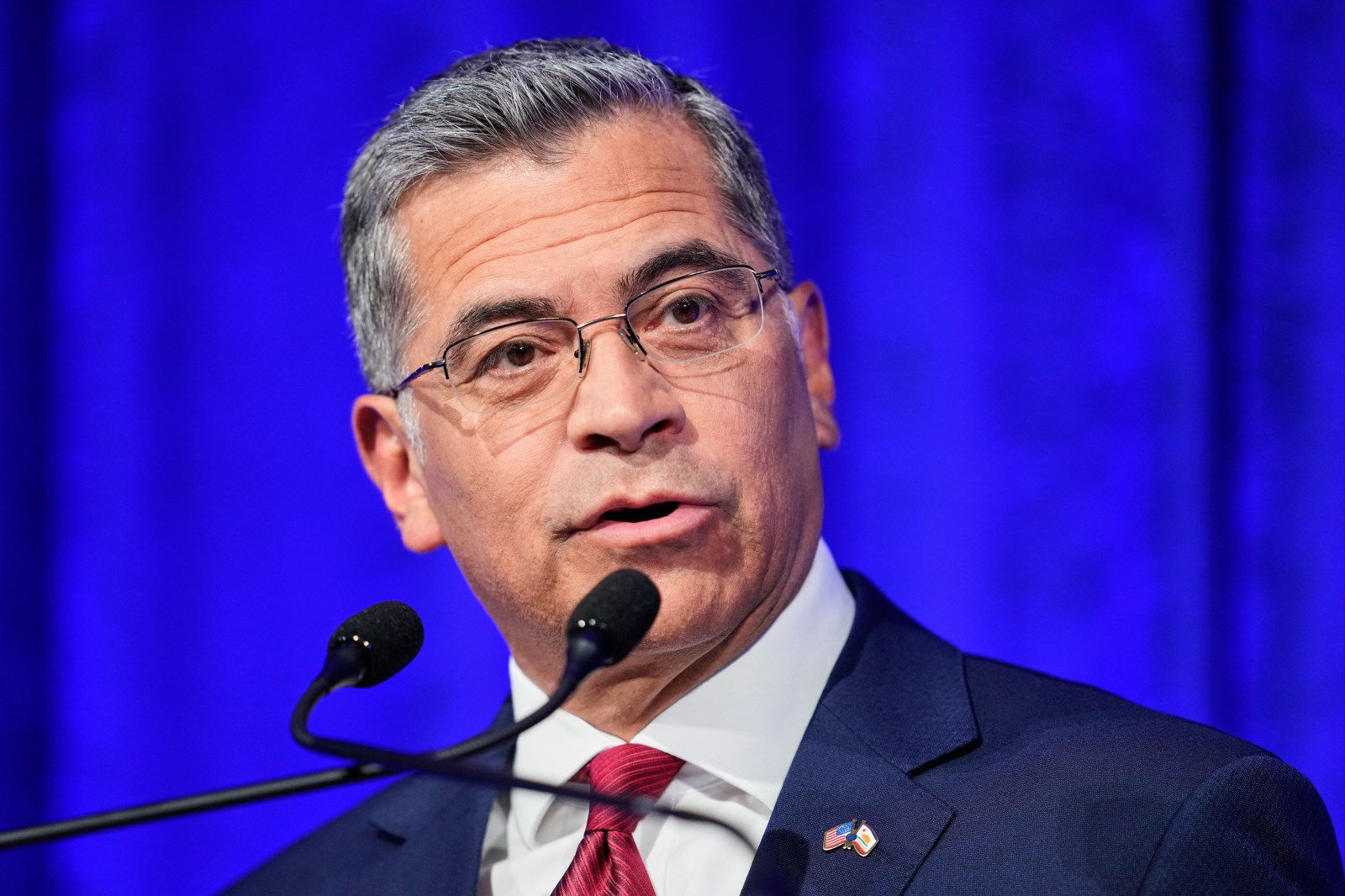
California Gubernatorial Candidate’s Bold Move
In the final stretch before voters head to the polls, Xavier Becerra, a candidate for California governor, has announced plans to revise the state’s high-speed rail project to ensure timely completion. This bullet train aims to connect Los Angeles and San Francisco, reaching speeds up to 220 miles per hour. However, it faces delays, funding issues, and soaring costs. Originally approved by voters in 2008 with an expected 2020 completion, the project remains incomplete, with the latest estimates predicting a 2038 finish.
Becerra, a Democrat with a background as Secretary of Health and Human Services in the Biden administration and as California Attorney General, is resolute in meeting this timeline. Addressing a crowd in Fresno, Becerra stated, “I’m going to scrap the current configuration, and I’m going to make sure we finish. But we’ve got to do it on budget and on time.” Despite these assertions, specific strategies for achieving the completion deadline were not disclosed. Newsweek reached out to his campaign for additional comments.
History of Delays and Financial Struggles
Californians narrowly approved Proposition 1A over 17 years ago, which supported using nearly $10 billion in bonds for an 800-mile high-speed rail connecting San Francisco and Los Angeles. Although initially promising, the project’s costs have surged beyond original estimates, with completion delayed by over a decade.
The $10 billion designated through Proposition 1A was soon recognized as a significant underestimation of the required funding. A 2006 estimate had pegged the cost at roughly $45 billion. The project initially gained momentum with the Obama administration’s backing but faced setbacks when President Trump withdrew nearly $1 billion in federal support in 2019 following a conflict with Governor Gavin Newsom.
President Biden reinstated funding with $3.1 billion from the Infrastructure Investment and Jobs Act. However, the project still faced a gap of at least $7 billion needed for a 171-mile segment from Merced to Bakersfield. President Trump later announced additional fund cuts in 2025. California’s lawsuit against these cuts was eventually abandoned due to dwindling federal cooperation.
The project’s escalating costs stem partly from its path through California’s agricultural regions, requiring navigation of complex environmental regulations. According to the High-Speed Rail Authority’s budget for 2024-2025, environmental review expenses exceeded $765 million.
Recent reforms relaxing requirements under the California Environmental Quality Act (CEQA) were praised by Governor Newsom for reducing bureaucracy while maintaining environmental standards. Now, 463 miles of the 494-mile system have passed environmental reviews and are ready for construction, according to the High-Speed Rail Authority.
Views from California’s Political Field
The gubernatorial race includes several Democrats, like Becerra, and two Republicans, all participating in the nonpartisan “jungle” primary on June 2. Polls suggest Republican candidate Steve Hilton leading, though a May poll from Emerson College showed Becerra slightly ahead.
Candidates’ opinions on the rail project generally align with party lines. Democrat Antonio Villaraigosa supports expanding transit rather than canceling the project. Katie Porter expresses skepticism but remains committed to completion. Republican hopefuls express more critical views, with Chad Bianco calling it “a train to nowhere” and Tony Strickland lamenting its mismanagement.
Despite widespread doubt, a POLITICO-Citrin Center-Possibility Lab poll found that nearly two-thirds of Californians (62 percent) would support continued funding for the project even without federal support.