China and North Korea Strengthen Ties Amid Global Tensions
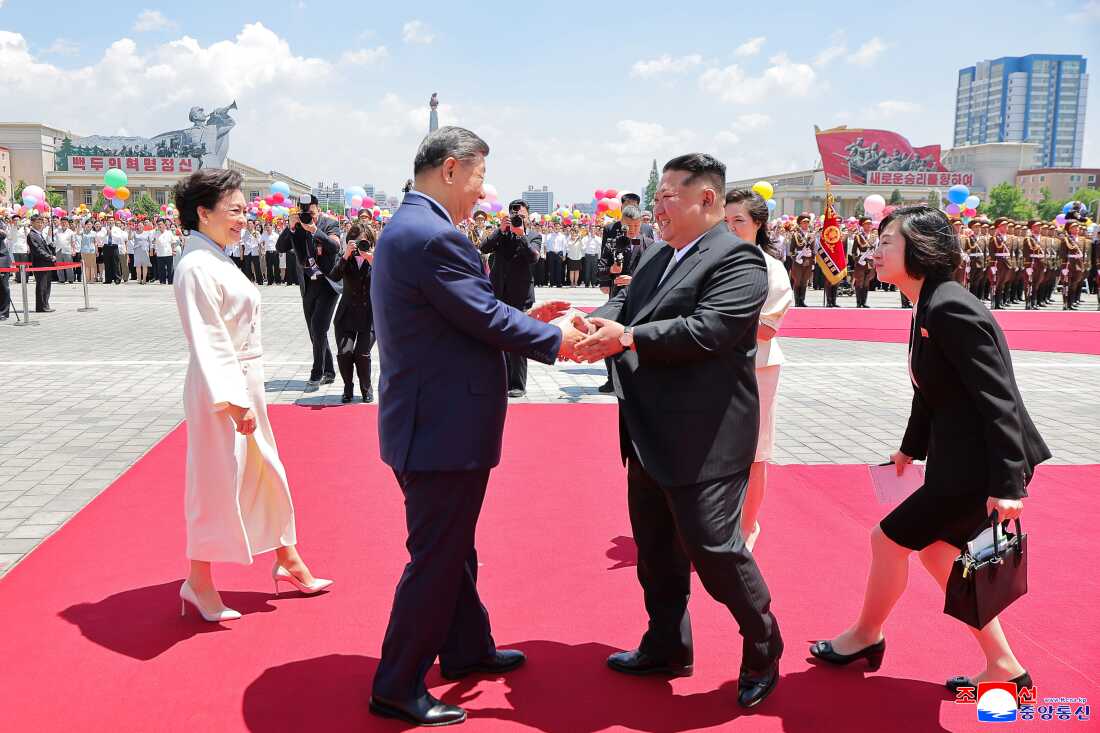
The leaders of China and North Korea met in Pyongyang to reaffirm their alliance and discuss strategic cooperation. This visit marked President Xi Jinping’s first trip to North Korea in nearly seven years and followed his meeting with President Trump in Beijing. Although the U.S. administration claimed a mutual goal of North Korean denuclearization, Beijing did not publicly confirm this.
Xi Jinping’s focus was on China’s commitment to shared interests and strategic preservation with North Korea. Chinese state media emphasized this stance. Meanwhile, Kim Jong Un described the alliance with China as North Korea’s primary strategic focus. This indicates Kim’s attempt to balance ties with both China and Russia.
China’s silence on North Korea’s nuclear program aligns with Kim’s recent efforts to assert his nation’s status as a nuclear power. North Korea showcased a new nuclear bomb fuel plant, with Kim planning to expand the nuclear arsenal. The U.S. claims a shared denuclearization goal with China, but Beijing has not corroborated this. Kim’s sister also dismissed such U.S. claims as false.
Tong Zhao, a senior fellow at the Carnegie Endowment for International Peace, notes China’s priority shift. He states that China seems to accept North Korea as a nuclear state to improve bilateral relations, despite potential repercussions affecting U.S. alliances in the region.
Expanding Alliances Beyond Korea
Both China and North Korea aim to broaden their alliance beyond the Korean Peninsula. Decorated streets in Pyongyang reflect this strengthened relationship. Previously, China and Russia supported North Korean denuclearization, but recent geopolitical changes have altered their stance. Russia’s invasion of Ukraine brought North Korea closer to Russia, including military support.
China and Russia have moved away from past approaches to North Korea, focusing more on opposing U.S. policies. Xi and Kim’s discussions suggest ambitions beyond current engagements. North Korea’s future involvement in regional issues like Taiwan might be on the agenda. The two countries plan to increase exchanges, including military cooperation.
Alliances and Strategic Flexibility
North Korea and China share aspirations to contribute to a ‘fair international order’, using rhetoric common in China and Russia’s critiques of the U.S.-led global order. However, Seong-hyon Lee from Harvard’s Asia Center suggests such alliances are more transactional than institutional.
Nonetheless, alliances are not solely limited to China and North Korea. The U.S. and South Korea are discussing alliance updates, focusing on South Korea’s military taking a leading role against North Korea, with U.S. forces concentrating on China.