Colombian Presidential Runoff: A Nation Divided
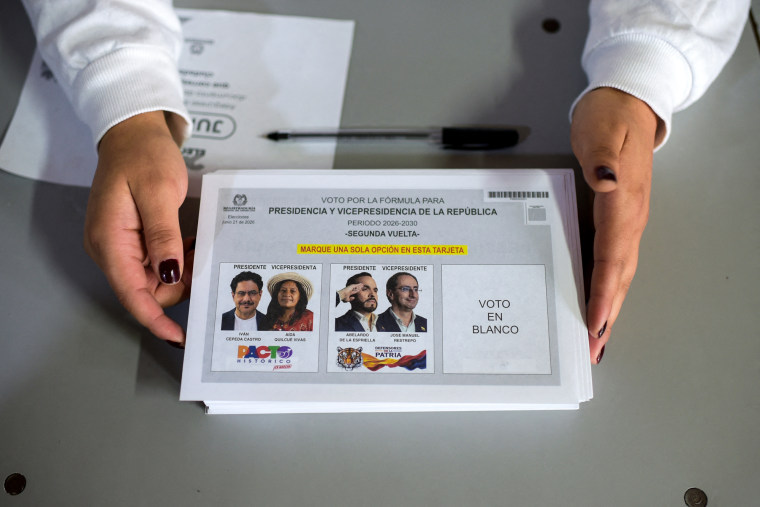
Bogotá, Colombia — A divided electorate faces a significant decision in Colombia as the presidential runoff approaches. On Sunday, voters will select between progressive Iván Cepeda and conservative outsider Abelardo de la Espriella. Both candidates confront fears of renewed internal conflicts.
Cepeda, a lawmaker connected to outgoing President Gustavo Petro’s political movement, represents continuity with Petro’s policies. His opponent, de la Espriella, is a businessman and lawyer endorsed by U.S. President Donald Trump, advocating a strong-arm approach to security.
Colombians endured decades of violence marked by car bombs, kidnappings, and displacements. Both candidates aim to prevent such turmoil. De la Espriella’s strategy includes aggressive crime control, while Cepeda seeks dialogue with illegal armed groups, despite previous efforts failing.
Different solutions for health system challenges, public debt, and corruption further characterize the candidates’ platforms.
As the runoff nears, citizens express concerns about extreme polarization. John Manrique, a Bogotá lawyer, noted the intensity of divisions and worries about post-election violence. He urged acceptance of results and sought social consensus regardless of outcome.
Cepeda received 41% of votes in the first round against de la Espriella’s 44%. Petro, without evidence, questioned these results given Cepeda’s previous poll leads.
This election occurs a decade after Colombia’s peace pact with FARC, which offered hope of ending cycles of rebellion and government conflict. Yet, violence returned, driven by drug trafficking incentives. Homicides reached 14,780 last year, marking the highest since at least 2015. Among victims was Miguel Uribe, a conservative candidate. Extortions increased to 13,417 cases, doubling 2015 figures.
42 million Colombians are eligible to vote on Sunday. De la Espriella, known as ‘The Tiger,’ vows to tackle crime severely and build mega-prisons inspired by Salvadoran President Nayib Bukele’s policies. Meanwhile, Cepeda intends to pursue Petro’s ‘total peace’ plan, negotiating with guerrillas and gangs. This strategy saw progress recently as an armed group of around 100 members began disarming and reintegration.
Yamile Guevara, a retired teacher in Bogotá, argues Petro’s plans require time given the conflict’s six-decade duration. As a Cepeda supporter, she critiques persistent skepticism toward Colombia’s left due to affiliations with rebel groups.
Leading up to the runoff, verbal confrontations and allegations of fraud and intimidation have intensified between candidates. Cepeda accused de la Espriella of paramilitary ties, claims denied by de la Espriella.