Debate Over Historical Interpretation Highlights Tensions on National Celebrations
Efforts to celebrate the nation’s birthday have faced challenges due to internal disputes over how that history should be portrayed. George Orwell warned that those in power could dictate the narrative of the past to justify present actions. This concept explains the current administration’s focus on historical interpretation.
President Trump’s administration has engaged in legal battles over historical displays related to slavery. The National Park Service was ordered, under a presidential directive, to remove panels at the President’s House Site in Philadelphia that addressed George Washington’s use of enslaved people. After a lawsuit from the city, a federal judge initially demanded the panels’ restoration; however, a federal appeals court later allowed their removal.
There are concerns about potential changes at the Smithsonian. An executive order aimed at ‘Restoring Truth and Sanity to American History’ accused the institution of promoting divisive ideologies, suggesting a need for narrative correction. Vice President JD Vance and former aide Lindsey Halligan are tasked with removing perceived biases. Yet, the determination of what is ‘improper ideology’ remains contentious.
Who controls the past controls the future. Who controls the present controls the past.
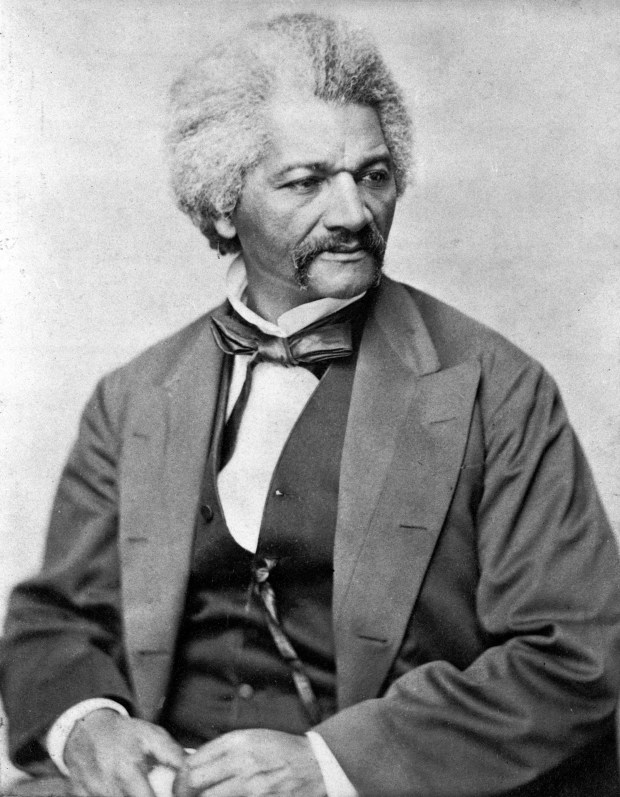
Frederick Douglass’s 1852 speech addressed the irony of celebrating freedom in a nation that allowed slavery. He denounced the hypocrisy of American liberty when Black Americans still lived in bondage. His words criticized a nation that boasted republican ideals but practiced injustice.
The infamous 1857 Supreme Court decision, Dred Scott v. Sandford, underscored this tension by denying citizenship rights to Black people. Frederick Douglass found hope in the nation’s founding documents, particularly the Constitution, viewing it as a promise that could ultimately overcome the institution of slavery.
Even today, debates over the proper interpretation of the Constitution continue. Recent Supreme Court deliberations on birthright citizenship reflect ongoing discussions about the meaning and application of constitutional principles. These dialogues signify the struggle to form a ‘more perfect union,’ despite ideological divisions.
For Americans committed to progress, the Fourth of July reflects both a celebration of freedom and a recognition of the nation’s challenges. As Martin Luther King Jr. envisioned, there is potential for improvement, anchored in the nation’s founding aspirations.