Developments in Lindsay Clancy’s Murder Trial
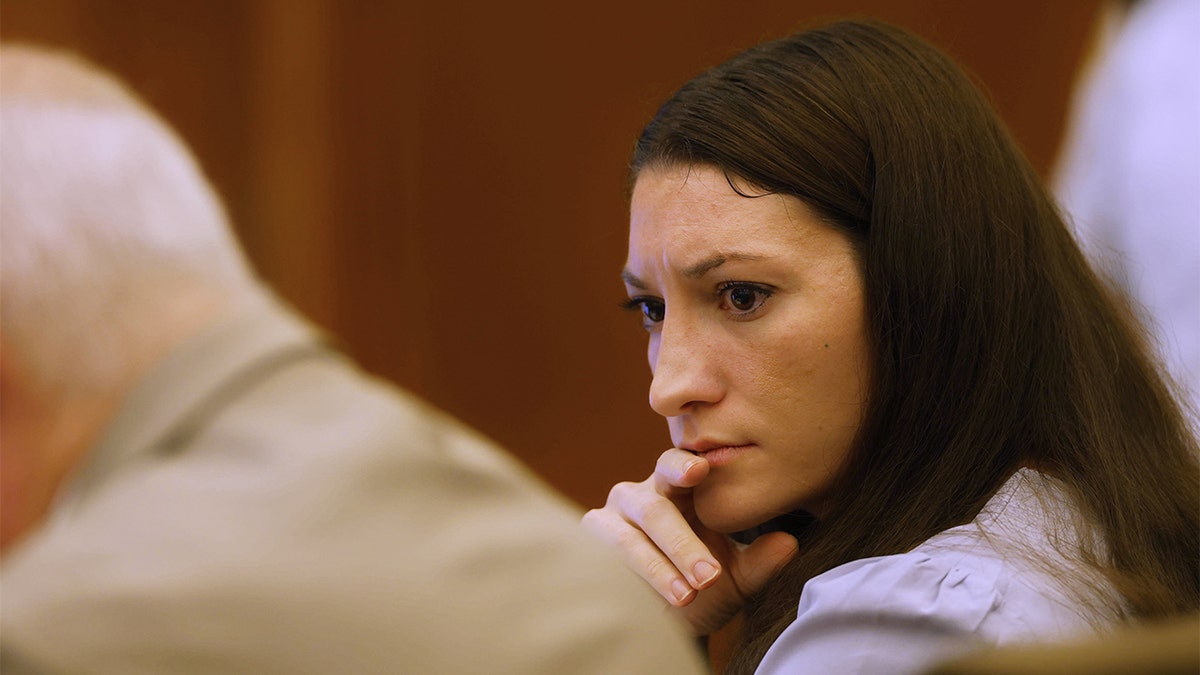
Lindsay Clancy spoke directly in court on Tuesday, repeatedly answering, “Yes, Your Honor,” as she agreed to allow prosecutors to treat certain forensic facts as established. This agreement came before a state police trooper testified that no usable fingerprints were recovered from a knife or three exercise bands.
The trial focuses on whether Clancy was criminally responsible for the deaths of her three children within their Duxbury home. Before the jury entered, Judge William Sullivan asked Clancy about a stipulation involving certain evidence.
“You understand that by signing the stipulation, the Commonwealth does not have to prove these certain facts contained in the stipulation,” said Sullivan.
“Yes, Your Honor,” Clancy replied. When asked if anyone had coerced her into accepting the agreement, Clancy responded, “No, Your Honor.” Sullivan determined Clancy was competent and that she entered the stipulation “knowingly, intelligently, voluntarily, and willingly.”
Defense attorney Kevin Reddington explained the agreement would prevent prosecutors from calling several witnesses merely to establish the chain of custody for blood, bodily fluids, exercise bands, and DNA evidence.
“We have not been contesting the government’s case in chief,” Reddington stated.
The stipulation does not equate to a guilty plea or an admission of criminal responsibility for the deaths of Cora, 5, Dawson, 3, and Callan, 8 months.
Margaret McLean, a former criminal prosecutor and law professor at Boston College’s Carroll School of Management, noted that the agreement allows the defense to pivot jurors’ attention from repetitive forensic testimony to Clancy’s mental state.
“The legal strategy is to steer the jury’s focus away from the horrific nature of the acts and toward the issue of criminal intent, or mens rea,” McLean stated.
She emphasized Clancy’s responses should not reflect her mental state on January 24, 2023.
“She sounded rational and understands her actions. However, the Commonwealth must prove she was sane beyond a reasonable doubt at the time of the crimes,” McLean explained.
Massachusetts State Police Trooper Jonathan O’Loughlin later testified on examining a knife and three exercise bands collected from the home. He noted the knife displayed an area of friction-ridge impression, but it could not be used for identification.
“There were not enough characteristics for comparison,” O’Loughlin said, adding that the impression held “no value.” The exercise bands showed no impressions suitable for comparison.
Defense attorney Reddington confirmed the lack of fingerprints following O’Loughlin’s testimony.
“Correct,” O’Loughlin affirmed.
O’Loughlin pointed out that fingerprints are “very fragile” and can be affected by an object’s texture, environmental conditions, movement, grip strength, and whether a surface was wiped.
McLean mentioned the absence of identifiable prints might lead jurors to wonder if gloves were used or items wiped, suggesting planning. The defense can argue jurors must not “speculate on something not in evidence.”
“They can use their common sense during deliberations, but they cannot speculate on things not in evidence,” McLean concluded.