Egyptian President Seeks Parliament Approval for Military Aid to Saudi Arabia
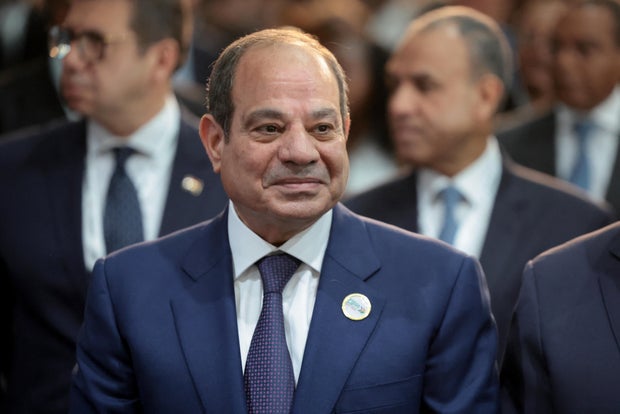
Egyptian President Abdel Fattah al-Sisi has requested that the country’s Parliament authorize military support for Saudi Arabia due to increasing attacks by Yemen’s Iran-backed Houthi rebels. These attacks have targeted key Saudi infrastructure like airports and oil facilities. Al-Sisi emphasized that Egypt’s involvement would be strictly defensive and contingent upon a request from Saudi Arabia.
During a recent military graduation ceremony, al-Sisi stated, “Egypt will take any measures requested by Saudi Arabia to protect and defend it.” Egypt’s Constitution requires the president to consult the National Defense Council and receive approval from two-thirds of the Parliament before deploying troops for combat missions abroad.
Al-Sisi led a National Defense Council meeting, which discussed the recent “grave escalations” and “unacceptable attacks” against Saudi Arabia. The council committed to providing “all necessary and possible forms of support” to secure Saudi Arabia’s safety, stability, and resources.
Historically, Egypt has avoided military conflicts in the region, focusing instead on diplomatic solutions. Some view this as one of al-Sisi’s significant achievements. However, Samir Ragheb, a retired army brigadier and political analyst, urges that it is time for Egypt to act on its longstanding commitments to regional security.
“Egypt has repeatedly pledged to support the security of the Gulf states,” Ragheb said, emphasizing that the current situation requires action rather than mere statements.
He highlighted that the Gulf states have invested heavily in Egypt, implying a moral obligation for Egypt to reciprocate. Parliament was scheduled to vote on the authorization but postponed the decision until next Monday. The Egyptian Social Democratic Party advised its members to abstain from voting, citing insufficient details about the mission’s scope, costs, and risks.
Ragheb warned of the growing threat not only from the Houthis but also from other forces like Iran and Iraqi militias. He pointed out that Egypt could lose regional influence if it fails to act. “To be a regional player, you must play a role,” he asserted.
The declining U.S. intervention against the Houthis has created a vacuum that Ragheb suggests Egypt should help fill. Additionally, other regional powers, such as Turkey and Pakistan, have signed the Mecca Accords with Saudi Arabia, forming a joint defense agreement.
“Even before Saudi Arabia asked for Egyptian support, the Mecca Accords was a death certificate for the idea of relying on America for any form of defense,” Ragheb remarked.