Enhanced Games: A Controversial Approach to Sports and Doping
In Las Vegas, Shania Collins faced an unexpected opportunity. Having previously been approached about performance-enhancing drugs, she consulted her parents, who both work for the Drug Enforcement Administration (DEA). Collins had experienced some success as a sprinter with contracts from major brands like Puma and Adidas. However, by 2024, her career stagnated, prompting her to retire at 29 to follow a lengthy screening process to join the DEA.
Last fall, organizers of a new sports startup, the Enhanced Games, contacted her with a lucrative offer. The one-day event encouraged doping in sports such as sprinting, swimming, and weightlifting. The financial incentives were substantial, offering six-figure salaries and up to $250,000 in prize money, with a $1 million reward for world records.
Collins initially expressed concern about potential drug effects and risks to her DEA career. After discussing with her parents, who asked pertinent questions about legality and safety, she felt reassured. Her commitment to the Enhanced Games included a two-month period of supervised drug intake, experiencing minor side effects like acne and hair growth.
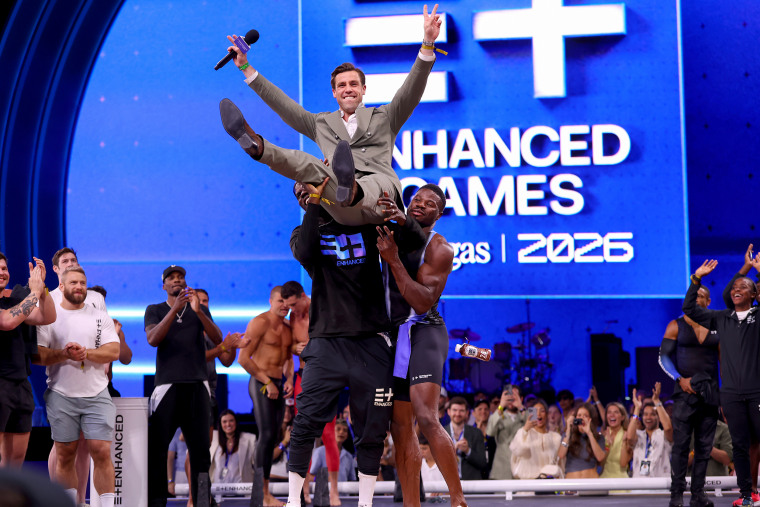
On Sunday, Collins was one of 42 athletes participating in the inaugural Enhanced Games event in Las Vegas. The competition stirred discussion within the sporting community. Both proponents and opponents expressed strong beliefs about their moral, ethical, and scientific standpoints. Enhanced Games’ chief executive, Max Martin, emphasized allowing athletes to tap into their potential, while Christian Angermayer, co-founder and executive chairman, stated that ignoring the data makes banning performance-enhancing drugs unethical.
However, anti-doping advocates, including the International Olympic Committee and the World Anti-Doping Agency (WADA), criticized the event’s message as dangerous. They accused organizers of prioritizing supplement sales over athletes’ health. WADA compared the games to a Roman circus where lives are sacrificed for amusement, questioning its value.
The event held additional controversy due to its open encouragement of doping. Ben Proud, a prominent swimmer, felt conflicted about potentially opening the door to doping among peers. Reece Prescod indicated that half might consider doping if assured of not getting caught. Even weightlifting coach Ivan Rojas admitted enhancement has long been part of the sport, only now practiced openly in a controlled environment.
Of the 42 athletes, 38 chose to participate in doping, monitored by a medical board. This board conducted clinical trials over two months to study the drugs’ effects. Among doping athletes, 91% used testosterone, 79% human growth hormone, 62% stimulants such as Adderall, and 41% opted for EPO, commonly used by cyclists seeking endurance enhancement. Athletes are subject to a five-year observation period following the event.
Many athletes found the transition to using PEDs daunting yet transformative. British swimmer Ben Proud recounted his fearful first injection, marking a distinct change in himself from his clean past. Others, like James Magnussen, faced challenges with newfound muscle mass affecting performance. Sprinter Mike Bryan adapted to changes in his physique, while swimmer Isabella Arcila considered future fertility concerns, which led the organizers to offer egg freezing services.
Financial incentives played a crucial role in attracting athletes to the Enhanced Games. U.S. sprinter Marvin Bracy-Williams, who faced a doping ban, joined Enhanced, enticed by the lucrative offer. In Olympic sports, financial gains are often limited, with sponsorship deals contingent on performance. Greek swimmer Kristian Gkolomeev amassed $1 million after breaking a world record at a private Enhanced event.
Within the Enhanced Games, even non-doping athletes like Hunter Armstrong sought opportunities without risking eligibility in sanctioned meets. He walked away with $375,000 for a win, despite potential backlash. Enhanced faced legal challenges, suing World Aquatics for restricting athlete recruitment. Whether these financial opportunities outweigh eligibility consequences remains debated by athletes.
The event relied on venture capital, backed by figures like Peter Thiel and Donald Trump Jr., aiming to transform sports through enhancing athlete performance with supplements. Enhanced marketed products like testosterone injections, sermorelin, and GLP-1s to the public, differentiating between athletes’ protocols and available customer products. Concern arose about unmedically supervised replication of athlete methods, with a requirement for consultations prior to prescriptions.
Cody Miller, Olympic gold medalist, emphasized transparency when advising youth swimmers. He regarded PEDs suitable for older athletes, providing faster recovery during training, opposed for teenagers, given their inherent recovery capacity. Miller, like many participating, returned from retirement, earning substantial sums despite being past prime competition years.
The inaugural Enhanced Games event took place in a stadium between the Vegas Strip and a casino hotel pool, with $50 million construction costs. Exclusive access was granted, excluding ticket sales, providing luxury amenities including beverages and gourmet food. The event appeared curated for media engagement and outside perception.
Organizers aimed for monumental achievements, yet track victories belonged to non-doping competitors. Fred Kerley and Tristan Evelyn showcased clean athletic abilities despite doping counterparts. Evelyn emphasized skill beyond chemistry, promoting interest in the games. Collins, despite second-place, celebrated with the substantial financial reward exceeding prior career earnings.
In swimming, the advantage offered by banned suits complicated assessing PED benefits. Emily Barclay’s performance in the 50-meter freestyle was noteworthy. Enhanced CEO Martin declared success reflected through personal milestones and online impact, seeking global reach and record-setting performances.