Exploring Direct-to-Device Satellite Services for Rural Connectivity
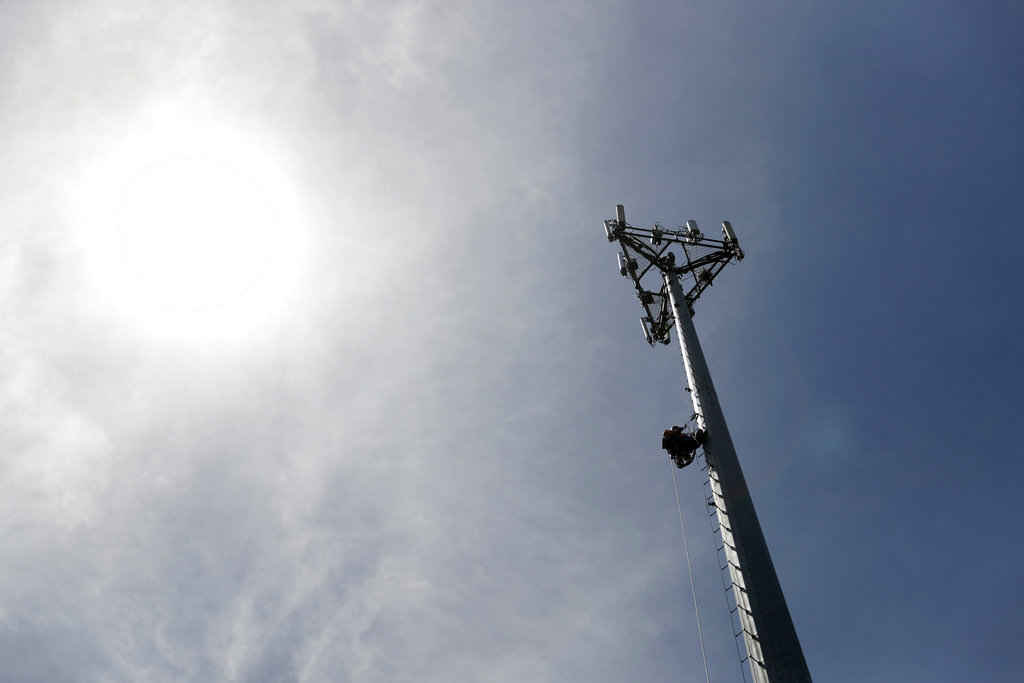
Nick Blase from True North Management Services ascended a cell phone tower for maintenance in High Ridge, Mo. on May 22, 2017. A recent report from the Federal Communications Commission (FCC) highlights a significant issue within America’s cellular networks: comprehensive coverage for nearly everyone, yet not everywhere. Although 95% of the U.S. population can access 5G service from at least one provider, only 69% of roadways and 39% of land receive such coverage. In rural regions, these figures drop to 60% and 38% respectively.
The rural-mobile gap isn’t about obtaining broadband at home; it’s about maintaining connectivity while moving or during critical activities such as farming or firefighting. Building additional cell towers has been the traditional approach, but extending networks to all remote locations isn’t economically sound. The FCC has authorized a plan to allocate up to $9 billion to bridge remaining gaps in 5G networks.
Instead of viewing every dead zone as requiring physical construction, satellites offer a viable alternative for covering challenging and costly regions. Direct-to-device satellite services enable standard mobile phones to connect directly to satellites when towers are unavailable, positioning satellites as cell towers in orbit. This service does not necessitate satellite-specific phones or equipment.
Major carriers like T-Mobile, AT&T, and Verizon are integrating satellites into their networks. T-Mobile, for instance, provides access through Starlink, which some plans cover, or costs $10 monthly for other customers. All three carriers plan a joint venture to broaden direct-to-device coverage and streamline access for satellite operators.
While direct-to-device services can’t replace terrestrial 5G due to limited capacity, initial services will concentrate on messaging, emergencies, and low-bandwidth applications. Enhanced voice and data services are under development. Basic connectivity in previously inaccessible areas can greatly enhance safety by enabling emergency calls or notifying loved ones.
To swiftly and economically implement such capabilities, focus on the FCC’s 5G Fund for Rural America. Originally part of the 2010 National Broadband Plan, this fund offers up to $9 billion over 10 years to provide mobile services in high-cost locations. Current criteria require recipients to offer standard 5G speeds, which satellite services cannot yet match.
Prior to committing to long-term conventional construction, the FCC should establish a direct-to-device tier. Providers could bid to offer basic coverage in areas towers can’t reach economically, in turn allowing competition to determine the most effective service delivery.
The FCC might ask providers to propose the lowest subsidy necessary to offer satellite coverage without additional charges to underserved areas. Providers would receive support contingent on fulfilling criteria concerning availability, reliability, emergency services, and handsets’ compatibility.
This move aligns with the Communications Act’s objective to ensure rural services are reasonably comparable to urban offerings in terms of accessibility and cost. Certain disparities in service and pricing are permissible if they uphold affordability and responsible Universal Service Fund management.
Clear allocation of resources is crucial; investing vast amounts in extending terrestrial networks across difficult terrains would deplete funds from more viable locations. Unaddressed, the rural divide persists, charging those in dead zones extra for essential connectivity.
Current FCC rules mandate rural services to reflect urban pricing strategies. Extending these guidelines to subsidized satellite services aligns with evolving universal-service policies, accommodating technological and economic shifts without introducing new price regulations.
With direct-to-device technology, the essential last cell tower for bridging the rural gap may now be stationed in space, leveraging federal resources meant for remote connectivity where markets fall short.
Blair Levin is a former FCC chief of staff overseeing the 2010 National Broadband Plan. Larry Downes co-authored notable works on innovation.
© 2026 Nexstar Media Inc. All rights reserved. Unauthorized use prohibited.