Future Changes in College Football Structure Looming
The landscape of college football is undergoing significant shifts as institutions and conferences strategize on revenue generation. The realignment frenzy originated with schools like USC and UCLA, who were financially outpaced by peers in the Big Ten and SEC. The potential expansion of the College Football Playoff remains a hot topic; many believe increased games and teams could enhance profitability.
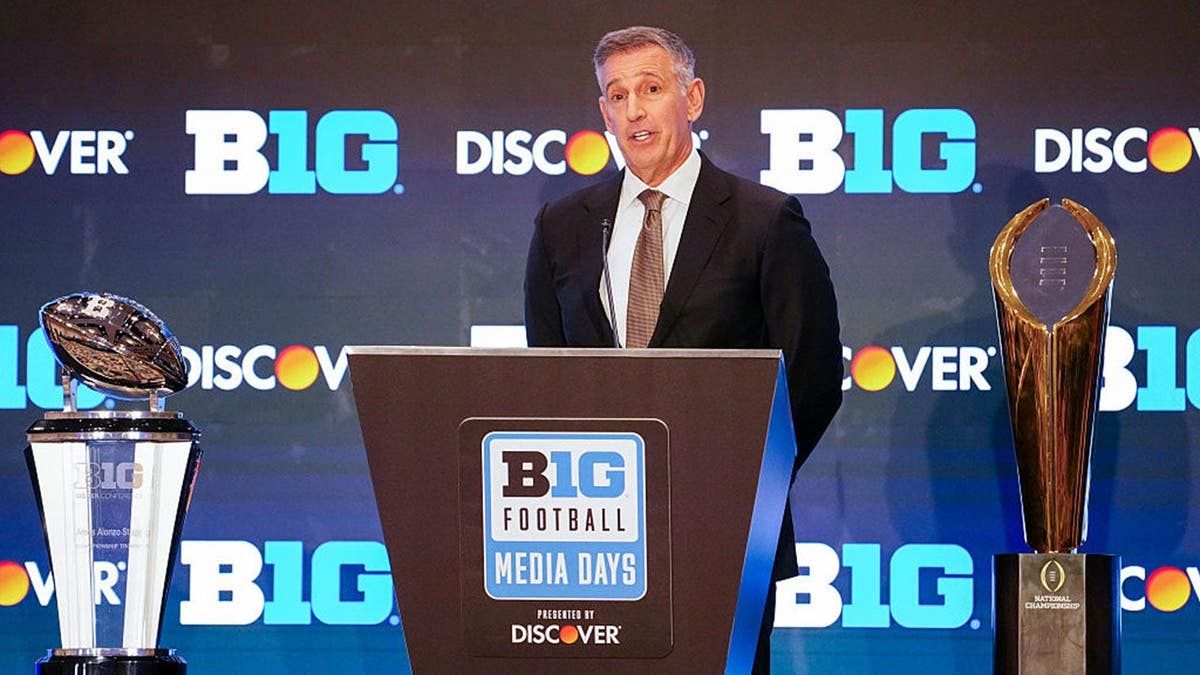
More profound is the discourse surrounding the NCAA’s role and the current framework of college football. Tony Petitti, the Big Ten Commissioner, emphasized these topics at the 2025 Big Ten Football Media Days in Las Vegas.
Some are advocating for the Power Four conferences to exit the NCAA and establish a separate league. Such a league would operate with a structure distinct from the current setup. Kirk Herbstreit, a well-known figure in college football, addressed this in early 2026, proposing a collective bargaining agreement (CBA) between players and conferences in a new organization.
Referring to this potential shift, Herbstreit said in an interview with Front Office Sports, “I think the Power Four needs to break away. Create their own world, create their own governing body. Allow the Group of Four to create their own world. Allow them to have their own playoff. Much like FCS and Division II and III. Just create a new level, which would be the Power Four. Let’s create a new governing body, let’s put a commissioner. If we need to unionize the players, to allow them to create a CBA to avoid the antitrust laws, make the rules, come to an agreement like the NFL does on both sides.”
Suggestions have arisen for the Big Ten and SEC, being the top-performing conferences, to form their unique agreement. Surprisingly, Jamie Pollard, Athletic Director at Iowa State, a significant Big 12 program, expressed openness to this division.
Addressing reporters, Pollard stated, “Let them break away. We should break away from them. Let them go, but they have to go in all their sports and see how fun it is to play baseball, softball and track when it’s just the 20 of you. That’s what I think we should do, but I’m one person and that’s probably a little more draconian.”
“That’s how I feel about it. Like, let’s quit talking about it. Quit threatening. Go do it. But if you’re going to do it, you don’t get to just do it in football and then keep all your other sports with us. No, take them all. See how fun it is,” Pollard added, highlighting the tensions between the leading superconferences and remaining Power Four members.
While Greg Sankey, SEC Commissioner, addressed these dynamics at the SEC Media Days, the broader conversation centers on the necessity and dependency among conferences. Pollard’s viewpoint, hinting at interdependence, underscores that both the Big Ten and SEC, and conferences like the Big 12 and ACC, offer substantial value to college sports.
The proposition of a complete breakaway by the Big Ten and SEC is dramatic. Yet, the notion of the Power Four separating from the NCAA seems increasingly plausible. The evolving scenario suggests substantial changes are forthcoming in college football.