Growing Healthcare Costs Burden American Households
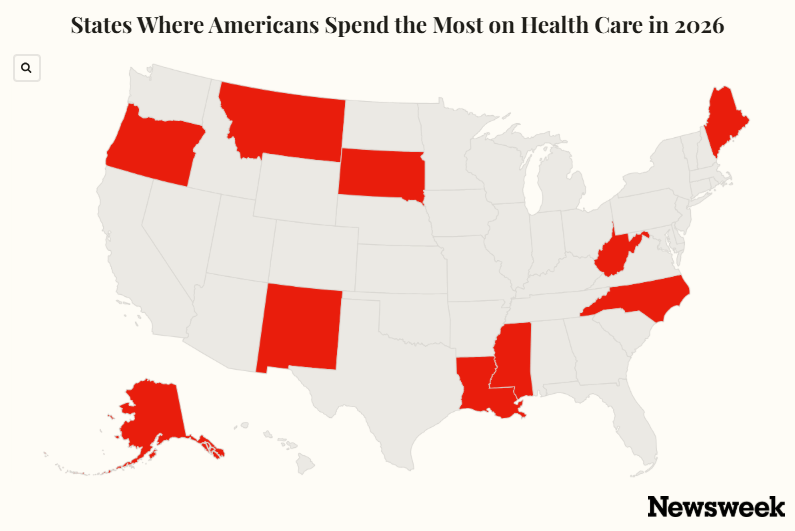
Americans face a rising challenge as a growing portion of their income is devoted to healthcare. Costs have been climbing steadily over the last two decades. A recent report from WalletHub reveals significant differences in the financial burden of healthcare across states.
State-by-State Comparison
The WalletHub report highlights that residents in certain states spend over 10% of their income on healthcare. In contrast, others spend nearly half that. Nationwide, average annual out-of-pocket healthcare spending increased from $811 to $1,514 over 20 years, outpacing inflation. This trend puts additional strain on household budgets.
Why Rising Costs Matter
As healthcare expenses rise, many Americans face tough financial decisions. Some delay or forgo necessary care due to costs. Even in states with relatively lower healthcare prices, incomes often fall short of meeting financial needs. Broader inflation affecting housing and food further compounds this strain.
Understanding the Report
The report ranked all 50 states based on the percentage of median household income spent on essential medical services and medications. Here are the top states where healthcare spending consumes significant income:
- Alaska — 10.08%
- Oregon — 9.32%
- Maine — 9.30%
- Mississippi — 9.18%
- West Virginia — 9.14%
- New Mexico — 9.07%
- North Carolina — 8.78%
- Montana — 8.62%
- South Dakota — 8.60%
- Louisiana — 8.13%
Conversely, the states with the lowest healthcare spending as a share of income include:
- Utah — 5.11%
- Virginia — 5.62%
- California — 5.64%
- New Jersey — 5.81%
- Nevada — 5.87%
Factors Influencing Healthcare Costs
High healthcare spending is not always linked to lower incomes. Often, high costs for medical services are a major factor. According to WalletHub analyst Chip Lupo, even states with lower average healthcare prices can pose challenges when resident incomes do not keep pace with inflation.
Alaska: Topping the list, residents spend about 10.1% of their income on healthcare. High doctor and medication costs contribute, even though the state’s median income ranks high nationally.
Oregon: Second on the list, with healthcare costs consuming 9.3% of median income. This stems from high service prices, not necessarily low wages.
Maine: Ranking third, residents face a cost burden due to high medical prices and lower-than-average earnings.
How the Rankings Were Determined
The WalletHub report assessed five key medical spending components across states:
- Doctor visits
- Dentist visits
- Optometrist visits
- Prescription costs for common medications
The combined costs were compared to each state’s median household income to gauge the financial impact. Data collection occurred in April, sourced from the Council for Community and Economic Research and the U.S. Census Bureau. Michael Ryan highlights that while averages are informative, they often mask extreme financial burdens on households.
Strategies to Reduce Healthcare Costs
Location can heavily influence healthcare costs, but individuals have ways to cut expenses. Maintaining health insurance and using preventive care can help manage long-term spending. Finance experts advise building emergency funds and using tax-advantaged savings accounts.
Alex Beene notes that limited healthcare facilities in some states reduce competition and increase travel distances, adding to costs. Insurance coverage factors into budgets, but is only part of the picture when planning for healthcare expenses.
Future Considerations
Increasing disparities in healthcare affordability may prompt policy attention as costs continue rising. Without changes in pricing, insurance, or income growth, individuals in high-cost states risk spending more of their income on essential care.
Kevin Thompson suggests that healthcare inflation extends beyond insurance premiums, permeating the entire system and affecting consumers. Addressing these systemic issues remains critical for reducing the financial burden on American households.