Japan’s Tactical Football Strategy and Its Implications
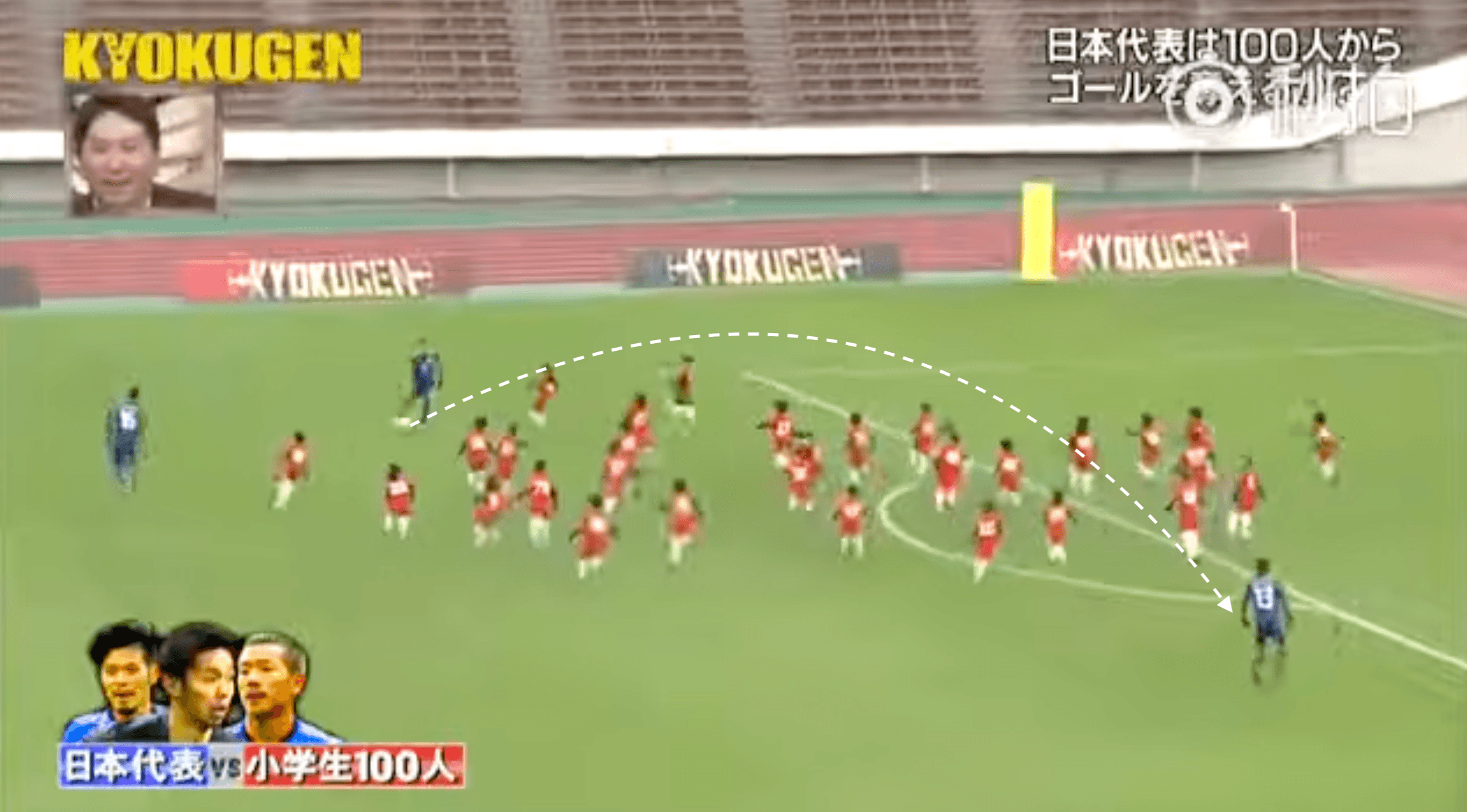
Social media users may remember a viral video featuring Japan’s national football players, Hotaru Yamaguchi, Hiroshi Kiyotake, and Yosuke Ideguchi, as they faced off against 100 schoolchildren on a football field. This humorous scenario showcases the players’ ability to perform precise passes amid overwhelming odds. Their technique hinges on drawing the schoolchildren toward the ball, then swiftly shifting the play to an unmarked area.
Japan employs a similar strategy in professional matches. Their 3-4-3 formation extends into a five-man front during possession. This setup enables them to find unmarked players who can exploit openings in the opponent’s defense. The concept is akin to facing 100 rivals, although a match typically involves only 10 outfield players.
Japan’s wing-backs exhibit versatility. Unlike dedicated late-runner wing-backs like Daniel Munoz or Denzel Dumfries, Japan’s Ritsu Doan and Keito Nakamura can shift play inside. Doan is left-footed playing on the right and Nakamura is right-footed on the left, allowing them to shoot or deliver angled passes.
A remarkable example occurred during Japan’s game against Sweden, ending in a 1-1 draw. Daichi Kamada, initially a central midfielder, crossed from the left for Yukinari Sugawara. Although Sweden cleared the ball, Ao Tanaka immediately switched play to Kamada, who attempted a volley but hit the goalkeeper.
Japan often positions extra players at the far post, capitalizing on late play switches. This strategy seems promising in their upcoming match against Brazil, whose defense shows vulnerabilities, particularly at full-back. Danilo, at 35, lacks the agility typical of Brazilian defenders, while Douglas Santos hasn’t excelled.
Brazil’s center defense remains strong with Marquinhos and Gabriel. However, overcoming them by shifting play past the flanks could be effective. Brazil might struggle tactically, facing Japan’s players on the far side unless they adapt their formation. Previous opponents, like the Netherlands, used additional players to reinforce their defense.
Which Brazilian players could adjust their roles? Could Casemiro replicate Frenkie de Jong’s midfield drop? Will Rayan, inexperienced, adjust to defensive duties? Coach Carlo Ancelotti’s response to these challenges remains uncertain.
This match holds significance beyond the tournament, as it reflects the global landscape of football. Nations from Western Europe and South America dominate, but Japan emerges as a potential force with tactical and technical assets. Though never victorious in a World Cup knockout, defeating Brazil might change their trajectory. Japan’s strategy could be pivotal in overcoming Brazil.