Lawsuits Challenge Illinois’ New End-of-Life Law
A lawsuit was filed in federal court challenging a new Illinois law that permits doctors to prescribe medication to terminally ill patients, allowing them to end their own lives. The law, called the End-of-Life Options for Terminally Ill Patients Act, faces opposition from two disabled patients, a doctor, and several rights organizations. These groups claim that the law disrupts long-standing protections for patients by altering the ethical obligation of doctors to do no harm.
The suit lists Democratic Governor JB Pritzker, the Illinois Department of Public Health, and its director, Dr. Sameer Vohra, as defendants. According to the plaintiffs, the law violates federal laws such as the Americans with Disabilities Act and the Affordable Care Act. They argue that it also breaches their equal protection rights under the 14th Amendment. A similar lawsuit was brought against New York state officials, as New York’s medical-aid-in-dying law was about to take effect.
The Illinois lawsuit asserts that the law redefines the doctor-patient relationship, replacing patients’ historical right to hold caregivers accountable for a do-no-harm duty with a new standard that permits prescribing lethal medication for assisted suicide. It claims that the law is an unguarded experiment with no adequate legal framework to prevent errors, potentially evolving from a right to die to a duty to die for those with costly disabilities.
The lawsuit emphasizes that individuals with significant disabilities may become vulnerable to pressure from insurers and healthcare providers to conclude their lives prematurely. The Illinois Department of Public Health declined to comment on the lawsuit, while the governor’s office did not respond to inquiries.
Governor Pritzker signed the End-of-Life Options for Terminally Ill Patients Act last year, which sparked a heated debate over allowing terminally ill patients to ingest life-ending prescription drugs. Illinois joined other states and Washington, D.C., in offering medical assistance in dying. Pritzker asserted that the law would assist terminally ill individuals in avoiding unnecessary pain at life’s end.
Under the act, patients at least 18 years old and Illinois residents can request oral medication prescriptions from their physicians, which must be documented. They must also provide a written request and make a second oral request five days after the initial one. The written request must be witnessed by two individuals who confirm the patient is acting voluntarily and is mentally sound. Various limitations restrict who can serve as witnesses. Physicians are required to inform patients about all end-of-life care options.
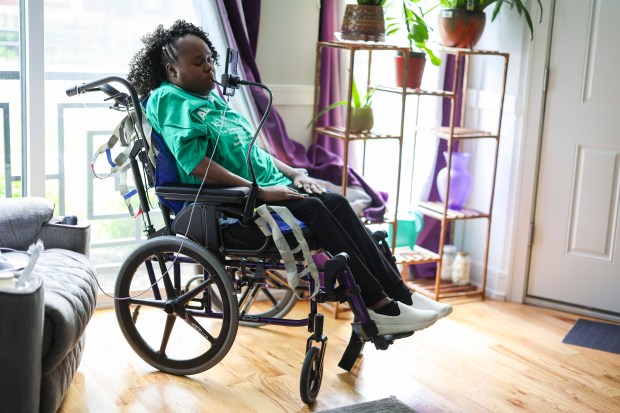
Among the plaintiffs are organizations like the United Spinal Association and the National Council on Independent Living. Individuals like Ebony Payne and Pam Heavens, both disabled, joined the suit. Payne, a quadriplegic, has faced multiple life-threatening hospitalizations recently. Heavens, born with cerebral palsy, now requires a motorized wheelchair due to her increasing support needs. Another plaintiff, Dr. Nooshig Luz Salvador, works with terminally ill patients and argues that these patients are frequently unprepared for devastating diagnoses and that end-of-life options are inadequately communicated to them.