Potential Conversation Between U.S. and Taiwan Leaders Raises Tensions
Taiwan announced on Thursday that President Lai Ching-te would welcome the opportunity to speak with U.S. President Donald Trump. This conversation would be a historic interaction between the leader of the United States and Taiwan, an island China claims as its territory.
The possibility of such talks remains uncertain. However, any decision could impact U.S.-China relations and influence a significant U.S. arms package for Taiwan. Since 1979, when Washington recognized Beijing over Taipei, no direct dialogue has occurred between U.S. and Taiwan presidents. China views Taiwan as a breakaway province and warns that it may use force to assert control.
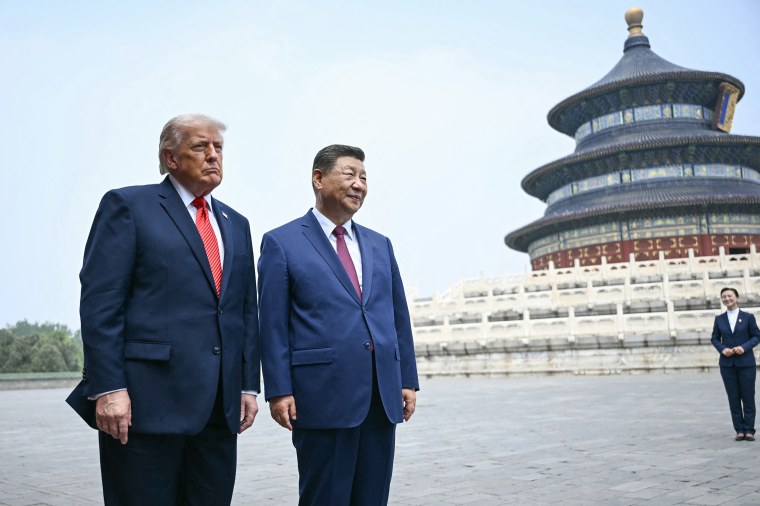
Trump expressed last Wednesday his intention to speak with Lai, a week after hinting at this possibility. This followed his meeting with Chinese President Xi Jinping in Beijing. The last direct contact between U.S. and Taiwan leaders occurred in late 2016, when Trump, then president-elect, spoke with Taiwan’s President Tsai Ing-wen via telephone.
Taiwan’s foreign ministry reaffirmed Lai’s commitment to maintaining stability in the Taiwan Strait and his willingness to discuss regional matters with Trump. Joseph Wu, the secretary-general of Taiwan’s National Security Council, advised a cautious approach, suggesting any progress would be publicly announced.
“If these communications and dialogues can continue to be elevated to higher levels, and if we can maintain a dialogue that contributes to regional peace and stability, this would benefit Taiwan and the broader Indo-Pacific region,” Wu noted.
Taiwan criticized Trump’s reference to the “Taiwan problem,” aligning with Beijing’s narrative. Wu stated Taiwan is not creating tensions; instead, it is China that is causing issues along the first island chain from Japan to the Philippines.
China’s foreign ministry stood firm against official U.S. exchanges with Taiwan, labeling Lai as a separatist. In response, Taipei remains defiant, dismissing Beijing’s sovereignty claims.
Amid these discussions, Trump considers approving a substantial arms sale to Taiwan, potentially worth around $14 billion, as reported by Reuters. The Taiwan Relations Act of 1979 obliges the U.S. to aid Taiwan’s defense, despite lacking formal diplomatic recognition.
U.S. military support, including arms sales to Taiwan, has historically angered Beijing. Taiwan’s Defense Minister Wellington Koo reassured that U.S. policy towards Taiwan has remained consistent, focused on peace and stability in the region, while equipping Taiwan with necessary defensive capabilities.
Koo stated, “Given that U.S. policy toward Taiwan remains unchanged, I think we remain cautiously optimistic about arms purchases.”