Rising Challenges on the Danube Amidst European Tensions
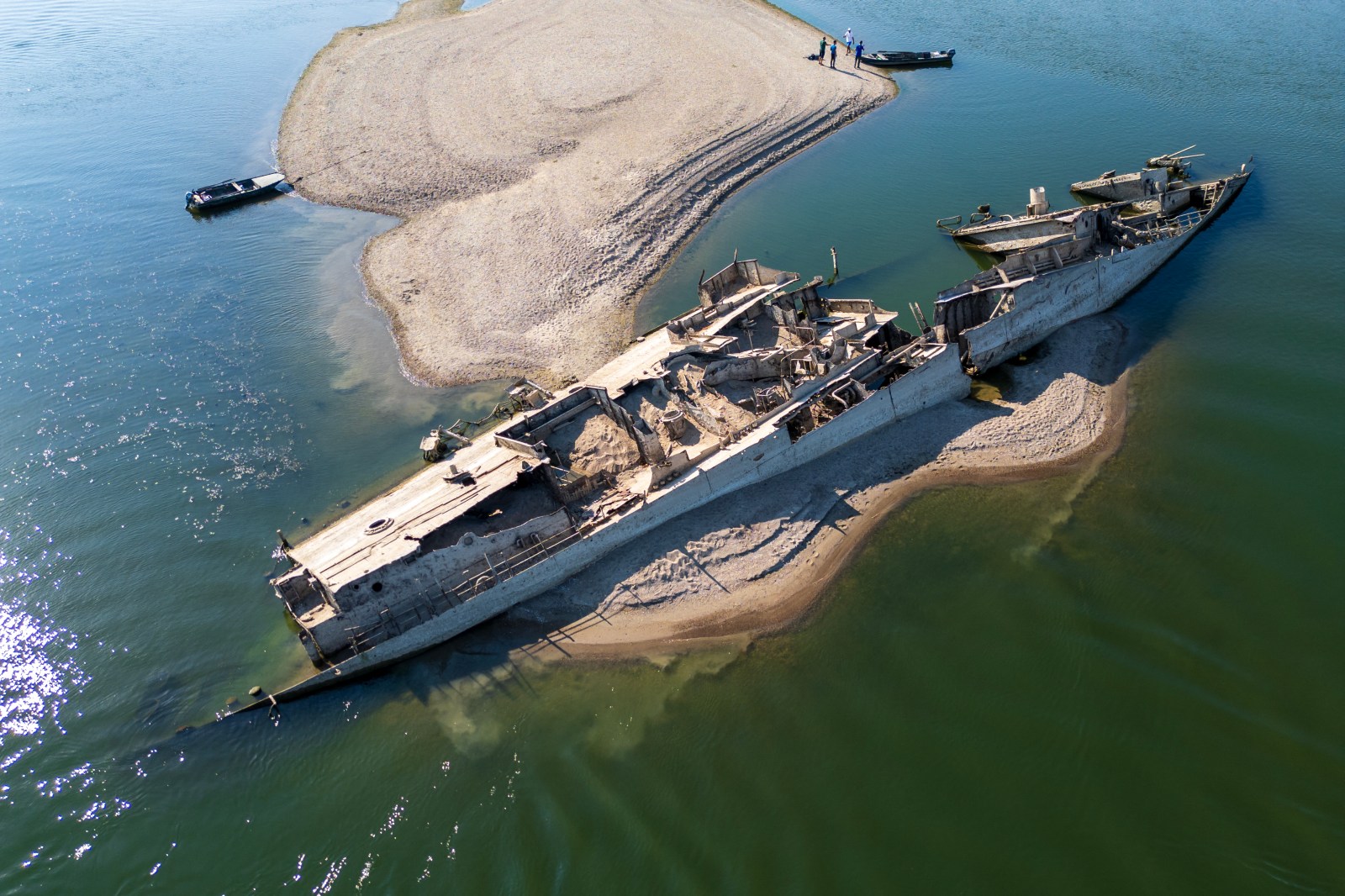
The Danube River, a vital waterway in Eastern Europe, reveals its historic past as prolonged drought exposes the remnants of German warships scuttled during World War II near the Serbian port of Prahovo. These vessels, once sunk to slow the Soviet advance in September 1944, now resurface, highlighting the region’s enduring conflict. In present times, as Russia escalates its assault on Ukraine, the Danube has grown in significance as a strategic route for grain exports when Ukraine’s Black Sea ports become perilous.
The Strain on the Danube
This summer, the river’s viability as an escape route is strained by sluggish flow in Romania, disrupting shipping and power production. Russia intensifies its attacks on Odesa’s ports, a key city in Ukraine’s southwest. In July alone, Ukraine documented numerous attacks on port vessels and infrastructure. On August 9, Russian forces disrupted the land corridor towards Moldova and Romania by striking the Mayaki bridge.
The journey through conflict is compounded by natural challenges, as highlighted by President Putin’s unexpected ally in a hotter, drier Europe.
Extreme weather poses additional challenges as Ukraine strives to maintain operation amidst the conflict. Droughts exacerbate existing vulnerabilities, putting pressure on systems established to bypass disrupted routes.
Historical Patterns and Present Realities
Russia’s ongoing campaign to debilitate Ukraine’s infrastructure has evolved from targeting power systems in 2022 to encompassing gas production, transportation, and more. Significant drone attacks highlight the severity of these efforts. Ukraine adapts by improvising with alternative export routes, showcasing resilience amidst adversity.
Weather’s Impact on Agriculture
Russian narratives seize on Europe’s climate struggles. Anatoly Tikhonov, from the Russian Presidential Academy, commented on Europe’s need for Ukrainian grain amid dwindling export potential. He suggests a competitive scenario where wealthier European buyers vie for supplies alongside poorer nations, portraying Russia as a noncolonial alternative.
When the invasion closed Black Sea ports in 2022, exports shifted to trucks, railways, and Danube ports like Izmail and Reni. These improvised solutions functioned but never fully replaced former capacities. Current Russian actions test these adaptations anew. Amidst disrupted grain exports, Ukrainian Agriculture Minister Taras Vysotskyi warned of significant losses in international markets if disruptions persist.
Power Struggles
Russia’s intensified attacks led Ukraine to lose substantial power capacity in 2024, exacerbated by rising temperatures and increasing demands. Reports from residents illustrate the impact on daily life, as power outages disrupt routines. Ukraine turns to the European grid for electricity, demonstrating its dependence during challenging times.
Hungary’s dependence on the Danube poses additional difficulties, as low water levels at the Paks nuclear plant forced a dramatic reduction in capacity. Romania faces similar challenges at the Cernavodă nuclear site, taking emergency measures to maintain operations.
Fire and Water
Ukraine’s extreme fire season in 2024 illustrated the combined impact of military conflict and adverse weather. Satellite data documented significant burn areas, with fires predominantly occurring during hot, dry spells. War conditions further complicate firefighting efforts, as mines and unexploded ordnance endanger responders.
Water scarcity poses another significant problem. The destruction of the Kakhovka dam and reservoir had far-reaching consequences, hindering irrigation and challenging the cooling capacity for the Zaporizhzhia nuclear plant. The interconnected vulnerabilities emphasize the critical role of water in supporting infrastructure.
Russia’s Climate Vulnerability
Russia is not immune to climate challenges. In 2025, drought and frost devastated crops in Rostov, prompting Moscow to escalate the agricultural crisis to a federal concern. Tikhonov’s essay acknowledges the universal threat posed by extreme weather but highlights an opportunity for Russia to exploit rivals’ vulnerabilities.
This summer, the Danube demonstrates the pressing need for adaptability. As environmental forces impose limitations, Russia’s military strategy continues to threaten Ukraine’s resilience. While the natural elements cannot be controlled, their influence on ongoing conflicts is undeniable.