Southern Voting Rights and Redistricting: A Shifting Landscape
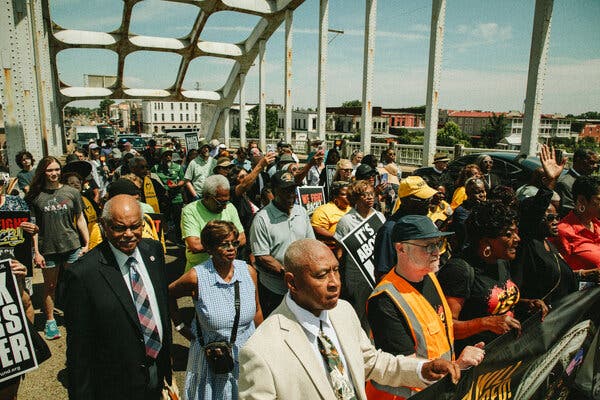
At the beginning of May, individuals from across the United States gathered in Selma, Alabama, to advocate for voters’ rights. The march started at the Tabernacle Baptist Church and concluded beyond the Edmund Pettus Bridge. Participants expressed concern, alongside a sense of solidarity, amid wider political movements. Selma’s symbolic significance provided a resonant backdrop for their efforts.
Republican leaders express optimism as civil rights activists brace for significant challenges ahead. There is confusion among some voters regarding the implications of recent political actions.
The complex political environment in the South reflects redistricting processes initiated by Republican officials. These changes followed a Supreme Court decision that diluted the Voting Rights Act, causing delays in primary elections. A long-standing House member ceased campaigning, while new candidates hastened to participate in upcoming November midterms.
The rapid redrawing of congressional maps may result in profound shifts in the South’s political sphere. The decisions risk further consolidating Republican dominance and placing the prospects of several Black Democratic politicians in jeopardy.
As district lines evolve, debates intensify over the nature of representation in the South. Practical concerns arise about constantly shifting district boundaries, affecting voter intentions and electoral outcomes.
“They literally have created chaos,” remarked Mayor Chaz Molder of Columbia, Tennessee. His home was removed from the district where he was campaigning for Congress when a new map was introduced in early May.
While redistricting efforts are widespread, they are not confined to the South alone, nor solely driven by Republicans. Former President Trump encouraged such strategies prior to the recent Supreme Court verdict. Anticipating challenges to maintaining a slim House majority in the midterms, Texas led last summer with a new map aiming to switch five House seats to Republicans. In response, Democrats in California followed suit, alongside several other states in the ensuing months.
The Supreme Court ruling in late May initiated a frenetic redistricting phase across Southern states. The Voting Rights Act historically shielded districts with significant Black populations, traditionally supporting Black Democrats. The recent ruling triggered extensive changes, affecting long-standing electoral dynamics.