Springfield’s Spring Legislative Session: A Mixed Review
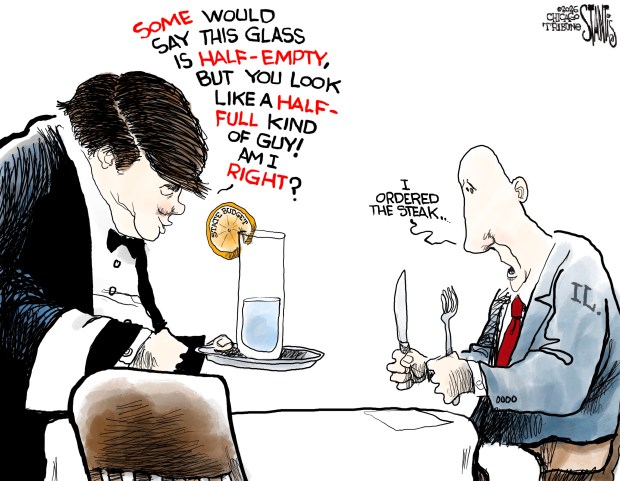
The recent spring legislative session in Springfield provides two contrasting perspectives. One view is one of disappointment, highlighting unfinished business such as the needs of the Chicago Bears, an unresolved energy supply-demand issue, lack of a housing boost, and the general need for making life more affordable in Illinois.
On a positive note, the legislature concluded without introducing major policy setbacks. No new burdensome taxes were imposed on individuals and businesses. Progressive legislators seeking a millionaire’s tax faced temporary defeat. Governor JB Pritzker’s maintenance budget received general support from lawmakers, with some areas improved. Local governments benefited, receiving an additional $60 million from rising income tax revenues, preventing further property tax burdens that stifle local growth.
Although the budget approval process was largely smooth, the session’s overall impression is of a state lacking clear direction. Despite their majority, Democrats showed little leadership, often disagreeing internally over addressing significant state issues. Republicans mostly observed from the sidelines, with Peoria Rep. Ryan Spain applauding Democrats for a more transparent budget process.
Governor Pritzker’s final spring session had limited impact as he prepares for his third term campaign. His goals of keeping the Bears in Illinois and advancing housing developments saw little progress. Efforts to retain the Bears were halted by local and state representatives. Attempts to increase housing stalled over local government concerns about losing zoning authority. Pritzker’s leadership seemed subdued, laying out goals but leaving details to lawmakers.
The session also saw inaction on an impending electricity supply crunch, worsened by energy-intensive developments and past clean-energy laws that phased out critical power sources in northern Illinois. Simple amendments to the 2021 Climate & Equitable Jobs Act, vital for maintaining the power supply and managing electric costs, were ignored by Springfield Democrats.
Despite this, some progress occurred beyond budgetary matters. The budget maintained pension obligations, increased funding for public schools by $350 million, and enacted a ban on cellphones in public-school classrooms. Additionally, regulations on artificial intelligence usage were introduced. A long-overdue licensing process for hemp businesses was approved, targeting the retail sale of THC-infused products.
On affordability, actions were minimal despite initial promises by Pritzker, House Speaker Emanual “Chris” Welch, and Senate President Don Harmon. A scheduled gas tax hike was postponed, saving drivers 1.3 cents per gallon. A one-time $400 payment will help ease the burden for those losing or receiving reduced SNAP benefits, costing the state $70 million.
A few small tax increases, notably on digital ads and social media, aim to cover the maintenance budget costs. However, by Springfield’s Democratic standards, this budget avoided excessive taxation.
The 2026 spring session will likely be remembered for missed opportunities. Increased public interest due to the Bears provided insight into the workings, or lack thereof, of Springfield under dominant Democratic control. Public opinion on these matters remains to be seen.
To share your thoughts, submit a letter of up to 400 words to the editor here.