Supreme Court Rejects Trump’s Birthright Citizenship Order
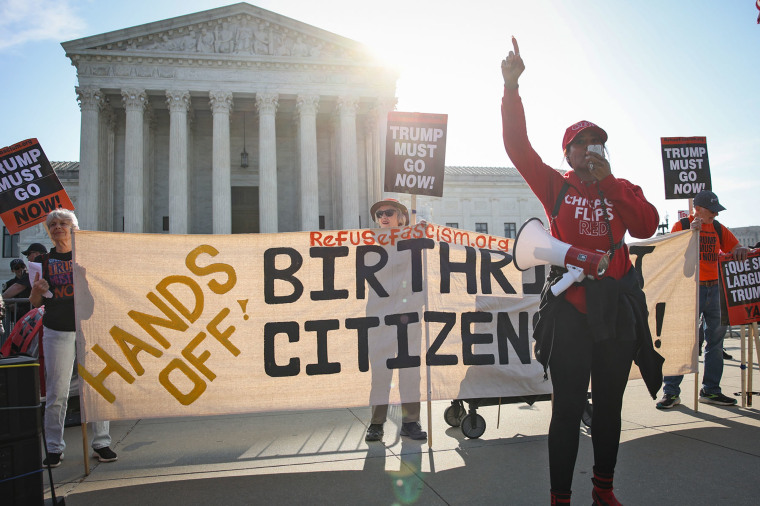
The Supreme Court has blocked President Donald Trump’s contentious executive order aimed at limiting birthright citizenship. This order, introduced on January 20, 2025, was deemed unlawful by a divided 6-3 ruling. The court found that it conflicted with the Constitution’s 14th Amendment, which traditionally grants citizenship to nearly all individuals born on U.S. soil.
Chief Justice John Roberts delivered the majority opinion, emphasizing that the order presented scant evidence supporting a novel interpretation of established law. He highlighted the longstanding definition of citizenship, affirming it as a fundamental right to participate freely in the political community. According to Roberts, the 14th Amendment was intended to ensure rights for all, including former slaves; this commitment continues today.
Justice Brett Kavanaugh, a conservative, agreed that the order violated federal law. However, he did not see it as unconstitutional. Justices Clarence Thomas, Samuel Alito, and Neil Gorsuch dissented, supporting Trump’s executive order.
The proposed order sought to restrict citizenship at birth to individuals with at least one parent who is a U.S. citizen or permanent resident. This would exclude children born to temporary visitors or undocumented immigrants. Despite Trump’s intentions, lower courts quickly blocked the order from effect.
In dissent, Justice Thomas argued the 14th Amendment targeted the rights of formerly enslaved Black individuals, asserting that they deserved citizenship due to their American status and lack of foreign ties. He differentiated this from the children of foreign visitors.
Cecillia Wang, National Legal Director of the American Civil Liberties Union, praised the court’s decision as an affirmation of America’s fundamental promise: birth in the U.S. guarantees citizenship. She noted that a president cannot amend the Constitution through executive commands.
The 14th Amendment’s interpretation has persisted for over a century, with few exceptions like children of diplomats. The court’s decision upholds precedents set in cases such as United States v. Wong Kim Ark, which established citizenship for individuals born in the U.S. to foreign parents. Numerous courts, including the Supreme Court, have consistently ruled against attempts to alter this standard.