The Aftermath of the U.S.-Iran Conflict: Assessing Global Implications
President Trump announced the conclusion of a 106-day conflict with Iran, signing an agreement at Versailles that signified the war’s official end. During the conflict’s duration, various U.S. officials, including Secretary of State Marco Rubio, declared it over several times, but the reality differed from those assertions.
The administration presented the war as a decisive victory, citing diminished Iranian military capabilities and a weakened economy. Iran’s government, however, remains intact, continuing its nuclear endeavors and support for regional terrorist groups. Control was passed on to the former leader’s son, indicating minimal political change.
Despite Trump’s claims that ships could navigate the Strait of Hormuz without tolls, as was the case months before the conflict, the U.S. agreed to release Iranian assets, lift sanctions, and, with partners, pledged at least $300 billion for reconstruction. The war cost the U.S. over $100 billion, while Trump’s reputation suffered as a significant portion of the American public viewed the war negatively.
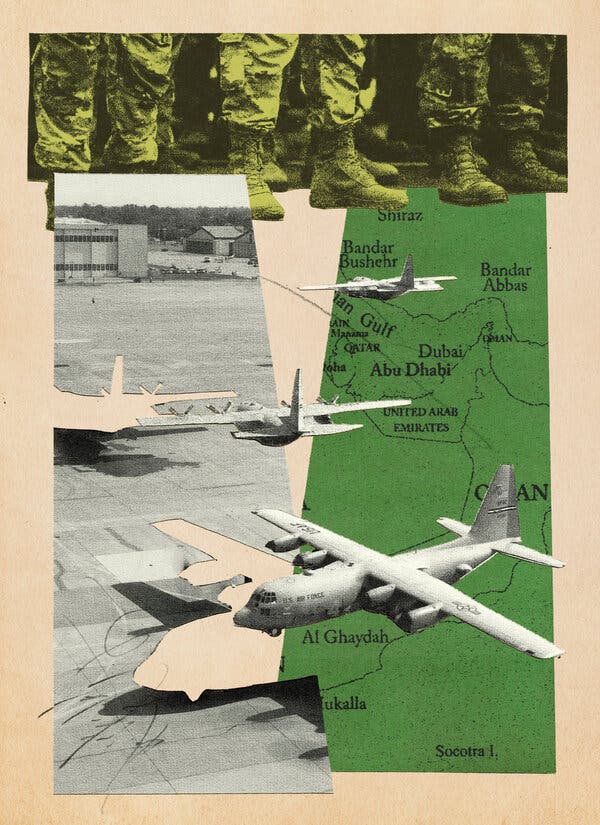
Beyond financial costs, the war stretched to U.S. military bases across the Middle East, critically impacting perceived security assurances for regional allies. Before an Iranian attack, a naval base in Bahrain evacuated hastily, and Qatar’s Al Udeid Air Base’s Combined Air Operations Center allegedly became nonfunctional. Political scientist Vali Nasr from Johns Hopkins University remarked on the effectiveness of the U.S.’s network of bases, metaphorically referring to it as a ‘string of pearls’ encircling Iran. However, their damage revealed nonmonetary consequences of concern.
Globally, at least 51 countries host American military bases, serving as strategic power projection points. They provide economic and military backing to allies. After this war, allied nations reconsider the costs of such alliance. Maryam Al-Kuwari from Qatar University expressed in a policy paper that citizens questioned the value of hosting U.S. military bases. In Bahrain, diplomats sensed growing perceptions, partly spurred by Iranian social media, of American abandonment.
The administration’s conflicting messages on the war’s justification, costs, and outcome highlight a deeper truth than officials acknowledge. These discrepancies illustrate the waning absolute nature of American dominance. For the world, the conclusion of the conflict underscored the illusion of continued American omnipotence.
Historically, the decline of empires accompanied by self-deception, as seen in mixed messaging regarding the cease-fire symbolizes a shift. Narges Bajoghli from Johns Hopkins, specializing in Iran, observed this as part of the U.S. grappling with losing a critical strategic conflict, posing a question of how such a loss is communicated.