The United States’ Struggles in Unilateral Warfare Against Iran
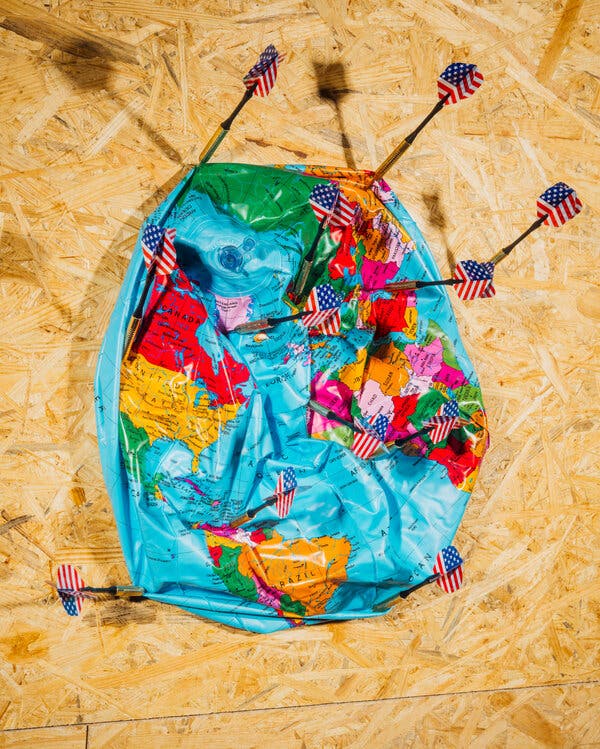
As the conflict in Iran nears a delicate conclusion, many Americans are questioning its outcomes. Despite its geopolitical isolation and economic struggles due to prolonged sanctions, Iran managed to challenge a global superpower like the United States, which has spent $29 billion on the war only to end up in a weaker position.
The primary issue lies in the U.S. strategy. The United States, alongside Israel, aimed to overpower Iran using its military might without seeking approval from the United Nations Security Council. This move rendered the war illegal under international law, alienating traditional allies. Furthermore, President Trump initiated the conflict without regional consultations, endangering local partners. His belief that sheer military force would achieve his goals proved misguided.
“Two can play at that game,” explained Oona A. Hathaway, a professor at Yale University. Iran effectively countered by illegally closing the Strait of Hormuz, threatening ships, launching drone attacks, and firing missiles at neighboring countries. President Trump’s attempt to seek global support was belated, hindering coalition-building efforts.
Multiple nations, including longtime allies of the United States, disassociated themselves from the conflict. Spain denied airspace usage and barred operations at joint U.S.-Spanish bases. France refused to allow overflight for planes carrying U.S. military supplies. Italy and Switzerland limited access as well. Even Britain, known for its close partnership with America, debated and finally agreed to allow U.S. forces to use its bases exclusively for defensive purposes. Prime Minister Keir Starmer asserted, “We are not getting involved in offensive action.”
The U.S. approach highlighted that even a superpower’s influence diminishes when acting unilaterally. This lesson reveals flaws in President Trump’s wider global strategy. While he aims to “make America great again,” he misses the point that America’s greatness stemmed from forging international institutions aligned with its values, thereby attracting other nations to join.
Historically, the United States played a pivotal role in drafting the United Nations Charter. Under Secretary of State Sumner Welles initiated a working group that envisioned a post-World War II peacekeeping body to prevent future conflicts requiring U.S. intervention. The U.N. reflected U.S. principles, including opposition to territorial expansion and renunciation of force. Unfortunately, the Trump administration’s actions in Iran, Venezuela, and the Caribbean have repeatedly violated the charter.