U.S. Vice President’s Role in Nuclear Negotiations with Iran
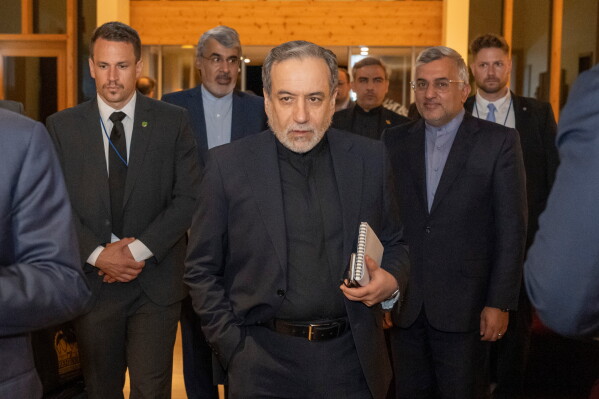
U.S. Vice President JD Vance arrived in Switzerland to initiate discussions with Iranian leaders. These talks aim to limit Iran’s nuclear program and strengthen a temporary agreement to cease hostilities in Iran. Vance and his spouse, Usha Vance, landed at Emmen Air Base near Lucerne early in the morning, as confirmed by his office.
The framework for negotiations was signed last week, starting a 60-day period where top negotiators from the U.S. and Iran seek consensus on technical details. The outcome has significant repercussions for the global economy and security. However, progress faced challenges due to clashes between Israel and Hezbollah in Lebanon, followed by Iran’s military declaration of closing the Strait of Hormuz—a crucial passageway for a substantial portion of the world’s oil and gas trade. Although Vance planned to arrive at the Bürgenstock resort near Lucerne on Friday, delays occurred after intensified fighting in Lebanon and cancellation of the Iranian officials’ plans to attend.
The U.S. Central Command challenged Iran’s claim of shutting the strait, confirming continuous surveillance to ensure uninterrupted movement. Vance assured millions of barrels of oil have passed through the strait in recent days. His travel followed Iranian state TV reports of Tehran’s negotiators arriving in Switzerland, including influential figures like Parliamentary Speaker Mohammad Bagher Qalibaf and Foreign Minister Abbas Araghchi, joined by key personnel from Iran’s central bank and oil sector.
Special envoy Steve Witkoff and Jared Kushner, President Donald Trump’s son-in-law, are already in Switzerland exploring the nuclear talk’s technical intricacies. Pakistan’s Prime Minister Shehbaz Sharif, army chief Field Marshal Asim Munir, and Qatari mediators are also participating. Vance intends to stay briefly, delegating detailed negotiations primarily to Witkoff and Kushner. His involvement has amplified the attention on the vice president amidst his contemplation of a 2028 presidential bid.
Skepticism arises from within Trump’s party, as hard-liners compare the deal unfavorably to a previous arrangement by the Obama administration, which Trump’s GOP criticized as ineffective against Iran’s nuclear pursuits. The agreement with Iranian President Masoud Pezeshkian grants Iran permission to sell oil freely and access currently frozen assets, while requiring Iran to reduce its highly enriched uranium stockpile. The pact permits free passage through the Strait of Hormuz for 60 days without charges but allows potential future fees from Iran.
Trump threatened to impose U.S. tolls on the strait if a deal isn’t reached within 60 days, citing the funds as necessary for ‘services rendered as the Guardian Angel to Middle Eastern nations.’ Adding complexity, neither Israel nor Hezbollah are part of the U.S.-Iran agreement; Israeli Prime Minister Benjamin Netanyahu insists on military presence in southern Lebanon until threats to Israel vanish, whereas Hezbollah demands Israeli withdrawal as a condition for ceasing attacks.
Violence between Israel and Hezbollah post-agreement resulted in 47 fatalities in Lebanon and four dead Israeli soldiers.