Divisive Architectural Icons: U.S. Buildings Loved by Architects
Some of the world’s most iconic buildings elicit strong reactions. While many see them as eyesores, architects appreciate them as bold expressions of design, engineering, and urban identity. From controversial museums to imposing civic structures, many projects highlight the gap between public opinion and professional admiration.
This discussion is part of a broader change in the United States’ approach to architecture. Nearly half of the nation’s 125 million buildings are over 50 years old, according to the American Institute of Architects (AIA). Recent trends show a growing focus on adapting existing structures. In 2024, adaptive reuse led to the creation of around 25,000 apartments from converted buildings, marking a 50% increase compared to the previous year, as reported by RentCafe.
The AIA emphasizes that reusing buildings can cut 50 to 75 percent of carbon emissions linked to new construction. This also reduces embodied carbon from materials and transport. Architects are increasingly focusing on renewing older structures. Gordon Gill, known for designing the world’s tallest building, highlighted the significance of refreshing older buildings to maintain their relevance.
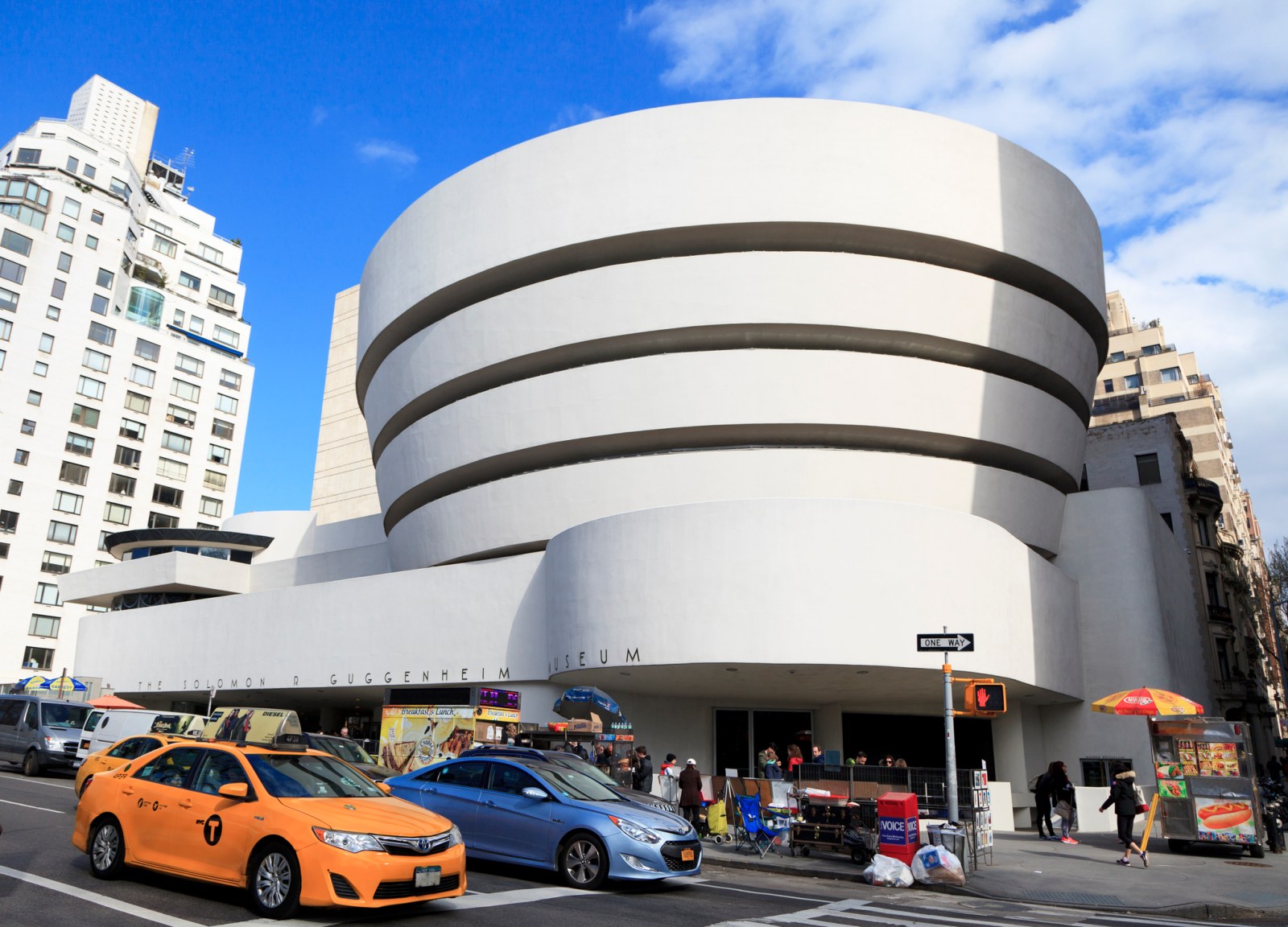
The Guggenheim, New York City
Frank Lloyd Wright’s Guggenheim Museum is well-known but not universally appreciated. Its stark contrast with neighboring Fifth Avenue buildings and its unconventional form can be divisive. Architect Monika Smith from DLR Group called it “controversial and not always appreciated” for its contrasting appearance and challenging curved walls.
However, Smith praised its radical rethinking of museum design, saying it “reimagined the visitor experience,” transforming traditional gallery layouts into a continuous journey influenced by circulation and natural light. She described the Guggenheim as “a memorable experience” and “a sculptural object,” marking it as a distinctive city landmark.
Marin County Civic Center, California
Another Frank Lloyd Wright design, the Marin County Civic Center, divides opinion. Architect and engineer Charles Bloszies described it as “well-known and somewhat polarizing.” While appreciating its unique design, he acknowledges others’ different views, recalling someone who called it the “Martian Embassy.” Nevertheless, he noted its architectural importance, describing it as “quintessential Frank Lloyd Wright Prairie School architecture transplanted to the rolling hills of northern California.” He added that, like the Guggenheim, “it fits its context surprisingly well.”
Boston City Hall, Massachusetts
Miles Smith from Graphisoft told Newsweek that Boston City Hall is a building he loves, though many in the public do not. Efforts to demolish it face resistance from the design community, with Smith calling it “a fantastic brutalist structure with a rich backstory.” He even described it as his “favorite building in the world.”
Architect Marc Gordon noted that the divide reflects broader attitudes toward brutalism. He said the style is “generally disliked by the general public” because of its exposed concrete and stark forms, often seen as “anti-humanistic.” However, architects appreciate its “honest expression of materiality” and “simplistic monumental geometric form.”
Norfolk Scope Arena, Virginia
The Norfolk Scope Arena is another building locals criticize, yet architects commend. Mel Price from Work Program Architects remarked that many Norfolk locals “don’t like it” but sees it as “an iconic landmark” defining the skyline.
Thom White, also from Work Program Architects, echoed her admiration, calling the building “majestic” and “an icon.” He highlighted its engineering significance as “the world’s largest reinforced thin-shell concrete dome,” and compared its designer to Santiago Calatrava. Although White acknowledged its aging infrastructure, he emphasized that updates are feasible. Demolishing the arena, he warned, would mean losing “a unique landmark” and “a prominent architectural gem” that makes Norfolk’s skyline “instantly recognizable.”
Woodhull Hospital, New York City
In Brooklyn, Woodhull Hospital’s architecture is contested. Gordon noted it is “generally reviled by the public,” with its design seen as “a dystopian vision of a future modernist architectural typology.” Its Cor-Ten steel façade gives a “foreboding, almost sinister appearance.”
Despite the public’s view, Gordon admires the hospital for its “sheer size and monumentality.” He also praised its “functional geometric forms,” “machine-like industrial aesthetic,” and “structural expressionism,” considering the building a daring, if misunderstood, design.