A Mother’s Journey Through Her Daughter’s Congenital Cataracts Diagnosis
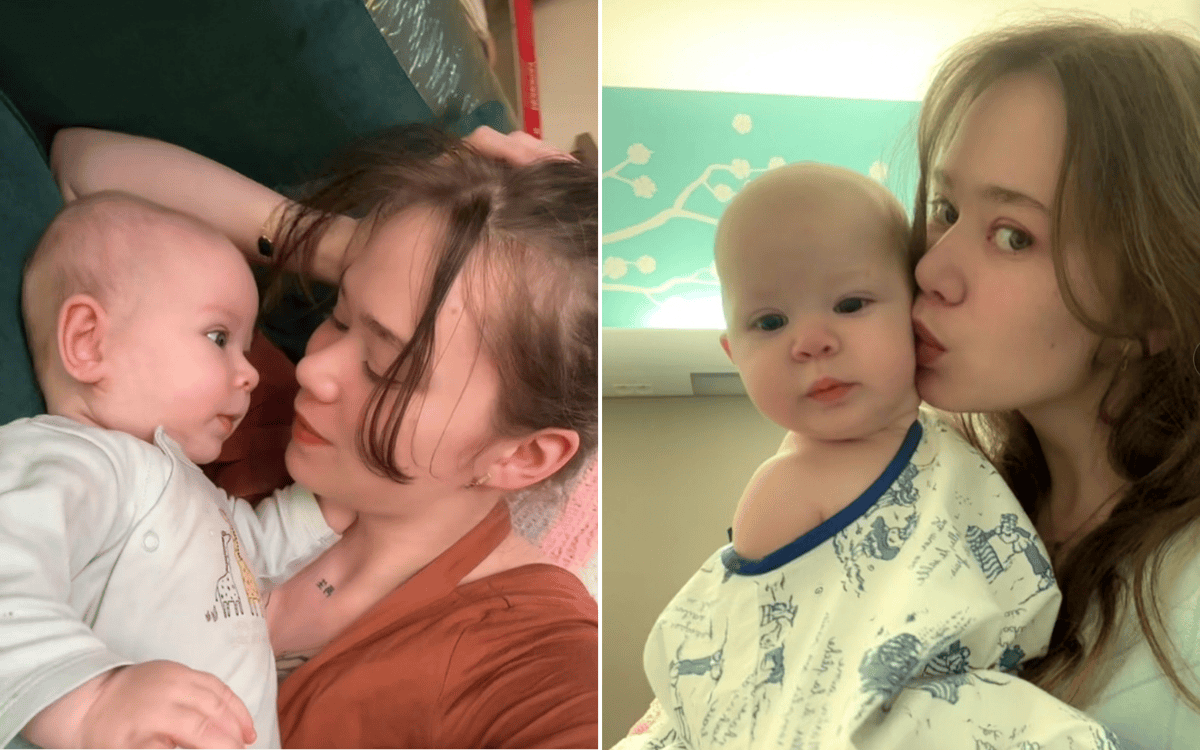
Marcelle Miller faced a daunting new reality when her three-month-old daughter was diagnosed with a rare congenital condition. Up to that point, Miller’s pregnancy had been uncomplicated. She shared with Newsweek that, “My pregnancy went really well. I only experienced a slight placental hematoma that resolved with rest. There was no morning sickness at all. It was a dream pregnancy.”
At the age of 22, Miller was thriving as a realtor in Europe. Her daughter arrived healthy after 42 weeks, 21 hours of labor, and a brief seven-minute delivery. “Everything was perfect,” said Miller.
However, when her daughter was three months old, Miller noticed a concerning feature. “I saw a small cloudy ring in her right eye,” she said. Concerned, she decided to have her daughter checked by a specialist.
Miller’s research led her to congenital cataracts, a rare condition where a baby is born with a cloudy lens. This occurs in approximately three to four out of every 10,000 U.S. births, causing potential vision issues and noticeable pupil changes. Treatment often entails surgery in infancy, followed by glasses or therapies.
Miller recalls hoping for a different diagnosis. But a few weeks later, doctors confirmed her worst fears. Her daughter had bilateral congenital cataracts. “My entire life came crashing down. I cried for a week,” she admitted. The diagnosis struck her as a sentence for a future marked by limitations.
Congenital cataracts can result from various causes, including genetic mutations, inherited conditions, or problems with prenatal eye development. Often, doctors cannot pinpoint a specific cause. Investigations continue, with a potential genetic link to a mutation in her father’s blood, although not directly causing the condition.
Miller swiftly moved to secure treatment for her daughter. “The condition is serious,” she stated. The family consulted with specialists for the required interventions. Immediate action was crucial to avoid hindering her daughter’s visual development.
Since diagnosis, her daughter has undergone four surgeries to replace her clouded lenses with artificial ones. Visual aids like glasses or contact lenses are necessary. Although she currently resists wearing glasses, her eyesight has maintained stability.
Miller feels the impact of the diagnosis deeply. “Witnessing my baby in that state broke something inside me,” she expressed. Future surgeries are likely, but Miller holds onto the hope of them being less invasive.
She aspires for a normal, limitless life for her daughter. Miller encourages other parents with similar experiences to find hope in her daughter’s story. “I’ve seen parents’ fears about their children’s futures,” she said. “Our children can have normal lives. It’s our expectations as parents that need to adapt.”