Montana’s Political Landscape: Forstag’s Congressional Run
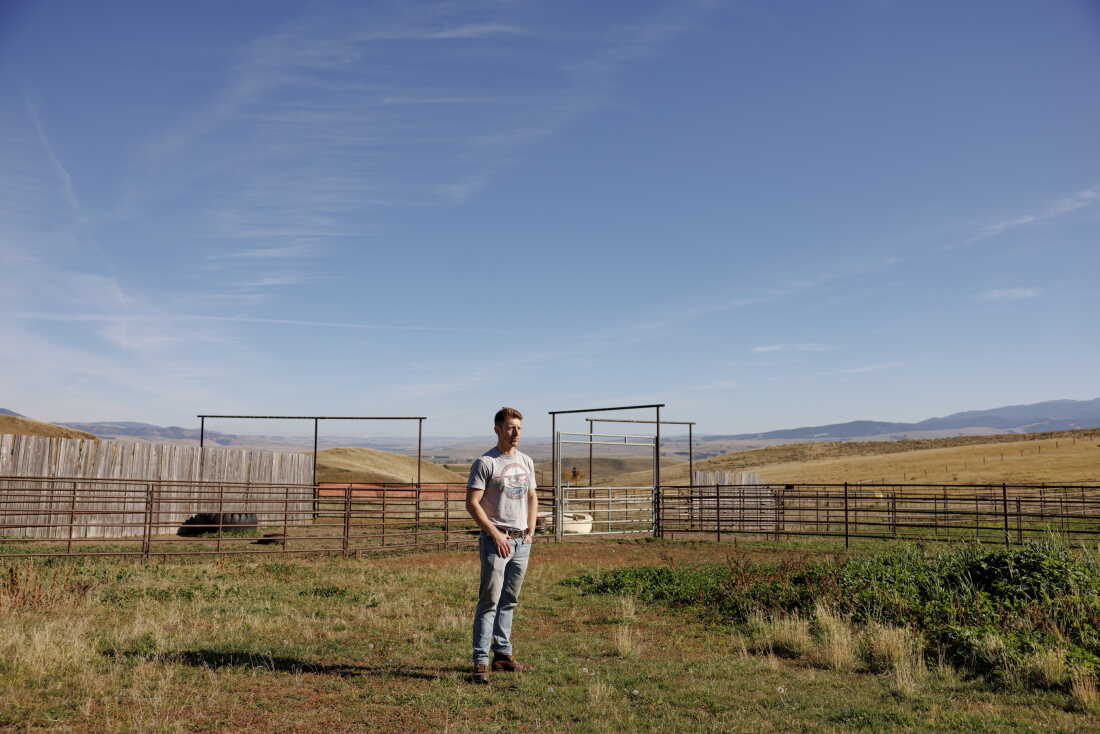
Sam Forstag poses for a portrait on a ranch outside of Drummond, Montana on October 7, 2026.
In Western Montana, amid an atmosphere of voter frustration, a group of unconventional Democratic candidates perceive a chance to regain lost ground in this year’s midterms. Tracing inspiration from progressive economic populism, these campaigns aim to reclaim spaces abandoned by others in their party by appealing to widespread discontent with corporate influence and the functioning of both political parties. Success in this approach could provide a new strategy for Democrats to regain traction in regions they once dominated.
In Montana, Sam Forstag, a former U.S. Forest Service smokejumper, is championing these ideas as he attempts to flip a House seat by directly addressing the economic challenges confronting many voters. He recounts his own experiences, saying, “I was earning 19 bucks an hour jumping out of airplanes for the federal government in a community where buying a house for half a million bucks is a rarity.” Forstag emphasizes that if someone like him is left behind, many more are too, regardless of political affiliation.
MONTANA’S POLITICAL SHIFT
In recent years, Montana has not typically been a battleground for Democrats. Yet the state was once a mix of both Republican and Democratic voters. As disruption and a blend of populist rhetoric targeting cultural elites and immigrants boosted Trump in 2016, Democrats found it increasingly hard to compete.
Take Sandi Ramos, for instance, who voted for President Obama twice before switching allegiance to Trump. While she respects Forstag personally, her inclination is doubtful, “I don’t think anything could change my vote quickly, although I really respect him as a person.” Despite the change in sentiment, past support allowed Democratic Senator Jon Tester to succeed until 2024, when he lost his reelection bid.
Tester points to the historical Democratic lean of the region, citing his own family farm’s roots and recognition of the government’s role during the Great Depression. However, the Democratic brand’s damage is evident, partially attributed to national Democrats often ignoring regions between the Appalachians and the Rockies. Tester remains hopeful that the Iran war and tariffs could prompt some to reconsider their options.
ENGAGING WITH LOCAL COMMUNITIES
Forstag spends time connecting with rural communities. He recently engaged farmers and ranchers at Peterson Angus Ranch, where Sue Peterson, chair of the local Democratic Party, theorized why Democrats may struggle in rural areas. “Dealing with life and death decisions in farming often makes it hard to relate to politicians perceived to be detached from these realities,” she suggests.
Forstag expresses frustration regarding superficial rhetoric, saying, “We don’t change things by inventing terms for nuances; we change it by rethinking political participation.”
EMBRACING PRAIRIE POPULISM
By concentrating on economic concerns, Forstag’s campaign has attracted support across the Democratic spectrum, from Alexandria Ocasio-Cortez’s progressive followers to more moderate Democratic Blue Dog Caucus members. Georgetown University’s Michael Kazin highlights how populism unifies varied groups. Rooted in historical movements against corporate monopolies, prairie populism resonates with neglected states.
Diverse Democratic candidates across states like Iowa and Kansas are claiming this prairie populist identity, emphasizing common-sense governance that unites small farmers against corporate challenges.
SHIFTING POLITICAL ENVIRONMENTS
Facing a deteriorating national environment for Republicans, GOP candidates, including Forstag’s opponent Aaron Flint, are also confronting economic issues head-on. Flint, a veteran and conservative radio host, campaigns to “make the Montana dream affordable again.” However, widespread frustration crosses party lines, shared by individuals like Nicholas Babcock, a mail carrier dissatisfied with Trump’s unmet promises despite having initially supported him.
Babcock’s openness exposes a potential for change, evident by his attendance at a Forstag town hall. He acknowledges Forstag’s relatable working-class history, expressing hope for genuine representation in governance.