African Lion 2026 Exercise: AI and Robotics in Modern Warfare
In the arid terrain of southern Morocco, where the Sahara Desert intersects with the Atlantic coast, the silence of the desert was disrupted by explosions and gunfire during the African Lion 2026 military exercise. American forces participated alongside 30 partner nations, with an emphasis on testing artificial intelligence systems in warfare scenarios.
AI’s Role in Modern Military Exercises
African Lion stands as the largest U.S.-led military exercise in Africa, focusing on the future of warfare increasingly dominated by AI innovations. Private defense contractors showcased various systems, receiving direct feedback from soldiers as they look to play a role in modernizing military capabilities.
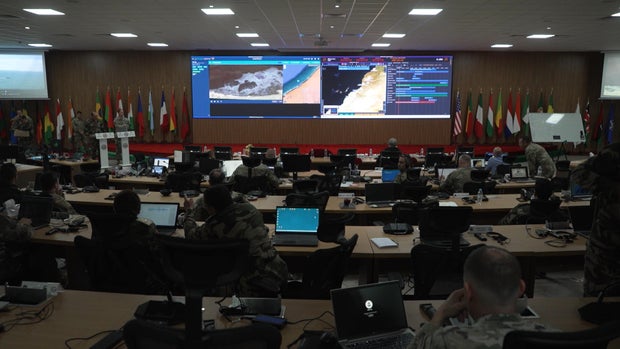
Technology advancements were notable, with AI-powered systems aimed at reducing the time taken to execute battlefield decisions. Lt. Col. Ramon Leonguerrero highlighted an instance where AI shortened decision-making from hours to minutes during a drill. The AI-driven platform, developed by defense tech company Palantir, facilitated rapid decisions at the Joint Operations Center in Agadir.
Expedited Decision-Making Process
Using AI, personnel in Agadir swiftly processed decisions that traditionally would take much longer. Although human approval was requisite for final decisions, autonomous systems capable of acting independently without human intervention already exist.
The operations utilized Project Maven, the Pentagon’s central AI initiative, developed by Palantir. Project Maven processes extensive battlefield data to identify patterns and prioritize key information for commanders, aiding them in making informed decisions.
Interfacing with AI Platforms
Anthropic’s Claude AI was integral to the practices, assisting operators by making complex battlefield data understandable in plain English. Despite recent disputes with the Pentagon over surveillance concerns, Anthropic remains influential in military exercises.
“There are moral and ethical issues to figure out,” General Dagvin R.M. Anderson stated, emphasizing ongoing concerns over AI’s role in making autonomous military decisions.
Gen. Anderson stressed the importance of adopting new technologies to ensure U.S. military capabilities remain competitive globally. He underscored the notion that ignoring technological advancements poses risks, as adversaries may gain advantages.
Robotics: Enhancing Safety and Efficiency
The exercise also highlighted robotics, aiming to enhance safety by replacing humans in high-risk environments. Overland AI showcased its ULTRA autonomous vehicle, capable of traversing the desert independently while equipped with weaponry.
Director of Business Development Tim Bishop explained ULTRA’s capabilities in supporting soldiers by deploying covering fire, laying mines, and breaching enemy lines. Currently, human operators remotely control weapons, but future automation could allow the robots to autonomously engage targets.
1st Lt. Vincent Gasparri of the 173rd Airborne Brigade expressed commitment to leveraging technology for safety, stating their operations in the Moroccan desert replaced numerous soldiers with a few robotic units. This approach aims at minimizing risks and maximizing protection.
Gasparri emphasized that advancing technology in military exercises is crucial for efficiency and saving lives. The goal is to surpass adversary capabilities, prioritizing quick and informed decision-making to secure soldiers’ safety.
The integration of AI and robotics continues to redefine military strategies, showcasing potential advantages and ethical considerations in future warfare.