Breast Cancer Risk Assessment and Prevention
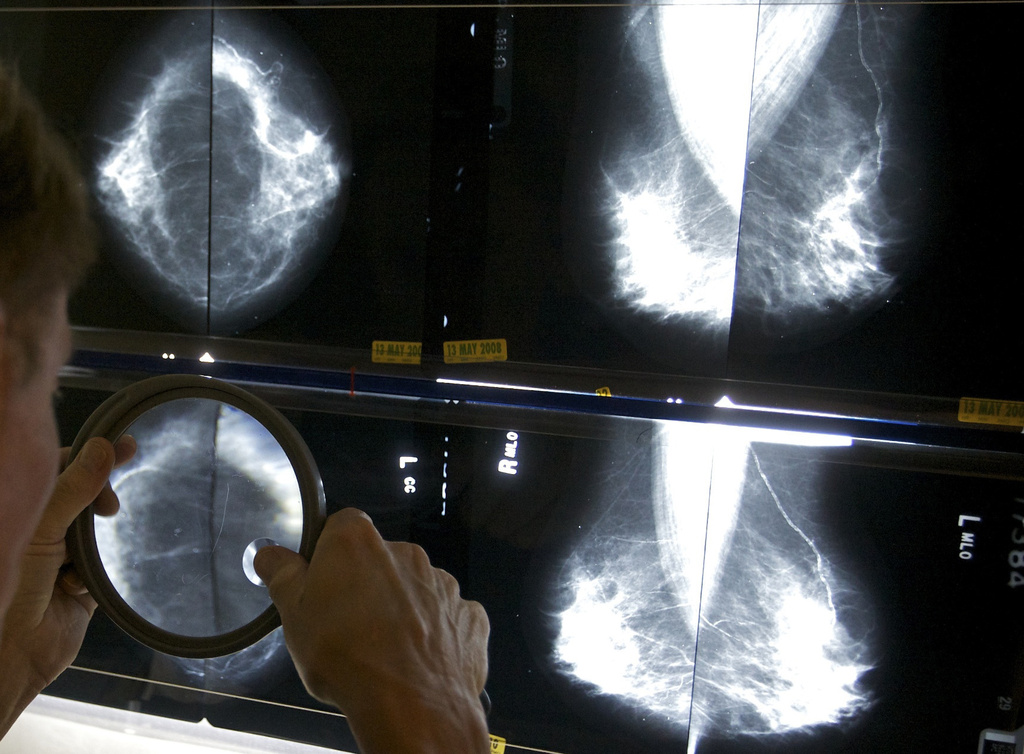
File Photo – A radiologist uses a magnifying glass to check mammograms for breast cancer in Los Angeles, May 6, 2010. (AP Photo/Damian Dovarganes, File).
My mother’s journey as a survivor of triple-negative breast cancer highlighted the importance of understanding one’s own risk for the disease. When I discovered my high probability of developing breast cancer, I decided to have a double mastectomy to reduce my risk. This decision, while challenging, allowed me to take preventative steps. I believe every woman should have this opportunity, starting with a universal tool to assess personal breast cancer risk.
Breast Cancer Awareness Month celebrates the progress in reducing deaths from the disease. It also recognizes the ongoing challenges. Improved access to screening and detection services helps women identify risks and address potential diagnoses earlier. Nonetheless, more efforts are needed, especially in underserved areas like rural Louisiana.
Risk assessment tools evaluate the likelihood of developing breast cancer based on factors such as family and reproductive history, and lifestyle. There are many such tools, but their variety can cause confusion. Many women remain unaware of their value, according to National Institutes of Health research. A standardized assessment, coupled with education on its importance, would empower women to understand their risk and make informed health decisions.
My recently introduced Know Your Risk Act aims to establish a universal risk assessment tool. The legislation instructs the Department of Health and Human Services to develop this tool. It also aims to expand access through the National Breast and Cervical Cancer Early Detection Program. Current tools vary in accuracy and effectiveness, often creating inconsistencies.
For instance, existing risk assessments are utilized in different formats, from paper questionnaires to digital applications, and assess diverse populations differently. A universal tool would provide women with consistent and clear information about their risk. It could prompt discussions on preventative measures with healthcare providers, potentially saving lives.
Early intervention was vital in my decision to take preventive action. Our health agencies need to ensure that no woman is unaware of her breast cancer risk. The Women’s Health Division at the National Institutes of Health, along with emerging artificial intelligence technologies, can advance research in this area.
Women should regularly consult with doctors about mammograms and screenings to detect early issues. Statistics show that one in eight women will develop breast cancer within their lifetime. Early intervention improves outcomes and survival odds. Access to reliable risk assessment is critical to prevention and care.
I remain committed to advancing this cause.
Rep. Julia Letlow represents Louisiana’s 5th District in the U.S. House of Representatives. She serves as vice chair of the House Appropriations subcommittee focused on healthcare issues.
Copyright 2026 Nexstar Media Inc. All rights reserved. This material may not be published, broadcast, rewritten, or redistributed.