Remembering Dolores Huerta: Labor Organizer and Civil Rights Icon
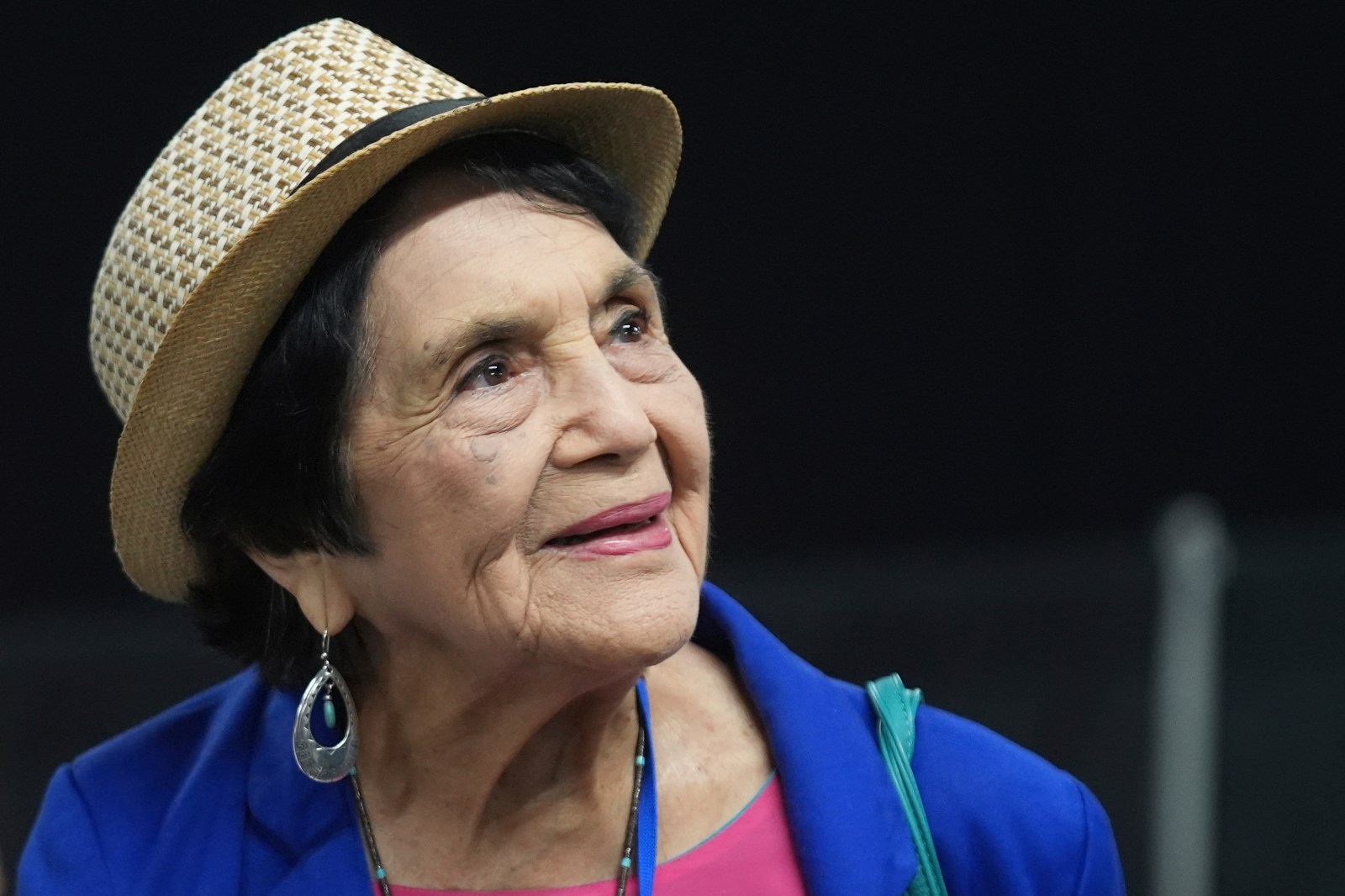
Dolores Huerta, a pioneering labor organizer and civil rights leader, passed away on Wednesday at the age of 96. She died at her home in Bakersfield, California, surrounded by family. Huerta was known for co-founding what became the United Farm Workers (UFW) of America. She was instrumental in securing landmark contracts for agricultural workers and originated the powerful phrase, “Sí, se puede.”
A family statement expressed their sorrow over her passing and requested privacy during this challenging time. The Dolores Huerta Foundation announced her death, stating she was with her close family. They plan to share details on how they will honor her legacy soon.
“Sí, se puede.” – Dolores Huerta
Huerta’s influence extended beyond labor rights; she was a formidable advocate for voting rights, women’s political participation, and more. Her notable negotiations and advocacy efforts transformed farmworkers into a cohesive labor force, giving them a strong political voice. She secured contracts providing better wages, job security, and protections from pesticides, among others.
Through her efforts with the UFW alongside figures like César Chávez, Huerta played a key role in advancing farmworker rights. Her work led to the enactment of California’s Agricultural Labor Relations Act of 1975, the first U.S. law acknowledging farmworkers’ rights to unionize and collectively bargain.
Huerta’s early years were shaped by her family’s involvement in labor activism. Born on April 10, 1930, in Dawson, New Mexico, Huerta moved to Stockton, California, with her mother and brothers after her parents’ divorce. Her mother’s civic involvement deeply influenced her path.
Initially a teacher, Huerta was driven to tackle poverty’s root causes by organizing. Her work, initially with the Stockton Community Service Organization, set the stage for her future impact in farmworker advocacy. Her introduction to Chávez in 1955 led to the formation of the UFW and a lasting partnership.
Huerta empowered a largely marginalized Latino and Filipino workforce, turning diffuse labor pools into a unified political constituency. Her methods included negotiating vital worker benefits, organizing consumer boycotts, and lobbying for legislative change.
Beyond union organizing, Huerta embraced feminism and broader social justice issues. Her activism attracted collaborations with leaders across domains, pushing for inclusivity and equal representation within and beyond the farmworker movement.
Despite facing personal and professional challenges, including disagreements with Chávez, Huerta’s leadership remained powerful. Her legacy was further complicated by her later revelation about alleged abuse by Chávez, shedding light on personal sacrifices made for the movement’s progress.
Her contributions have been recognized widely, with honors such as the Presidential Medal of Freedom and induction into the California Hall of Fame. Huerta founded the Dolores Huerta Foundation to continue her work in empowering communities through education and advocacy.
Reactions to her death highlight her impactful life. Texas Democratic Party Chairman Kendall Scudder emphasized her lessons on community organizing and the importance of political participation. Huerta’s legacy is celebrated through ongoing work by activism groups inspired by her relentless advocacy for justice and equality.