Cannonball Discovery Highlights Alamo Battle History
Recent Cannonball Discovery
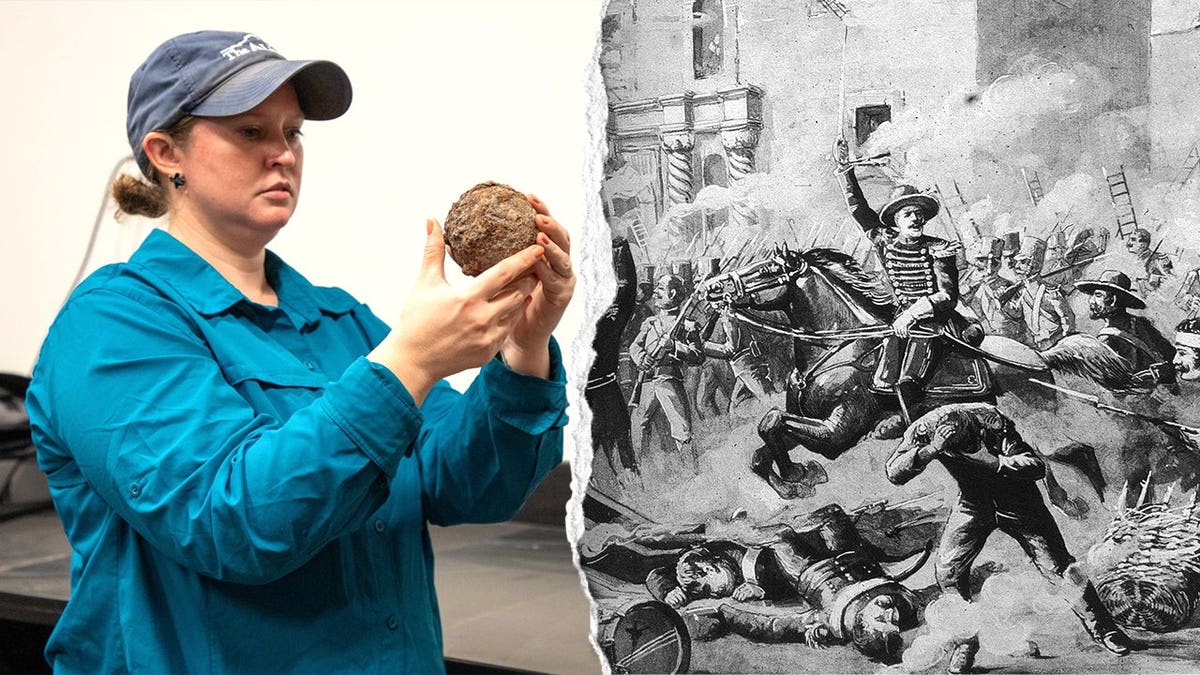
Archaeologists have uncovered a cannonball that likely dates back to the 1836 Battle of the Alamo. This discovery comes just three months after finding a similar artifact.
The cannonball, found on June 2, was announced by the Alamo Trust on June 16. This organization manages the Alamo Mission.
“Secrets of Revolutionary War Battlefields emerge 250 years after America’s Founding,” said the trust.
Located outside the northeast corner of the Alamo Church, the cannonball was found where another similar discovery was made in March. Photos reveal heavy rust on the iron cannonball, giving it an orange-brown hue.
Nearly 190 Years Undisturbed
Archaeologists believe this artifact has been untouched for nearly 190 years due to its depth matching the earlier find.
Tiffany Lindley, director of archaeology at the Alamo, explained, “Once dropped, possibly in 1836, they haven’t been disturbed since.” This undisturbed nature makes the finds significant.
Historical Significance of the Alamo
The Battle of the Alamo stands as a pivotal conflict in Texas history. The siege lasted from February 23 to March 6, 1836, when Texian forces, including notable figures like Davy Crockett and William B. Travis, defended against a larger Mexican army.
The siege ended in defeat for the Texians, which turned into a rallying cry for the Texas Revolution.
Continued Excavation Efforts
Lindley shared her surprise over finding another cannonball and mentioned that the site has had considerable use over the years, influencing underground findings.
“We often find broken and discarded items,” Lindley noted, mentioning the area’s history of U.S. military occupation and commercial development.
The most recent cannonball, made from solid iron, is less preserved than the first one, which was bronze. Despite this, it’s in good condition, and both artifacts may undergo conservation.
Ongoing Discoveries
Lindley revealed that the site yields numerous historic artifacts daily, ranging from exciting finds to mundane items like nails and bricks.
She emphasized the cannonball is merely “one small part of this project.” Once excavations conclude, the resulting data analysis will offer insights into the lives of those who inhabited this historic site.