Chicago Schools Lean on Independent Revenue Amid Budget Strains
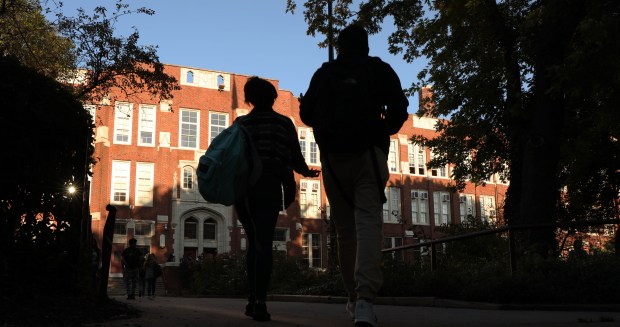
Karen Calloway, the principal of Kenwood Academy, continuously searches for additional funding streams for her school. She has successfully utilized the school’s facilities by renting out the campus to churches, nonprofits, and sports leagues. Through these efforts and a parent-led fundraising group, Kenwood has significantly increased its supplemental income.
According to analysis by Chalkbeat and the Tribune, Kenwood Academy spent $418,983 in fiscal year 2025 from external funding sources, compared to approximately $90,000 in 2021. This funding provides for athletic equipment, student clubs, and college tours at the predominantly Black high school where many students come from low-income families.
“Regardless of the budget, as a principal, you should want to create other arms of revenue for your school,” said Calloway.
District-wide, Chicago schools have increasingly relied on independent revenue due to financial challenges. In 2025, district-run campuses spent $48 million in revenue raised independently, a 78% increase since 2021. The budget pressures stem from long-term debt, pension liabilities, and outdated infrastructure.
Larger schools find this type of funding critical. Amundsen High School, which attracts families from the affluent Lincoln Square area, lost federal funding for disadvantaged students in 2024. The school then turned to independent revenue sources, such as fundraising, to compensate for operational expenses.
The distinction between schools that have access to independent funding and those that do not can lead to inequality. Wealthier schools often raise substantial amounts, as seen with Friends of Payton, which raised $786,000 in 2023-24 for Walter Payton College Preparatory High School. Yet, schools like Amundsen use this revenue to bridge budget deficits.
In 2024-25, independent revenue comprised about 1% of total school budgets, yet it was more significant in some places. Lincoln Park High School, for instance, sourced 6% of its budget from these funds.
However, securing independent funding requires effort. Renting facilities and managing fundraisers demand time from school leaders. Despite these challenges, schools on the South and West sides are expanding their efforts.
At Kenwood, a recent eighth-grade graduation saw high sales of school “spiritwear.” This effort by Friends of Kenwood has strengthened parent engagement. Although their fundraising reached $55,000 last year, representing 13% of their external revenue, they aim for more involving local businesses and alumni.
Schools such as Dyett High School for the Arts and Benito Juarez High School have increased their outside spending since 2021. Overall, revenue from independent sources has risen 40% among South and West Side schools since 2021.
The district’s financial pressures are real, and organizations like ours help to close the gap,” said Ramona Burress, a former head of Kenwood’s Local School Council.
The district has encouraged renting school facilities and aims to share facility-related revenues more equitably. But reliance on independent revenue is not a sustainable solution for systemic financial shortfalls, notes Lauren Sartain, who studied CPS fundraising for the Federal Reserve Bank of Chicago.
Despite budget challenges, school leaders appreciate these funds. At Whitney Young, a prominent selective school, independent revenue will fund teaching positions for the first time this year.
The blends of sources like facility rentals and cell tower leases are formally recorded in a fund called School Special Income. These figures represent some of the resources schools draw from, though not all spending is immediately visible since schools may use internal accounts to manage funds.