Devotion and Rituals: Soccer’s Sacred Influence in Latin America
Across Latin America, soccer is more than a sport; it is a cultural phenomenon that blends devotion with daily life. Santiago García’s story exemplifies the depth of this connection. When García’s grandmother fell ill, he placed his treasured Boca Juniors necklace around her neck, believing in its protective power. His faith reflects a broader belief among fans that their favorite clubs symbolize hope and strength.
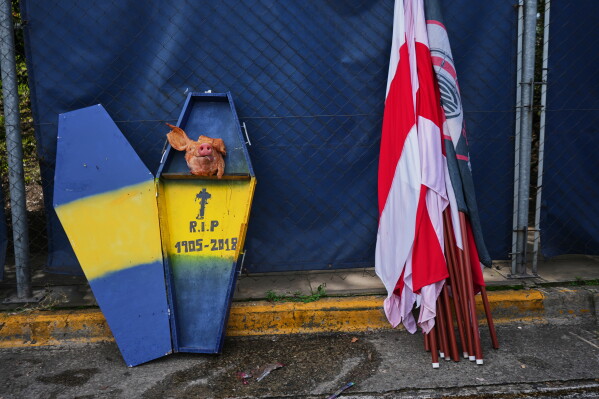
For millions preparing for the 2026 World Cup, soccer influences routines and rituals. Whether it’s the passion seen in a Boca Juniors tattoo or a cardboard coffin adorned with team colors, the sport fosters a deep emotional bond among fans. Mexican analyst Erick Fernández discusses how soccer generates identity and unity, making fans feel part of a broader process.
Loyalty to soccer clubs in Argentina often passes down through generations. Families inherit club affiliations, creating lifelong devotion. Even Pope Francis, a supporter of San Lorenzo, has endorsed soccer as the world’s most beautiful game.
García’s love for Boca Juniors was instilled by his father. His mother, once a fan of another team, converted to Boca fandom after meeting García’s father. At 17, García tattooed a phrase from Boca’s anthem on his torso, a testament to his unyielding loyalty.
Communal passion for soccer is evident during matches. Chanting anthems, shedding tears, and embracing strangers embody the communal devotion inherent to the sport. Argentine anthropologist Eloísa Martín credits soccer’s ability to form strong communities among diverse groups. This sense of belonging fosters unity but can also provoke negative reactions.
Adilvania Santos, clad in Fluminense colors, shares her story of how soccer brought solace during a challenging period. Supporting her club feels sacred, akin to religious rituals. She attends matches despite living 100 kilometers away, valuing the joy soccer brings to Brazilians, according to Catholic priest Jeferson Mengali.
Many fans engage in rituals hoping to influence game outcomes. In Argentina, such practices, known as ‘cábalas,’ gained popularity in the 1990s. Martín explains how these rituals vary: some fans keep to specific routines, while others alter their habits based on match results.
García’s family embodies these traditions. His father changes seats during matches, and his mother cleans instead of watching games. García carries a Diego Maradona image, viewing it as a relic after the player’s death elevated him to a saintly status.
Figures like Maradona, known as ‘El Diego,’ hold a revered place in collective memory. Their names resonate globally, yet fans also treasure local idols. In Chile, Héctor Hermosilla values a portrait of Colo Colo founder David Arellano, asking for blessings before matches.
Hermosilla, committed to his club since 1986, sustains his passion by selling team merchandise along his travels. He and his family undertake rituals that honor their club, viewing Arellano as a guiding force.
Santiago, Chile, and Rio de Janeiro contribute to the narrative underscoring soccer’s cultural prominence. Associated Press religion coverage is supported by collaboration with The Conversation US, highlighting soccer’s unique intersection with identity, community, and faith.