Ebola Crisis in Eastern DRC: Unrest and Challenges
Escaping Suspected Ebola Patients Amidst Unrest
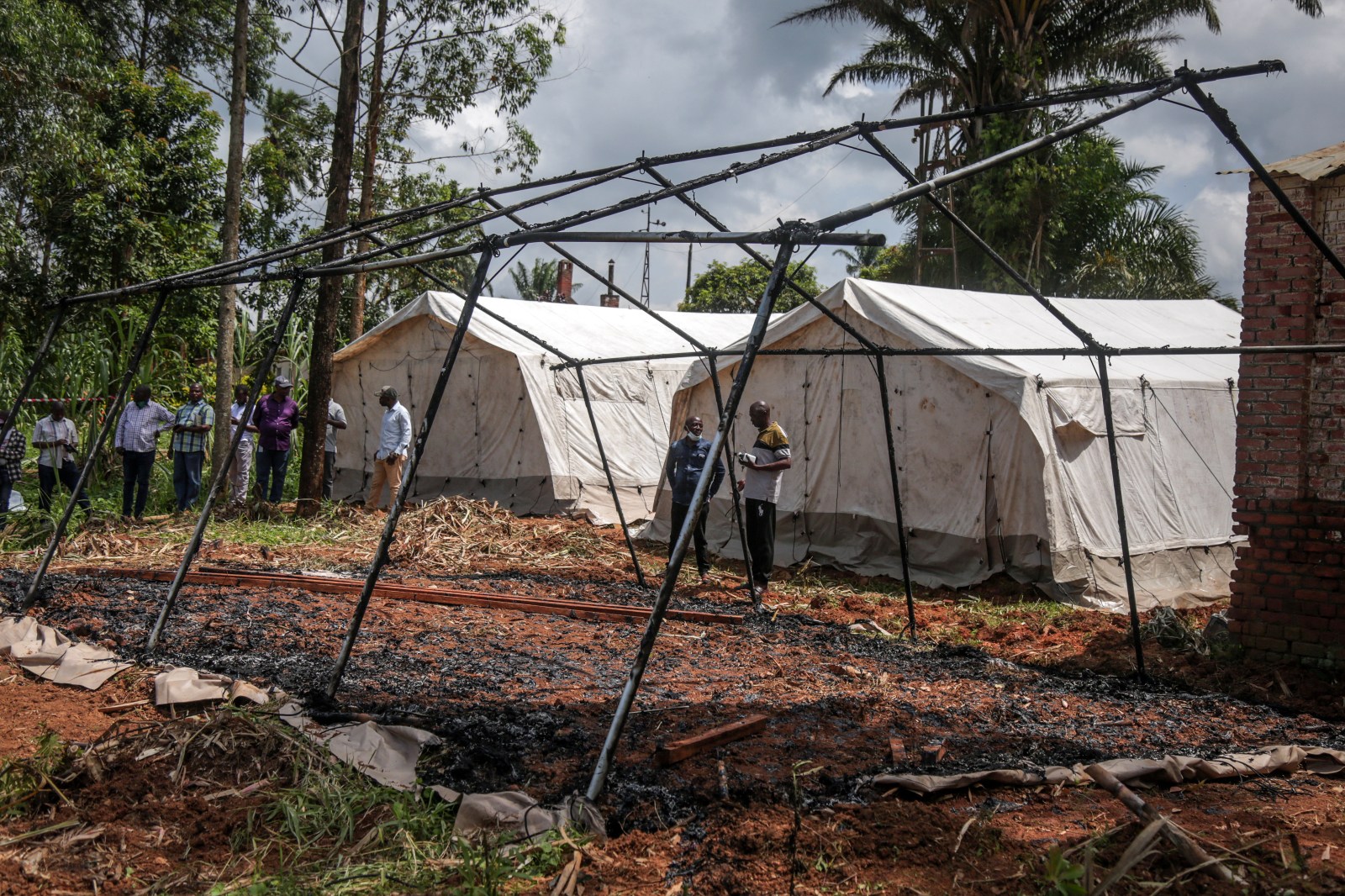
A hospital director in eastern Democratic Republic of the Congo (DRC) reported that more than twelve individuals with suspected Ebola cases fled following a fire set by angry residents at a treatment tent. The incident follows a similar outbreak when authorities refused to release the body of an Ebola victim, causing unrest.
Dr. Richard Lokudi, director of the Mongbwalu hospital where the tent was ignited Friday night, expressed strong condemnation of the act, noting it caused panic and the escape of 18 suspected cases into the community. The tent, provided by Médecins Sans Frontières (MSF), was empty and no one sustained injuries, as per the humanitarian organization’s spokesperson.
The World Health Organization (WHO) categorized the outbreak’s risk level in the DRC as “very high.” The outbreak involves the Bundibugyo virus, a rare Ebola strain lacking approved vaccines or targeted treatments. Global health officials caution that the escape of suspected cases significantly raises the risk of community transmission, complicating efforts to limit infection and mortality rates.
Details of the Medical Tent Incident
On Friday evening, residents in Mongbwalu, the center of the Ebola outbreak in Ituri province, set fire to a medical tent. Although the blaze left no injuries, the hospital director confirmed 18 suspected Ebola cases fled the facility during the turmoil and remain unaccounted.
MSF recently started operations in Mongbwalu, aiding the Ministry of Health and communities combating the Ebola outbreak. They acknowledged persistent uncertainties and fears within the community’s quickly evolving situation.
The event underscores the importance of ongoing community engagement and trust-building, vital elements of any Ebola response. Despite setbacks, MSF remains dedicated to establishing a 60-bed Ebola treatment center while continuing with patient care, community outreach, and critical health services.
Civil Unrest Over Burial Protocols
A similar incident transpired in Rwampara on Thursday, where protesters burned a treatment center after local authorities stopped relatives from recovering the body of a deceased Ebola suspect.
Health officials recommend against burials without proper precautions due to the contagious nature of Ebola post-mortem. Funerals often attract large crowds and can significantly spread the virus. The Red Cross supervises many public burials, with personnel in full protective gear handling the remains.
In Rwampara, security forces responded with tear gas and warning shots to disperse the crowd before demonstrators ignited two eight-bed medical tents. ALIMA, a medical charity that ran the facility, reported that a body scheduled for burial was consumed in the flames.
Scope and Origin of the Ebola Outbreak
WHO Director-General Tedros Adhanom Ghebreyesus reported 82 laboratory-confirmed cases and seven deaths in the DRC, cautioning the outbreak’s scope is likely larger. The AP noted at least 750 suspected cases and 177 suspected deaths, with numbers expected to rise as surveillance increases. The DRC health ministry reported 160 suspected deaths among 670 suspected Ebola cases.
The outbreak commenced late last month following local health officials’ identification of unexplained deaths in Ituri province with symptoms matching viral hemorrhagic fever. The suspected index case, a nurse from Bunia, died on April 24, suggesting the virus circulated undetected weeks prior to confirmation.
The outbreak was formalized in early May by the DRC Ministry of Health and WHO after diagnostic testing confirmed the Bundibugyo virus. The rapid spread prompted alerts in neighboring Uganda and South Sudan and triggered enhanced CDC screening protocols at U.S. airports. The virus, first discovered in 1976, has caused over 40 documented outbreaks in the past five decades, according to the National Institutes of Health.
Understanding Ebola’s Lethality
Ebola is among the deadliest viral pathogens, with case-fatality rates varying by strain, healthcare infrastructure, and prompt case identification. Historical data indicate mortality rates between 25% and 90%.
The Bundibugyo virus historically results in a 30% to 50% mortality rate. However, survival prospects decrease with delays in receiving specialized medical care.
The current outbreak shows increased severity, with the Pan American Health Organization estimating mortality rates between 55% and 60%.
Ebola creates severe illness by overwhelming the immune system and damaging blood vessels, leading to organ failure, shock, and internal bleeding. Early supportive care, including IV fluids, oxygen, and treating complications, can enhance survival chances, yet many affected communities face hurdles to accessing swift medical aid.