Innovative Research on Tiny Transparent Fish to Unlock Brain-Behavior Connections
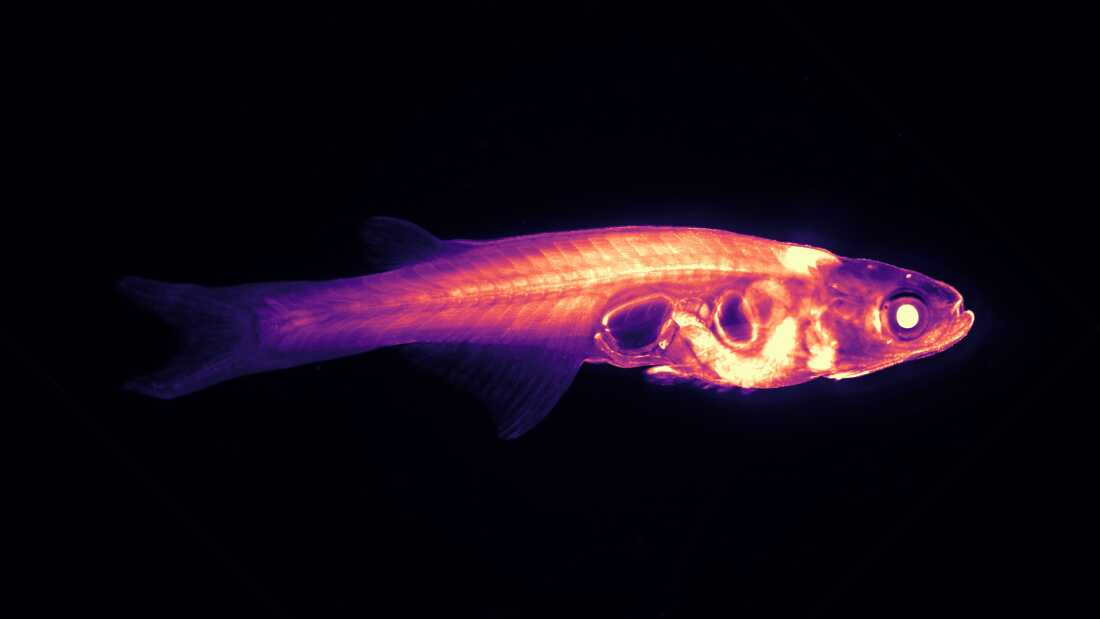
Fluorescent proteins are being used inside transparent Danionella fish to help scientists track processes within its brain and body. Researchers at the Howard Hughes Medical Institute’s Janelia Research Campus aim to unveil new insights about the brain-behavior connection through this innovative approach. This major brain science center, located near Washington, D.C., has announced the use of artificial intelligence alongside the study of Danionella fish to understand how the brain dictates complex behaviors such as social interaction.
Significant Investment in Research Space and Expertise
Janelia intends to expand their facility by tripling the space allocated for fish research to 6,000 square feet. This expansion will accommodate numerous new tanks, expecting to increase the team of researchers focusing on Danionella from the current 10 to potentially over 100. Although considered a risky investment, the potential outcome is promising, as the ability to observe an entire fish brain in real time could revolutionize understanding of how brains drive behavior in various species, including humans. “We all evolved from fish, and our brains share many features with theirs,” states Nelson Spruston, Janelia’s executive director.
Benefits of Transparent Danionella Fish
Danionella fish offer unique advantages compared to other laboratory animals like rodents. The absence of a skull’s upper part and their see-through skin make it easier to observe brain functions. Although less understood than other models such as zebra fish, Danionella cerebrum presents an unmissed opportunity as it was established as a separate species only in 2021.
According to Matt Lovett-Barron, a scientist studying Danionella at the University of California, San Diego, “Having an animal with a clear head and body is extremely beneficial to neuroscience.” The clarity allows direct observation of neuronal activity without the obstructions of skin or bone.
Transition from Fly Studies to Fish
Janelia’s notable past achievements include mapping 54.5 million connections within the fruit fly brain. Now, under the leadership of Erin O’Shea, HHMI President, they are venturing into uncharted territories with Danionella, aiming to unravel fundamental biological mysteries. One significant issue is the brain-behavior question, examining how neuron firing leads to cognitive processes like memory and decision-making.
Gerry Rubin emphasizes the necessity of observing all neurons firing simultaneously to understand brain functionality. The transparent nature of the fish makes such observations feasible, albeit resulting in a significant increase in data compared to flies. “Artificial intelligence will be vital in analyzing this data,” Rubin explains.
Paving the Way for Meticulous Research
Part of Janelia’s strategy involves creating accessible resources for scientists investigating Danionella. Current plans include mapping every neuron connection, mirroring past work with fruit flies, and establishing partnerships with AI to expedite discoveries. Currently, scientists often restrain Danionella for brain studies, a practice Janelia aims to redevelop allowing studies in freely swimming fish.
Spruston discusses the necessity for overcoming engineering hurdles to enable experiments within swimming animals. “The ultimate goal is freely swimming animals during studies,” he states. Enhanced experimental techniques are anticipated, beneficial to researchers like Lovett-Barron who examine fish synchronization using visual cues within simulated social settings.
These improvements would accelerate research significantly, yet O’Shea suggests the brain-behavior query remains a long-term ambition. Achieving one single behavior comprehension, such as schooling, within a decade would be a milestone. Progress has already been noted with larval zebra fish, boasting 80,000 neurons and raising expectations for scaling up to study Danionella adults with 650,000 neurons.
Though the human brain contains approximately 86 billion neurons, breakthroughs in observing simpler organisms’ neuronal activity pave the path for deeper understanding of complex human behaviors.