U.S. Supreme Court Declines to Review Voting Rights Case
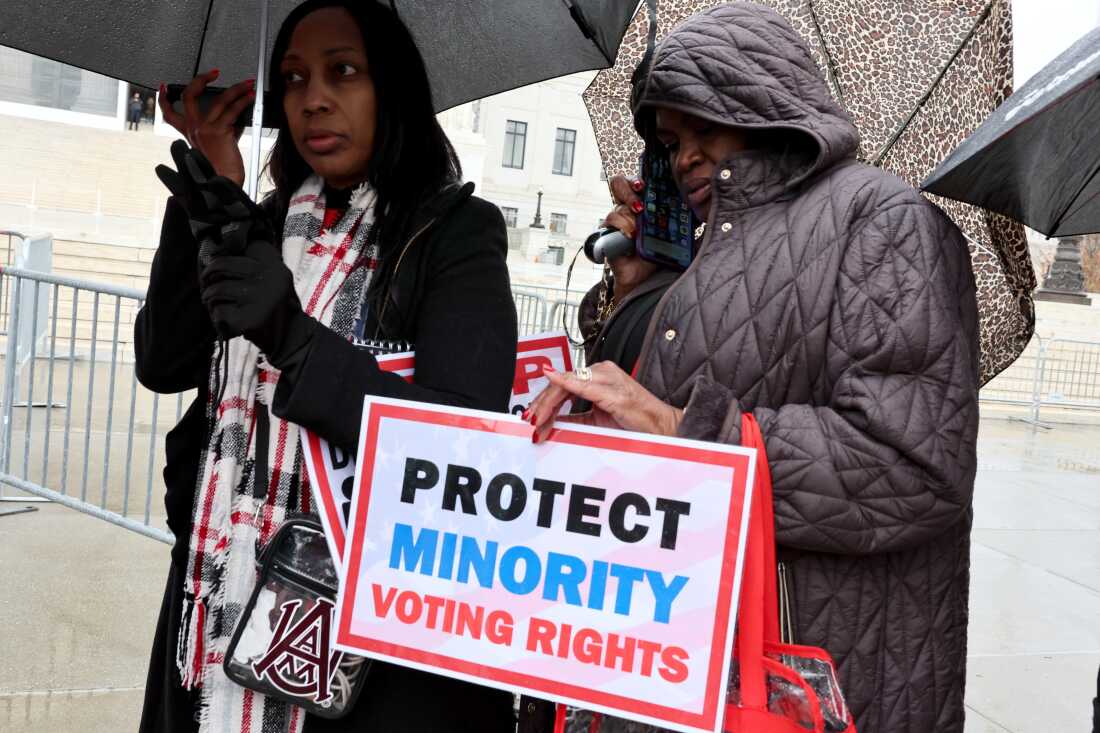
Protestors gathered outside the U.S. Supreme Court in Washington, D.C. in 2025, holding signs that emphasized the importance of protecting minority voting rights. Jemal Countess/Getty Images for Legal Defense Fund
By refusing to review a lower court decision, the U.S. Supreme Court has further weakened the Voting Rights Act. On Monday, the court announced it would not examine a lawsuit originating from Arkansas, thus maintaining a 2025 appeals court ruling. This ruling removed a significant tool for preventing discrimination against minority voters in seven predominantly Midwestern states.
The affected states, covered by the 8th U.S. Circuit Court of Appeals, include Arkansas, Iowa, Minnesota, Missouri, Nebraska, North Dakota, and South Dakota. According to the ruling, private individuals and organizations may not file lawsuits to enforce Section 208 of the Voting Rights Act. This section allows voters, who have disabilities or cannot read or write, to receive assistance from a person of their choice while voting.
The Supreme Court’s decision comes nearly two months after its conservative majority issued a ruling that weakened additional aspects of the Voting Rights Act. This decision has prompted significant redistricting changes nationwide. Following this, the court chose not to review cases from Black voters in Mississippi and Native American voters in North Dakota, focusing on the issue of a “private right of action.”
Historically, private lawsuits have driven the enforcement of the Voting Rights Act. In 2021, Justice Neil Gorsuch questioned the right of private entities to file such lawsuits, prompting Republican officials to argue that only the U.S. attorney general could initiate these legal actions. This interpretation could significantly reduce the number of voting rights lawsuits due to the Justice Department’s limited resources and changing focus with different administrations.
The case the justices refused to hear was brought by Arkansas United, an immigrant advocacy organization. The group has provided Spanish-language interpreters at polling places to help voters with limited English skills. Challenging an Arkansas law that limits assistance to six voters per non-poll worker, the organization initially succeeded in federal court. However, after GOP officials appealed, the 8th Circuit ruled against the private right to sue under this section. Notably, the 8th Circuit stands alone in breaking from decades of legal precedent on this matter.