Potential Changes in Cuba as U.S. Eyes Political Shift
Following the U.S. military operation that removed Nicolás Maduro from power in Venezuela, President Trump has hinted at similar action in Cuba. He has suggested that change in Cuba is conceivable, stating, “Cuba’s going to be next” and expressing interest in significant change there.
For years, U.S. efforts to transform Cuba’s communist system through sanctions have achieved little despite the country’s economic decline. As conditions deteriorate due to an imposed oil blockade after Maduro’s ouster, U.S. officials are urging key Cuban figures to consider political and economic reforms.
Trump has called for what he describes as “a new dawn for Cuba,” implying a major transformation similar to Venezuela’s. The question remains as to how this will impact Cuba’s leadership and governance. Here are some key figures involved:
Raúl Castro
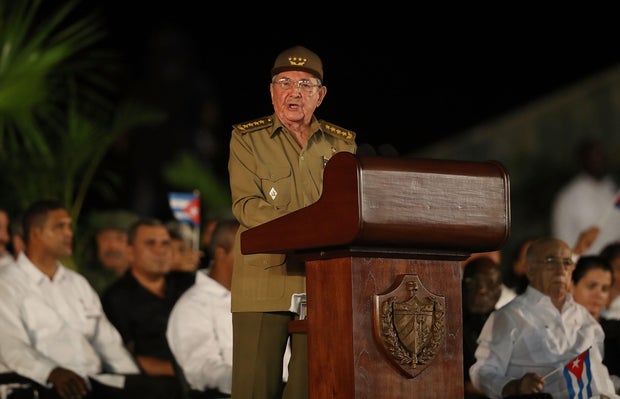
Raúl Castro, 94, though no longer officially in power, remains a powerful figure in Cuba. Previously indicted in the U.S. over the 1996 downing of planes operated by the Brothers to the Rescue group, he faces charges including murder and conspiracy.
Castro’s tenure saw an agreement with President Barack Obama that strengthened U.S.-Cuba relations, which have since cooled. He remains influential in Cuba’s political landscape.
Miguel Díaz-Canel
Miguel Díaz-Canel, Cuba’s president since 2018, is the first leader outside the Castro family since the Cuban Revolution. Although he engages in talks with the U.S., experts view him as lacking substantial authority.
Diaz-Canel has been vocal about resisting U.S. pressures. He emphasizes dialogue over confrontation but is seen by some as a symbolic leader.
Oscar Pérez-Oliva Fraga
As Deputy Prime Minister and Minister of Foreign Trade, Pérez-Oliva Fraga, related to the Castro family, is noteworthy. His recent move to allow investments by the Cuban diaspora marks a shift from past policies.
However, these new policies could conflict with the Helms-Burton Act, requiring a non-Castro transition government before lifting the embargo. His significant role in trade offers influence over Cuba’s military-controlled economic sectors.
Raúl Guillermo Rodríguez Castro
Nicknamed “El Cangrejo,” Raúl Guillermo Rodríguez Castro is a trusted aide and bodyguard to his grandfather, Raúl Castro. While not holding official government roles, his access to decision-makers makes him crucial.
He remains the main point of contact in U.S. negotiations, representing crucial links in potential diplomatic developments.
Cuba’s Future Amid U.S. Strategies
The U.S. might seek an approach paralleling its Venezuela strategy. However, challenges exist without a clearly analogous figure to Venezuela’s Delcy Rodriguez in Cuba. While individuals like Pérez-Oliva Fraga appear promising, the complexity of Cuban politics complicates matters.
Resistance from Cuban leaders is expected regarding external pressures on sovereignty and political leadership. Discussions are ongoing, focusing on economic issues without conceding political control. Finding a mutually agreeable solution remains complex.
The Associated Press provided additional contributions to this report.