Paris Saint-Germain: Football Excellence and Controversy
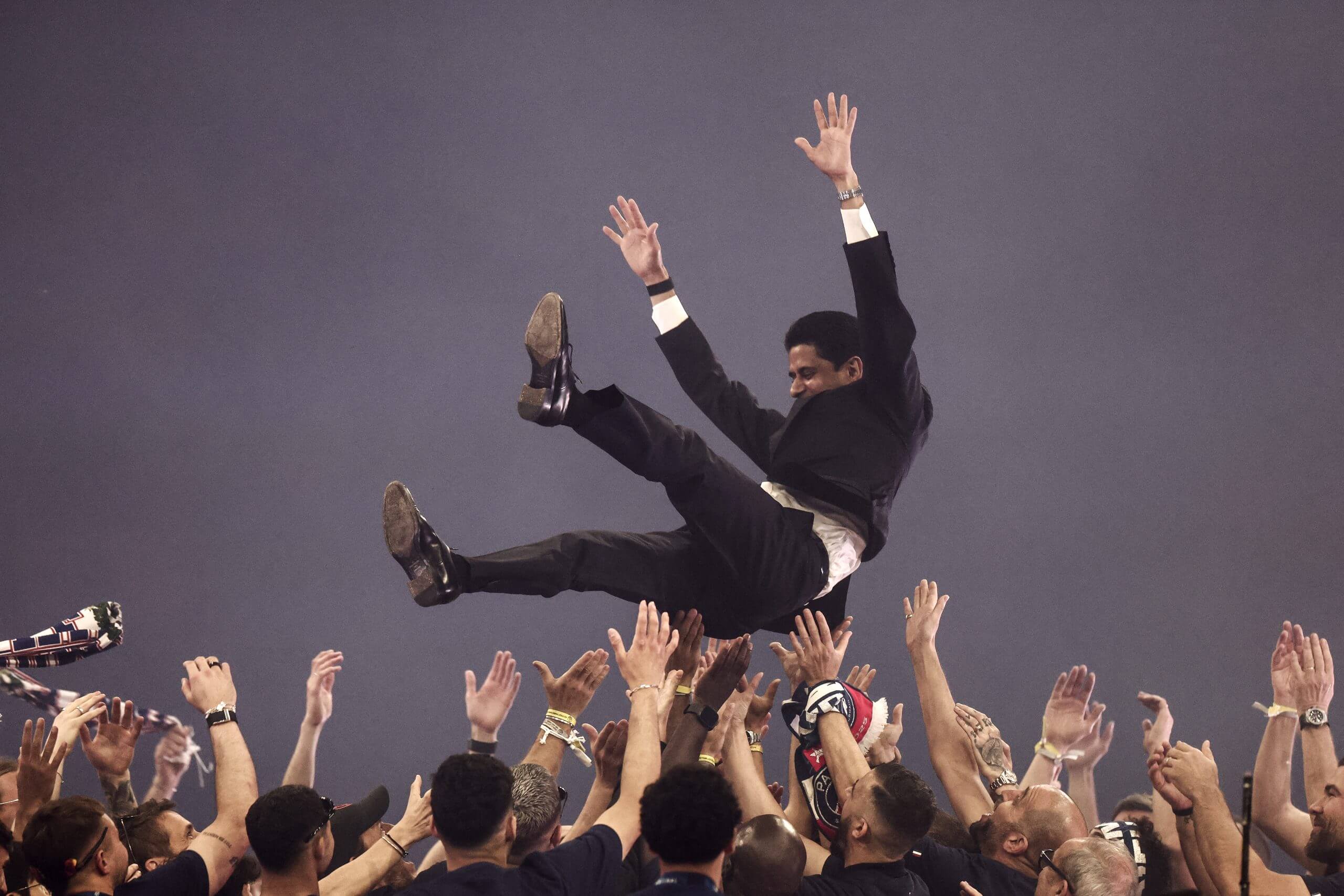
Paris Saint-Germain (PSG) is renowned for its exhilarating style of play. They are celebrated not only as one of Europe’s top teams but their matches provide unmatched entertainment. Their full-backs exhibit the talent of potential wingers in other teams. The midfield’s warm-up drills often outshine entire matches played elsewhere.
Ousmane Dembele, previously inconsistent and injury-prone, now shines as a Ballon d’Or-winning striker. Desire Doue dazzles with his speed, skill, and intelligence. Bradley Barcola could easily play for most Champions League teams, yet struggles for time at PSG. Then there is Khvicha Kvaratskhelia, a player combining power, speed, and grace, creating a thrilling spectacle.
Some of PSG’s performances this season demonstrate the essence of football, characterized by fast-paced attacks, numerous goals, and structured play with enough vulnerability to maintain excitement.
However, PSG’s ownership complicates this admiration. Qatar Sports Investments acquired the club in 2011, a year after Qatar was named the host of the 2022 World Cup. Critics view this as sportswashing or a quest for soft power, serving to enhance Qatar’s influence through a renowned European club.
Football achievements are undeniable. PSG claimed 12 of the last 14 French titles and won the Champions League last season. They are strong contenders for the upcoming final against Arsenal. Businesswise, their value increased astronomically from the approximately €70 million initial investment to an estimated €4.25 billion in 2023, illustrating both success and controversy.
Nasser Al-Khelaifi’s vision during his initial tenure focused on branding over footballing priorities. Employing star players to build a brand, they aimed for Parisian representation by adjusting the club logo and forming partnerships with the likes of Nike and Jordan.
Their strategy embraced famous personalities attending matches, growing a global retail empire by opening stores in major cities like London, Tokyo, and New York.
PSG’s transfer approach evolved, featuring phases of acquiring notable players like Zlatan Ibrahimovic and David Beckham, followed by superstars Neymar, Kylian Mbappe, and Lionel Messi. Recently, the focus shifted towards building a cohesive team including talents like Dembele and Kvaratskhelia.
Al-Khelaifi expressed aspirations for a team comprised of academy graduates or French nationals, though this vision remains partly unfulfilled. Only two French players featured in last year’s Champions League final starting XI.
The transformation into a dynamic and engaging team is evident. Nevertheless, the impact on national reputation is ambiguous. Awareness about Qatar increased, uncovering both positive and negative aspects such as workers’ rights issues, gender and LGBTQI rights deficiencies, and restricted freedoms.
This leads to questioning the ethical implications of a state-owned football club serving geopolitical purposes. Skepticism is justified even if one overlooks the moral disagreements regarding Qatar’s actions.
Al-Khelaifi’s words juxtaposed with PSG’s on-field success highlight the complexity of state involvement in football.
While PSG competes at the top, concerns over the implications of state ownership linger. A reminder remains: PSG’s dazzling performances do not eclipse the nuanced issues behind their ownership.